French Navy Photo Galleries Home
French Torpedo Avisos, 1882-1897: Photo Gallery
Torpilleurs avisos were one of two larger types of torpedo craft that were added to the fleet list in 1883, the other being the even larger Torpilleurs éclaireurs (torpedo scouts). These were changed to Avisos-torpilleurs and Croiseurs torpilleurs (q.v.) respectively in 1885 when they were moved out of the torpedo craft category. The Bombe and Lévrier classes became Contre-torpilleurs in 1909. The later classes became Contre-torpilleurs d'escadre in 1896, Contre-torpilleurs in 1901, and Torpilleurs d'escadre in 1914.
Click on a photo to prompt a larger view of the same image.
Bombe class (on list 1883)
The design for this class was based on Normand's 27-meter torpedo boats (Nos. 54-55) with the main hull dimensions multiplied by a factor of 2.06. They had four engines like the single engine in No. 54 on two shafts instead of one. They were designed with closely paired torpedo tubes in the bow, but these were found unsuccessful on trials and were moved to sponsons on the sides aft before entering service. They were poor sea boats and, like the smaller torpedo boats, quickly lost speed in heavy seas.
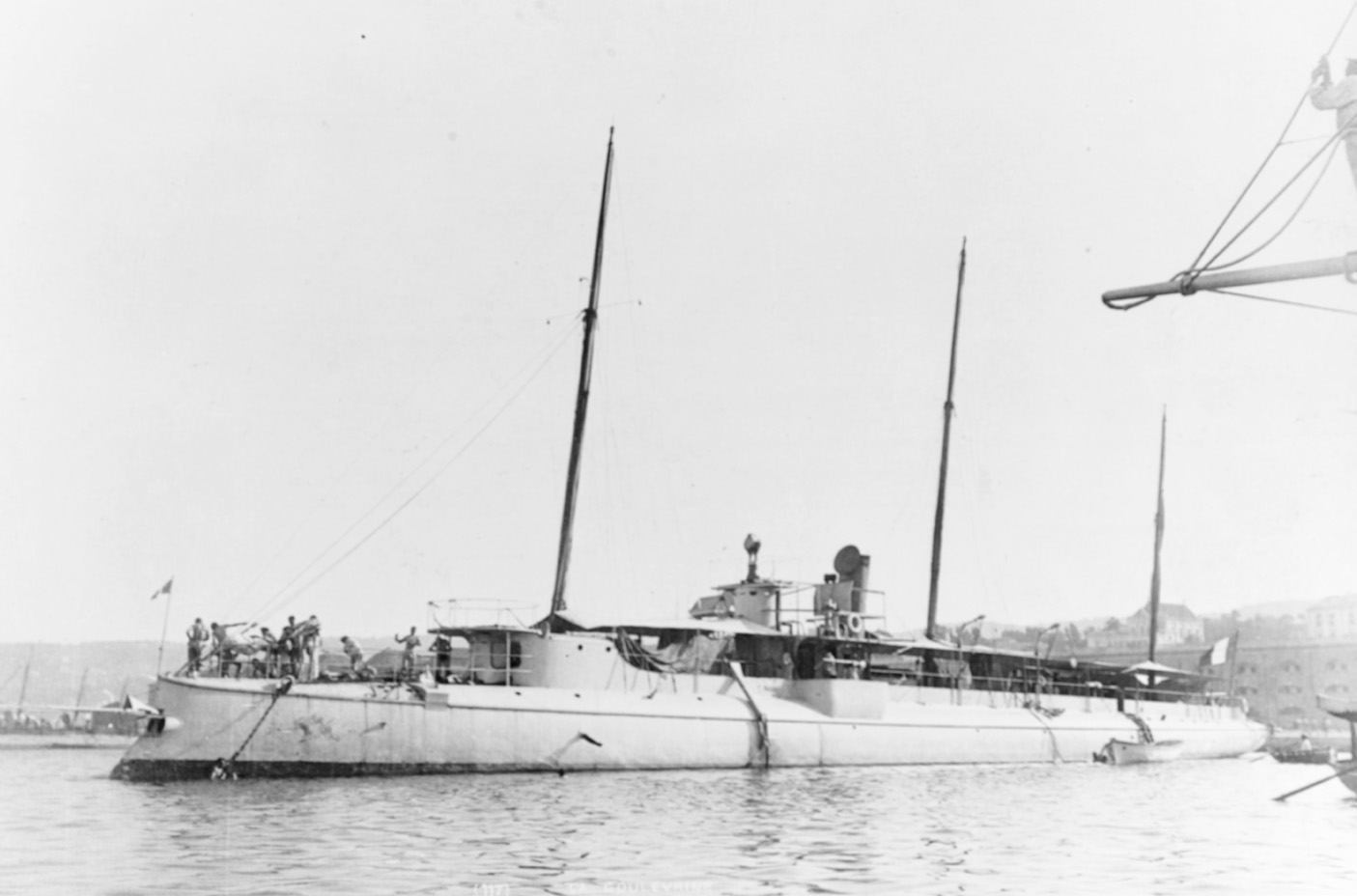
Couleuvrine
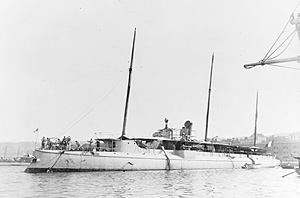
Couleuvrine (French torpedo aviso) with bow torpedo tubes, which were quickly found to be unsatisfactory. (Photo: NHHC Photo Archives NH-74872 from ONI album of French warships)
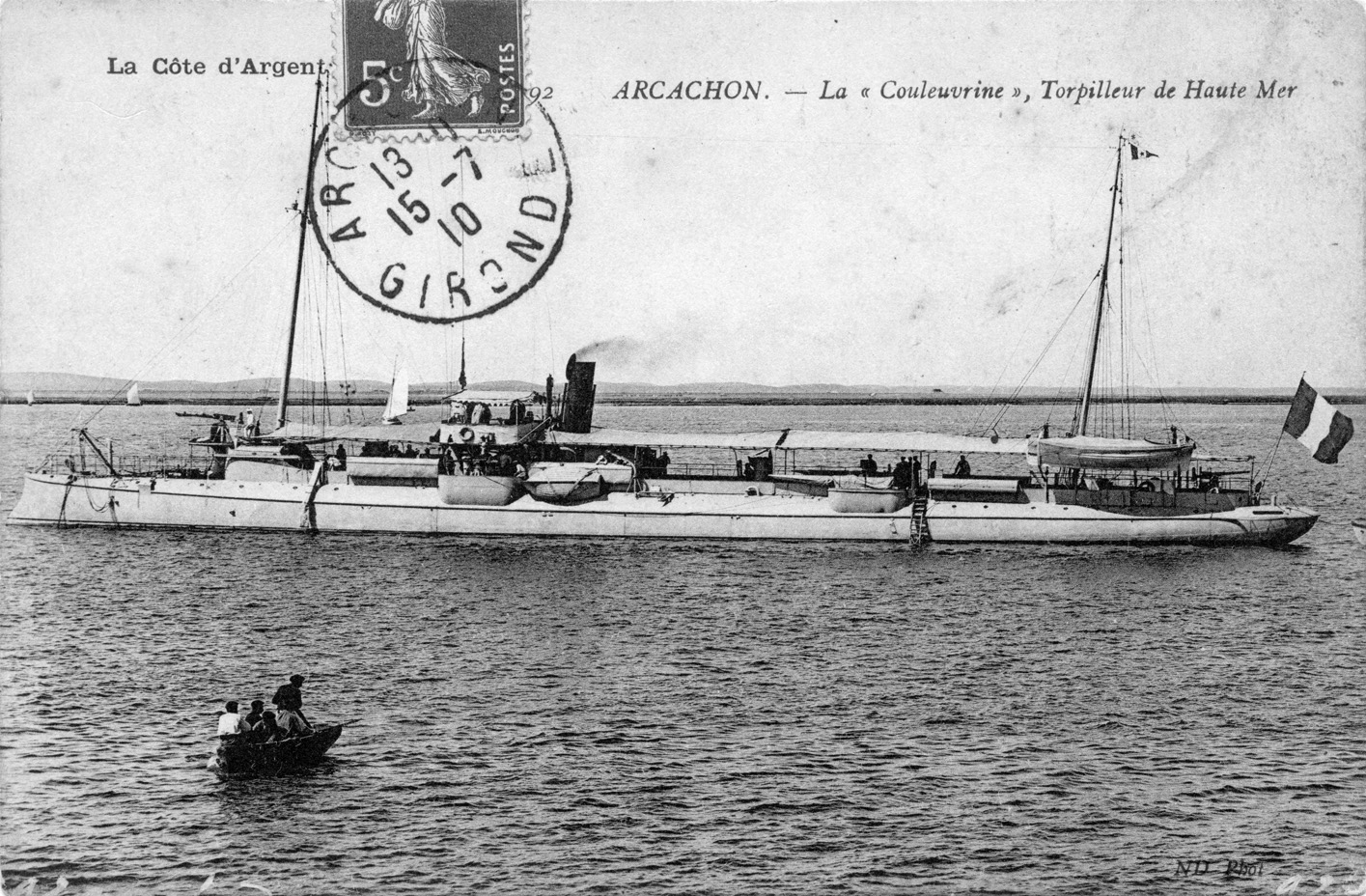
Couleuvrine
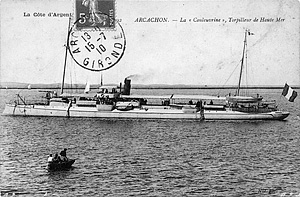
Couleuvrine (French torpedo aviso) with two masts at Arcachon, a major oyster farming area near Rochefort. Couleuvrine was assigned to the Défense Mobile at Rochefort from 1901 to 1909. Dragonne and perhaps others also had two masts late in their careers. (Photo: Postcard by ND Phot)
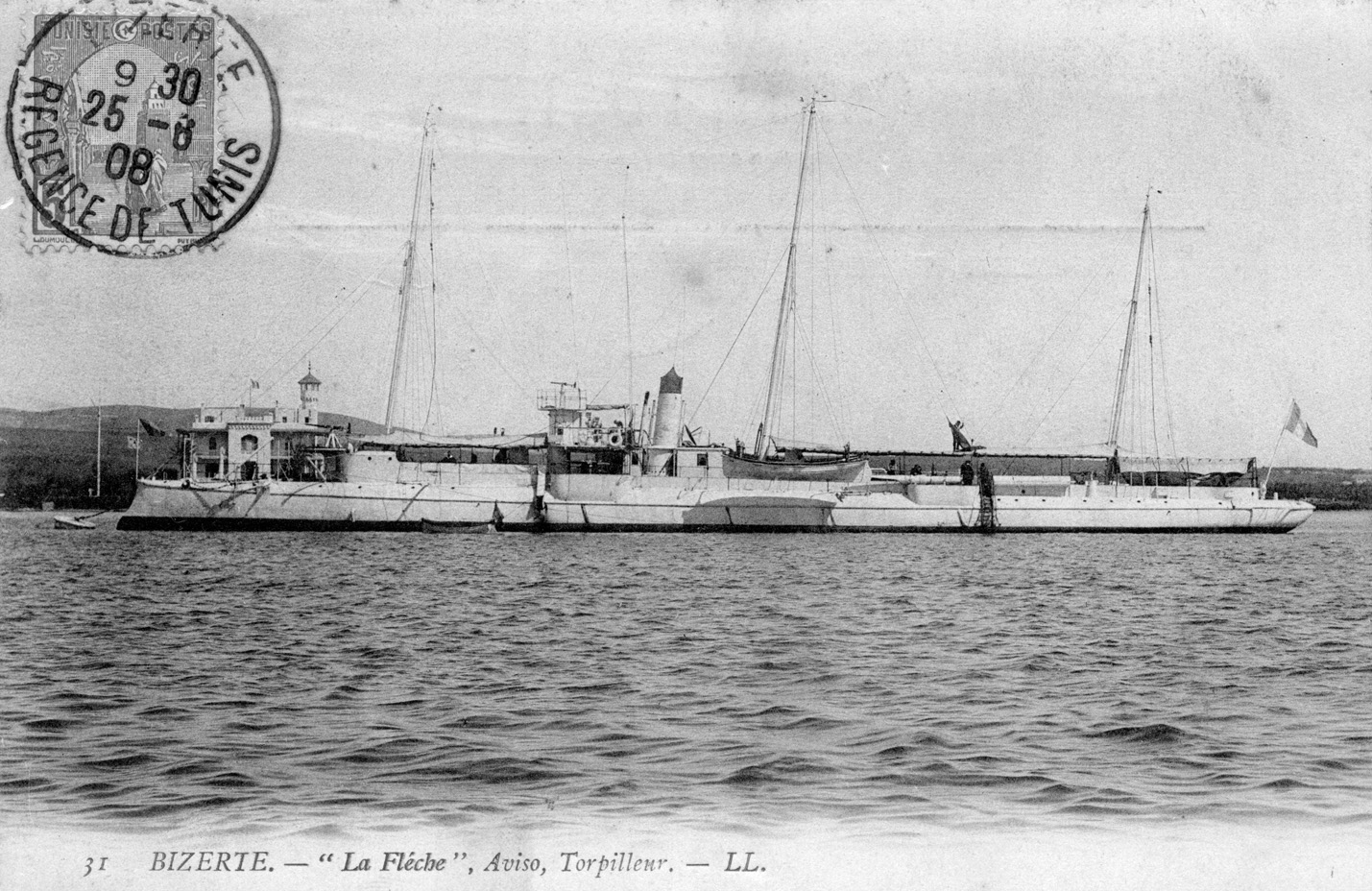
Flèche
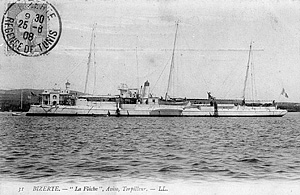
Flèche (French torpedo aviso), postmarked in 1908. From 1899 to 1909 Flèche and one or more defense ships comprised the Tunisia Naval Division at Bizerte. (Photo: Postcard by LL.)
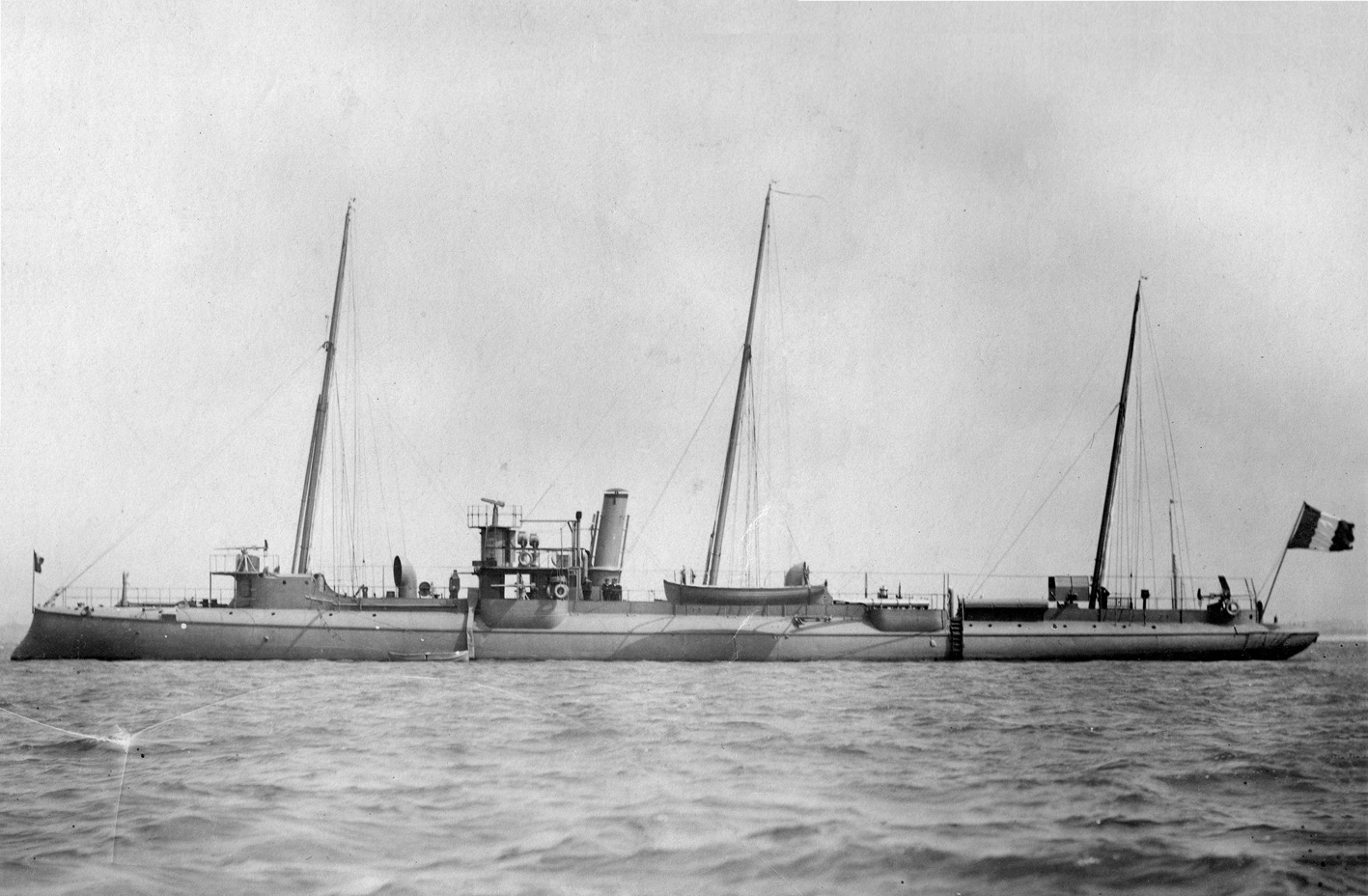
Lance
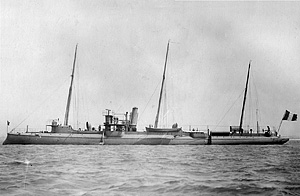
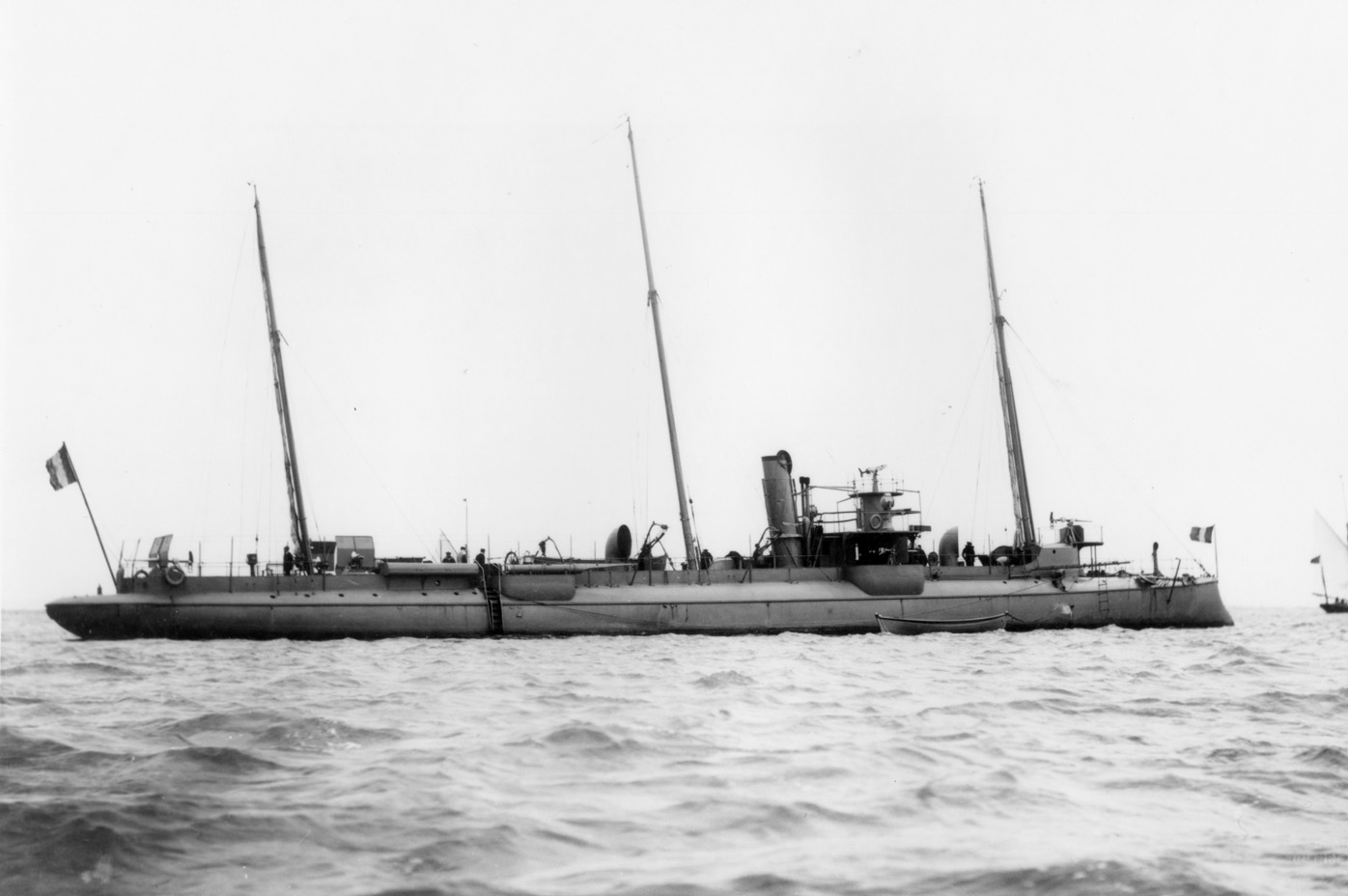
Lance (French torpedo aviso). The torpedo tubes have been repositioned from the bow to new sponsons on each side between the after two masts. (Photo: NHHC Photo Archives NH-64449)
Lance
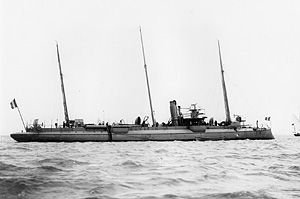
Lance (French torpedo aviso). (Photo: NHHC Photo Archives NH-66082, Farenholt collection)
Lance
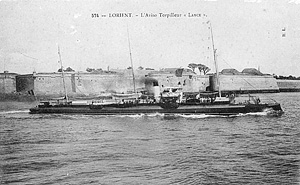
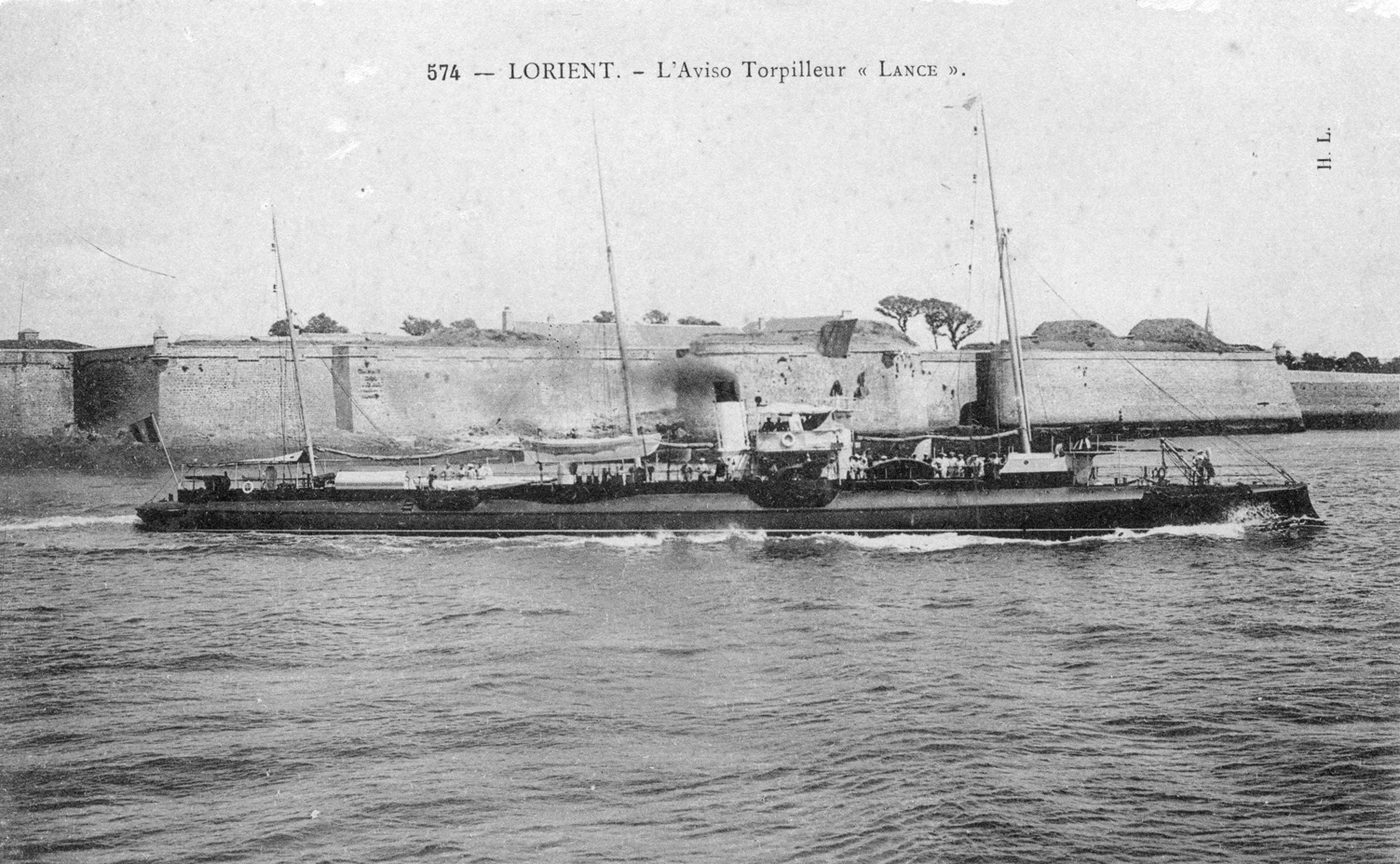
Lance (French torpedo aviso) passing the Port-Louis citadel near Lorient. She was assigned to the Défense Mobile there between 1901 and 1909. (Photo: Postcard by J. Puel, phot.)
Salve
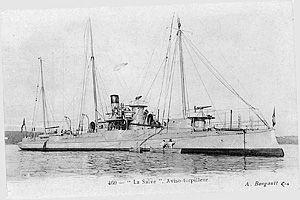
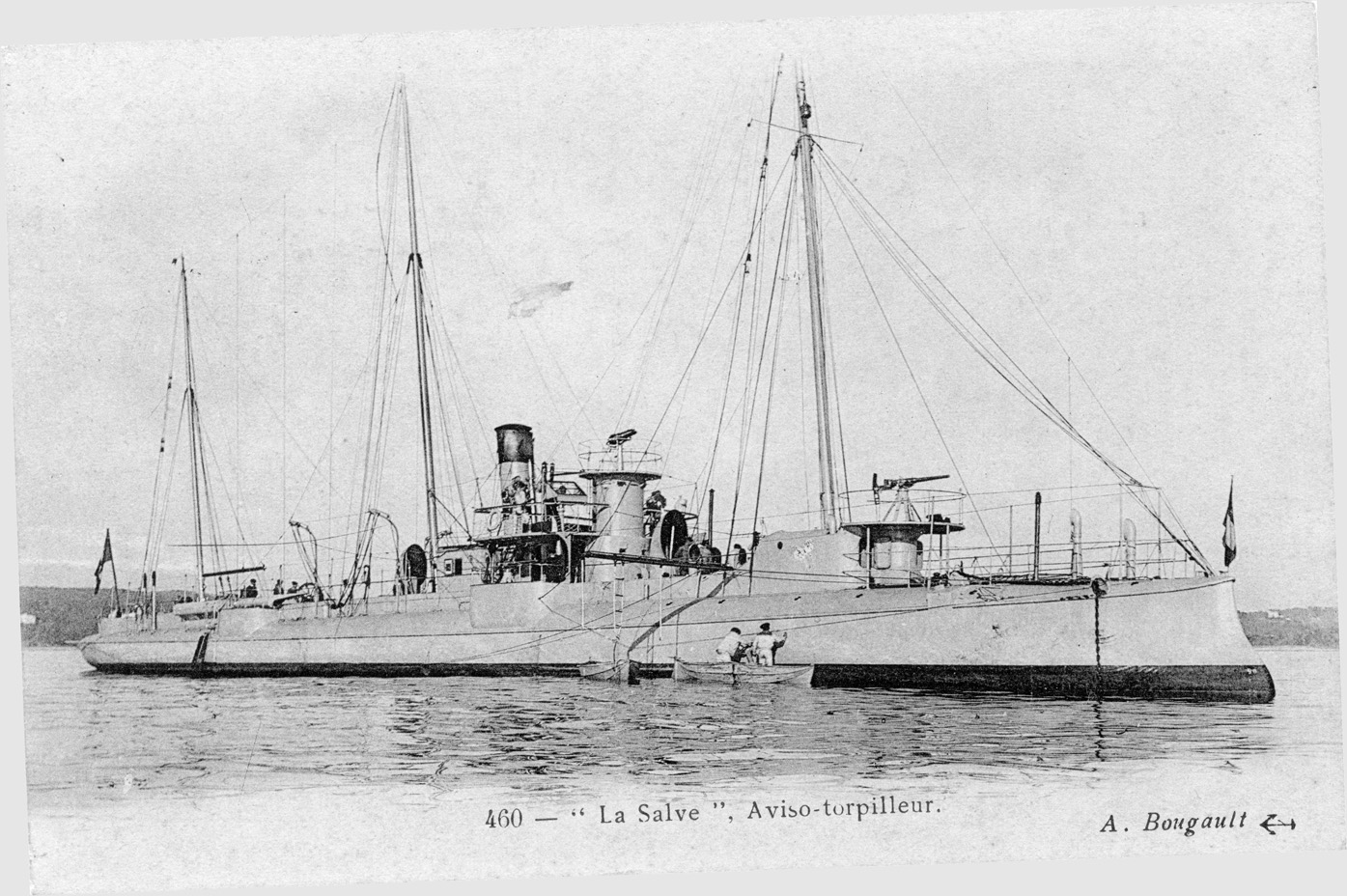
Salve (French torpedo aviso), She served her entire career in northern France. (Photo: Postcard by A. Bougault)
Sainte Barbe
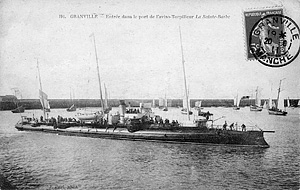
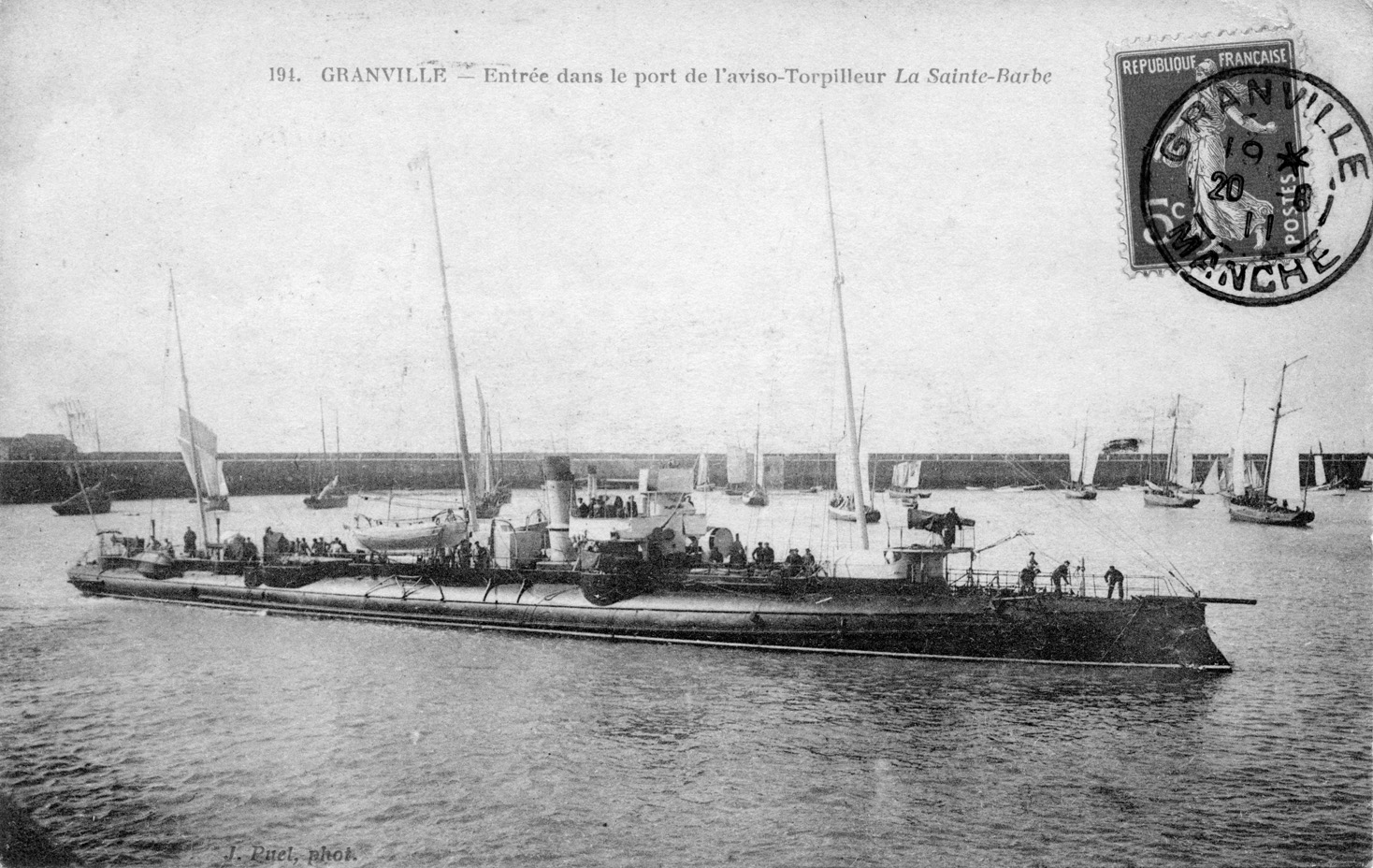
Sainte-Barbe (French torpedo aviso) entering the port of Granville. She was assigned to the Défense Mobile at Dunkirk between 1897 and 1902 and similarly at Brest from 1905 to 1909. (Photo: Postcard by H.L.)
Léger class (1889)
In 1888 the designer of the Bombe class was asked to produce an updated design with new Belleville boilers and machinery and improved hull lines. The funnel had to be 15 meters high to ensure adequate natural draught for the boilers. They had three torpedo tubes, one high up in the bow and two on mountings forward and aft of the main superstructure that could be pivoted to fire on either side. They were considered slow and weakly armed but were good sea boats.
Léger
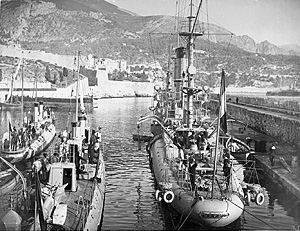
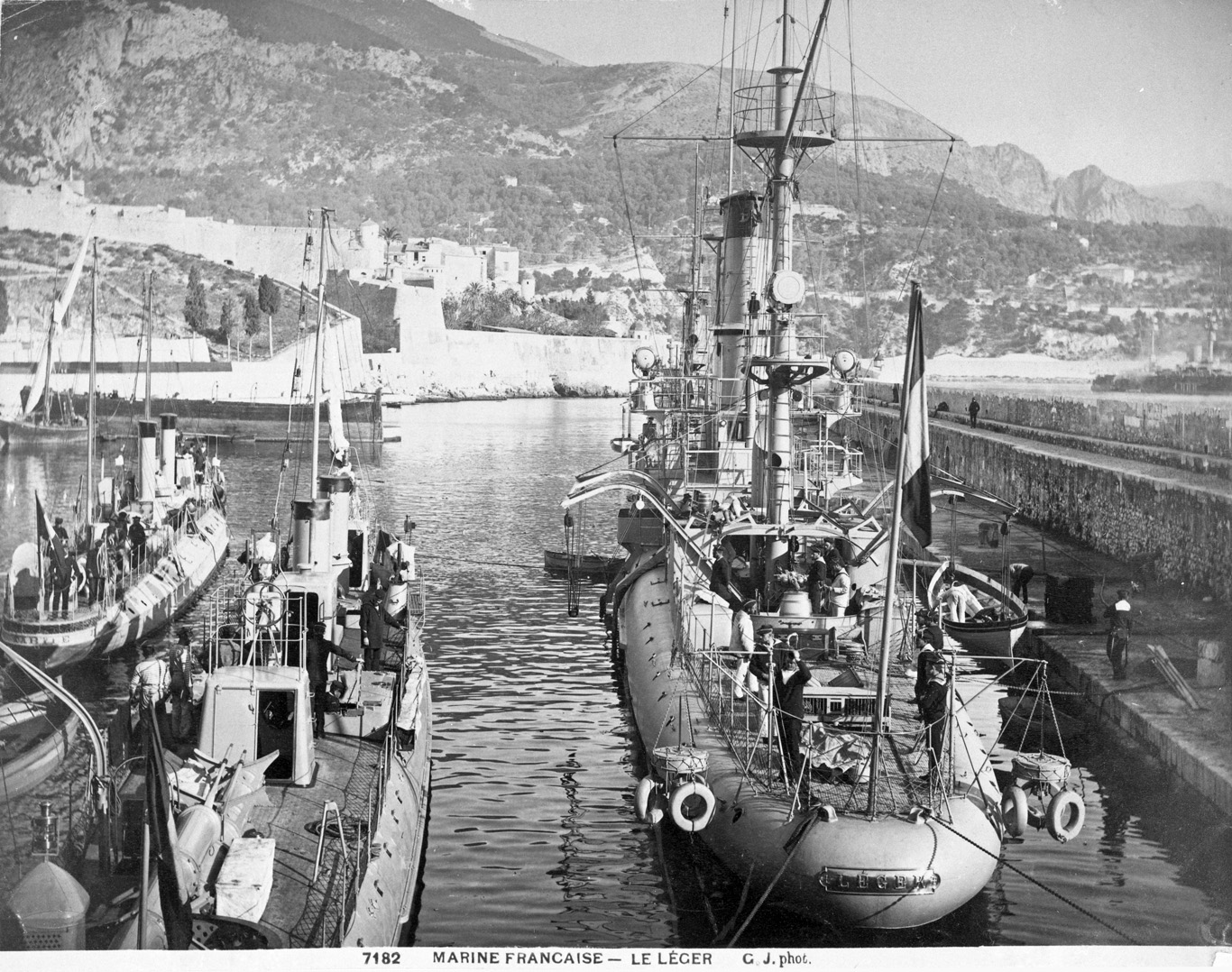
Léger (French torpedo aviso) at Villefranche in the early 1890s with seagoing torpedo boats Kabyle) (left) and Dragon (center). (Photo: NHHC Photo Archives NH-88792, G.J. Phot.)
Léger
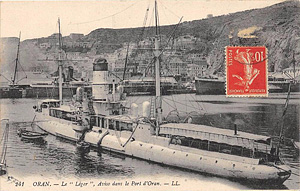
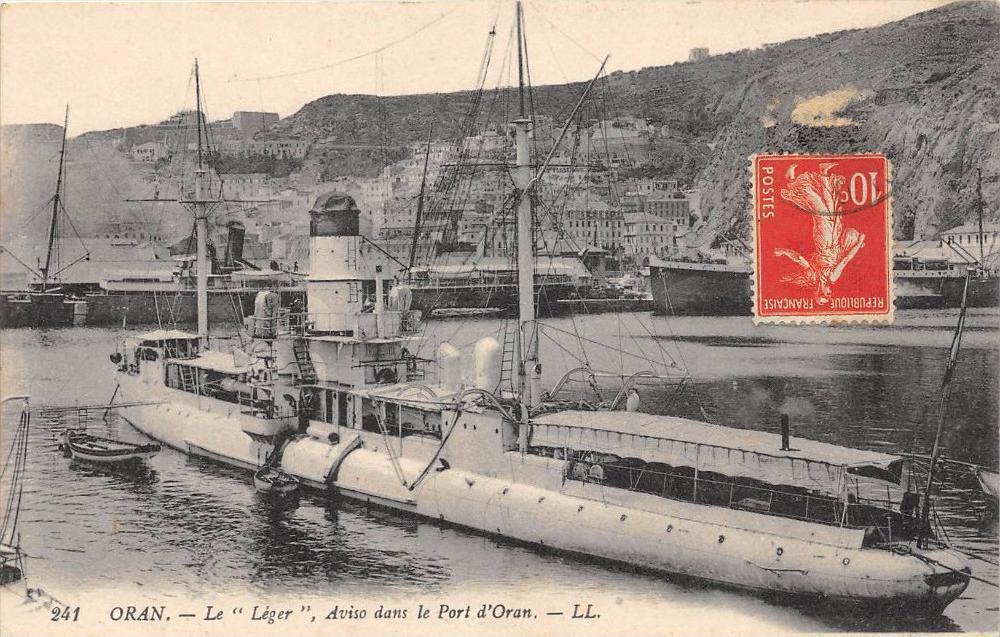
Léger (French torpedo aviso) in Oran, where she was assigned to the Défense Mobile between 1902 and 1907. The funnel appears to have been shortened somewhat and the main top has been removed. (Photo: Postcard by LL.)
Lévrier
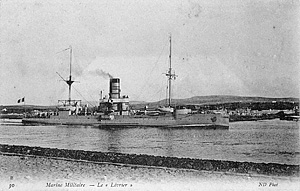
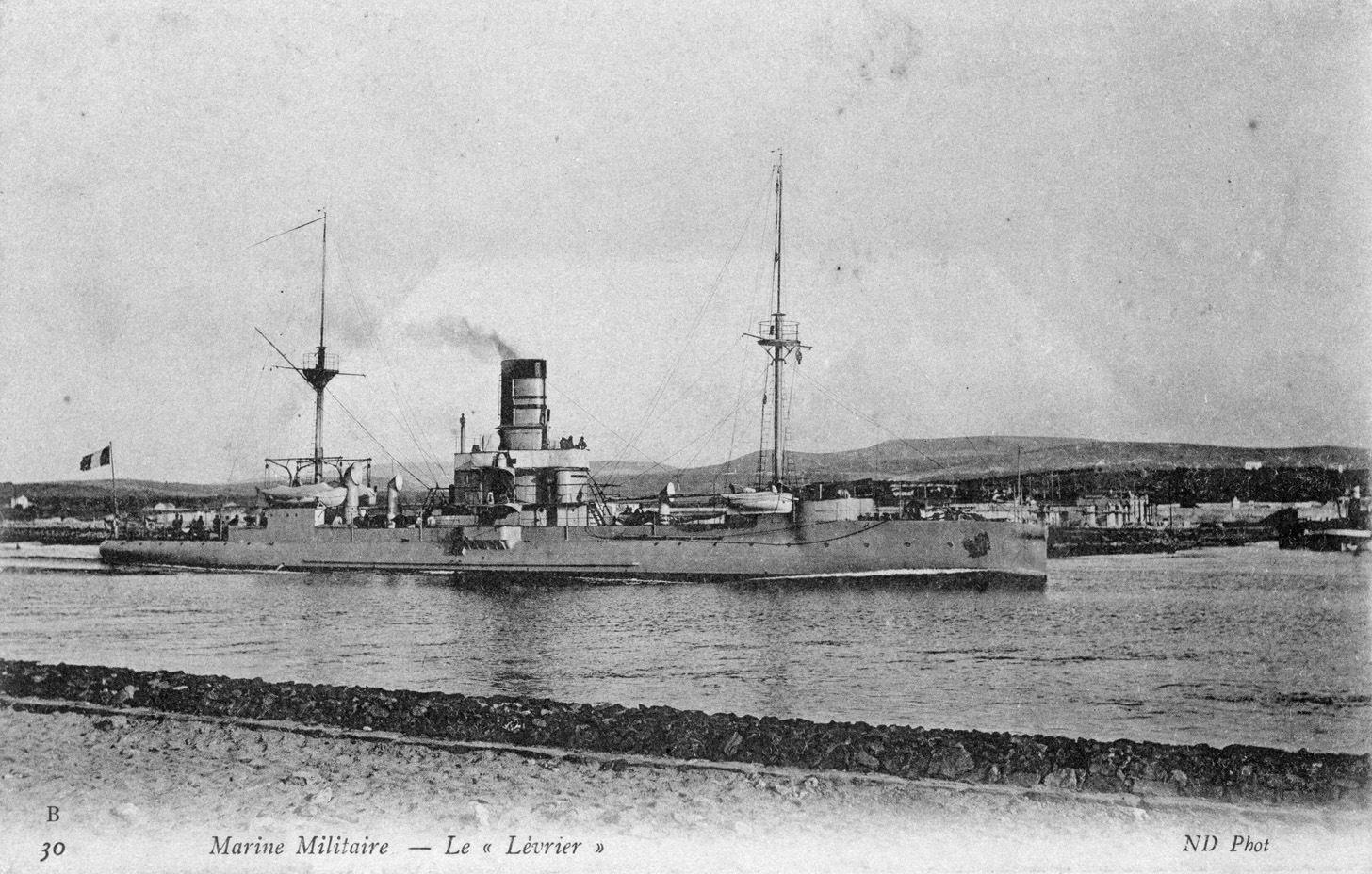
Lévrier (French torpedo aviso). The location may be the canal at Bizerte that was opened in 1896. (Photo: Postcard by ND Phot)
Lévrier
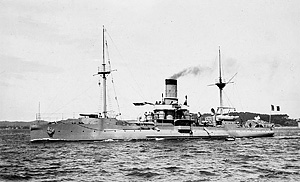
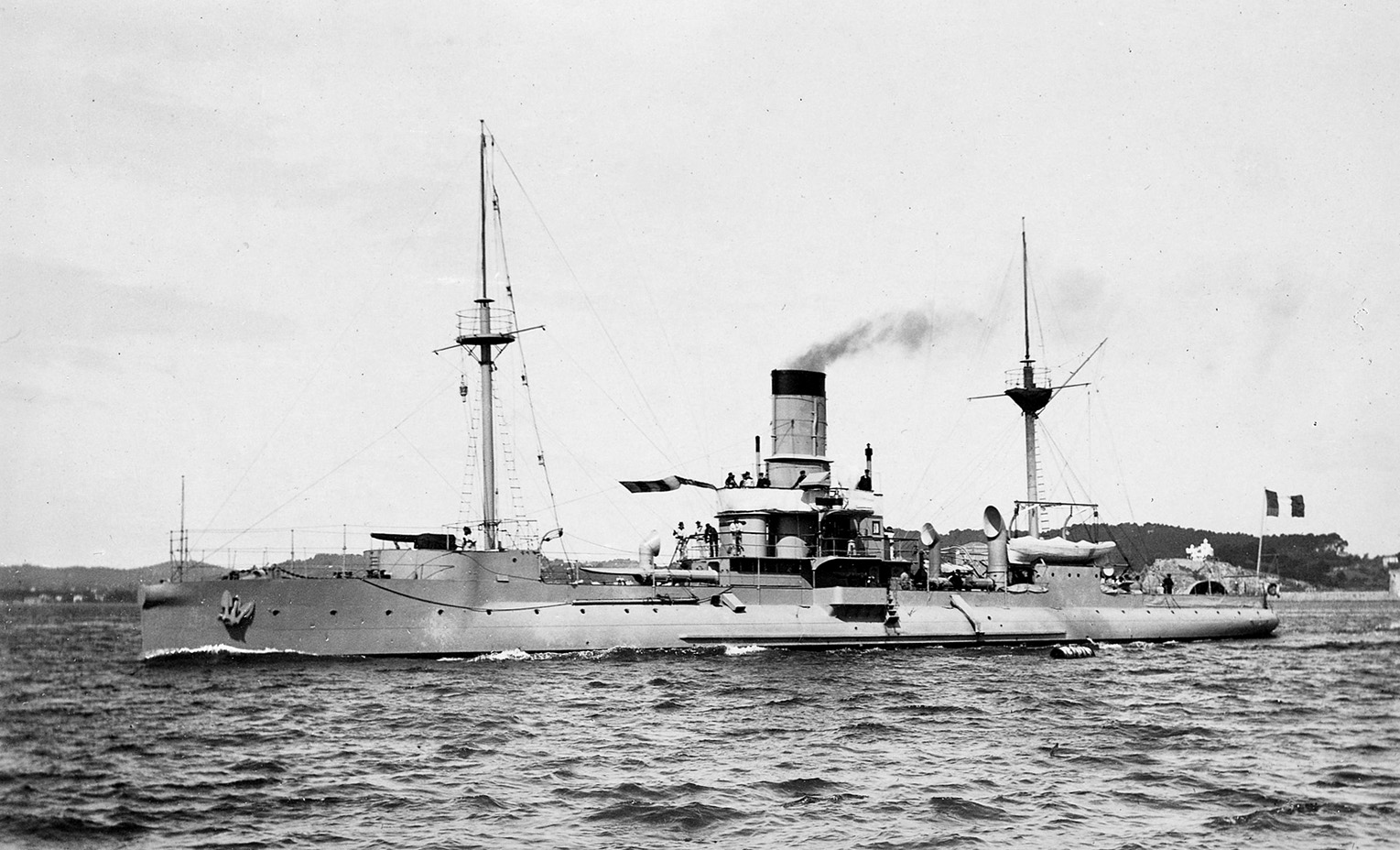
Lévrier (French torpedo aviso). All three torpedo tubes are visible here, with one in the bow, one between the foremast and the superstructure, and one between the superstructure and the after mast. Both of these were stowed to port but could be pivoted to fire on either side of the ship. (Photo: Private digital collection)
Lévrier
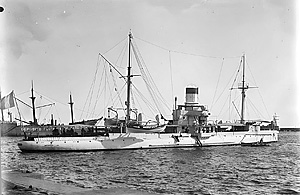
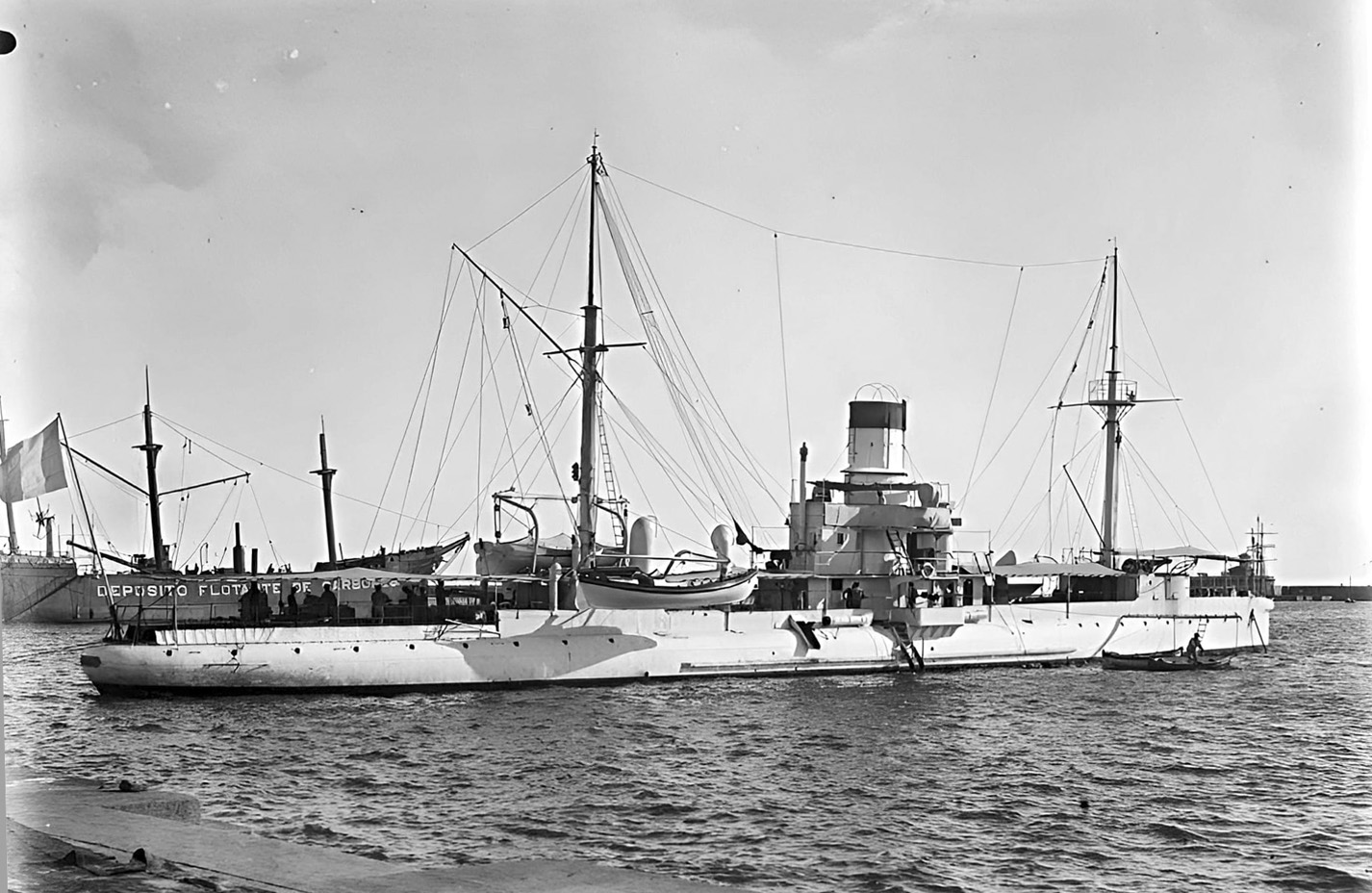
Léger or Lévrier (French torpedo aviso) at Barcelona, with a shortened funnel. Both ships were assigned to Défenses Mobiles in the Mediterranean between 1901 and 1907 and then deleted. (Photo: Private digital collection)
D'Iberville (1892) and Cassini (1893) classes
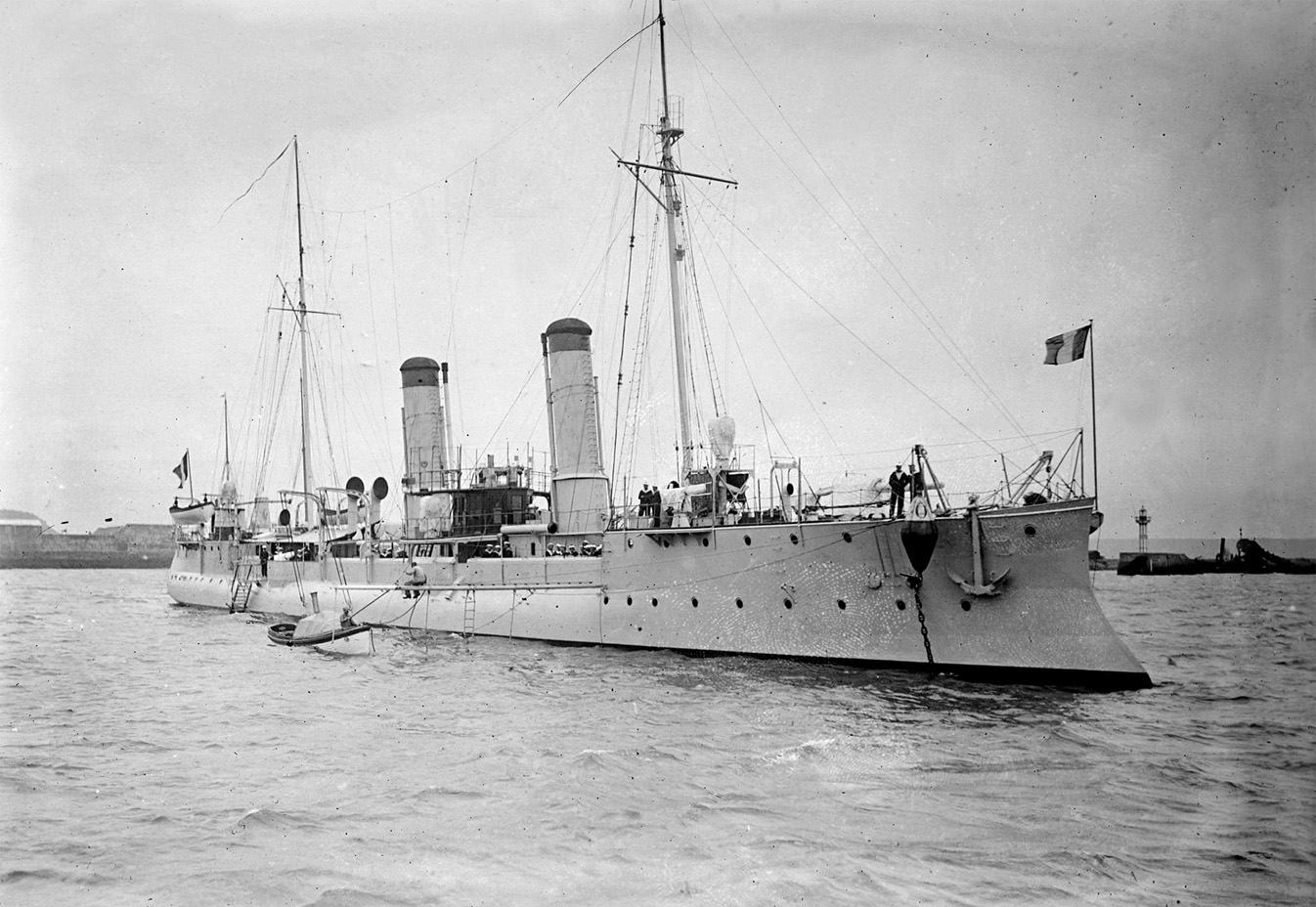
In 1890 four avisos-torpilleurs of 420 tons and 18 knots like Lévrier were added to the building program, but this type was soon replaced by one of 925 tons and 21.5 knots, probably influenced by the new Italian Partenope. Three units were built, all by different builders and differing in various details. The first, D'Iberville (1892), had six torpedo tubes: 1 in the bow, 1, in the stern, and 4 on twin deck mounts, one to starboard forward of the superstructure and one to port aft of it. Cassini (1893) and Casabianca (1894) were designed with only two tubes located like the twin mountings in D'Iberville, but they never carried them because in 1895 the Navy decided to remove from ships all above-water torpedo tubes that could not be properly protected.
D'Iberville
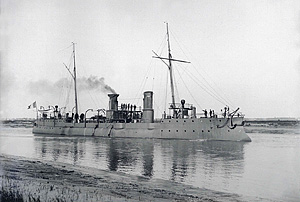
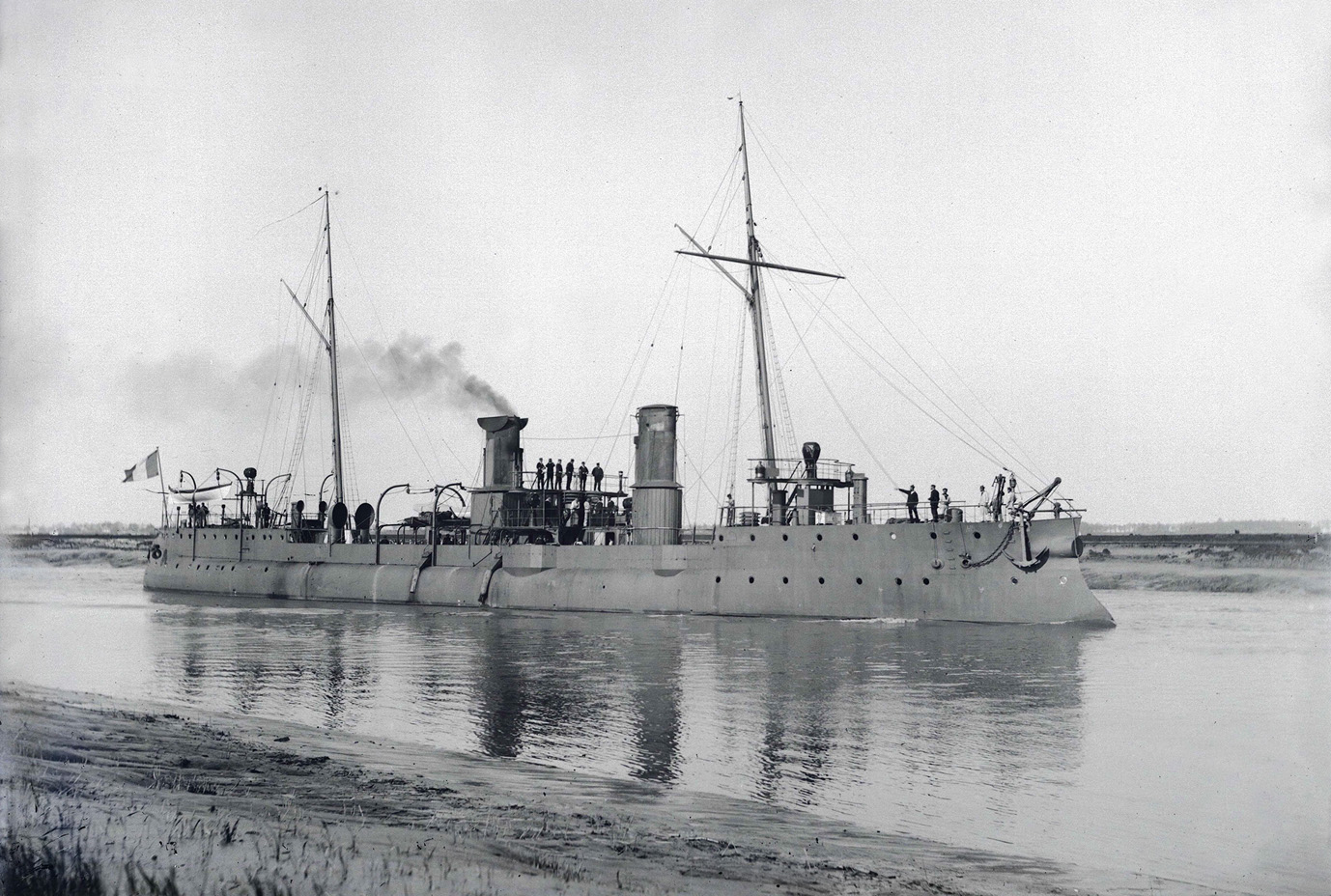
D'Iberville (French torpedo aviso) in the Charente in 1894 with partial armament and with the covers on the forward funnel closed. (Photo: Private digital collection and Wikimedia from SHD Archives Rochefort MR-5-G-494)
D'Iberville
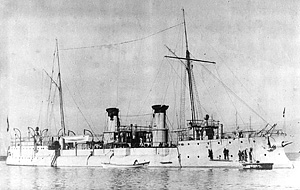
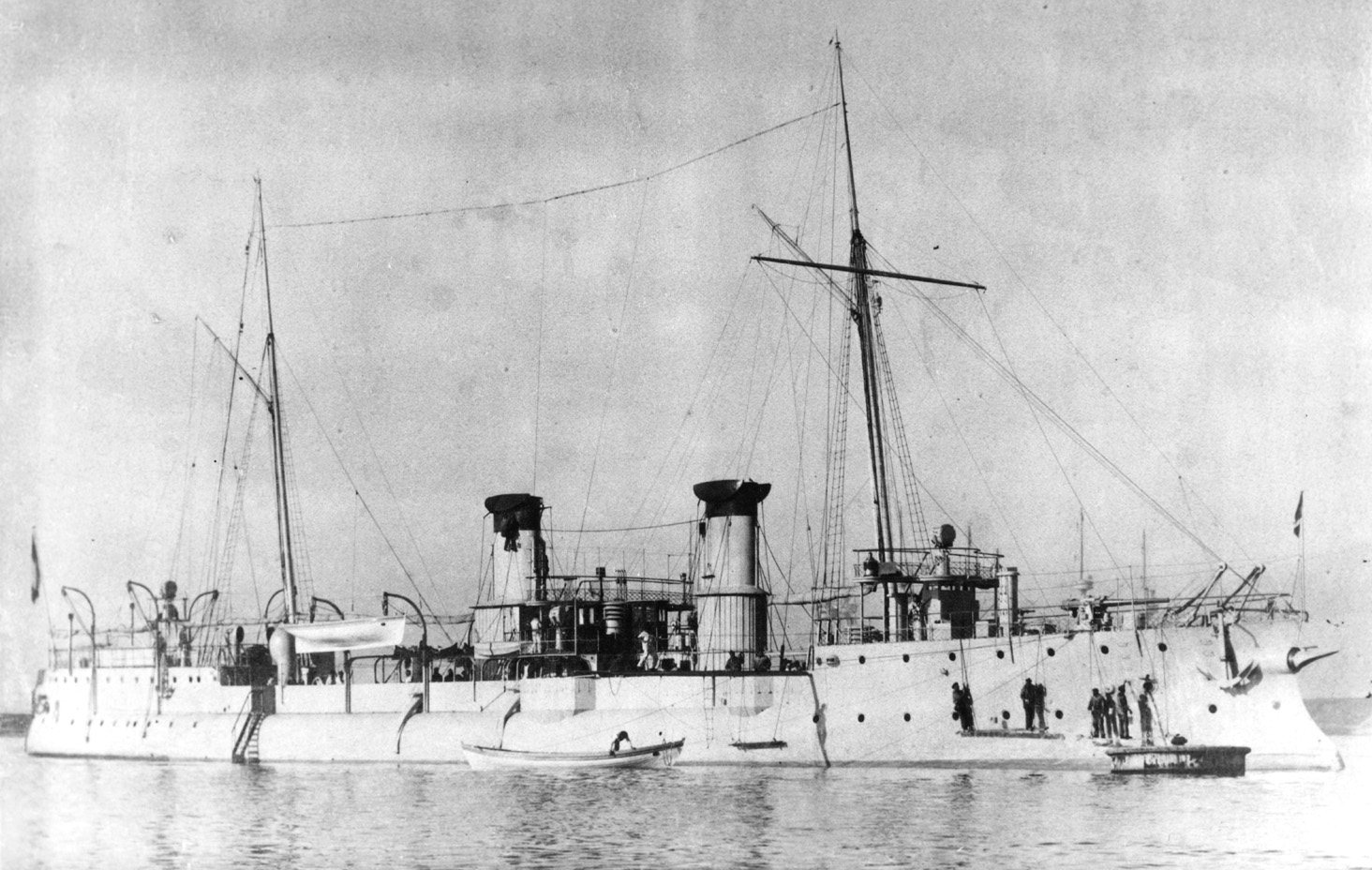
D'Iberville (French torpedo aviso). (Photo: NHHC Photo Archives NH-66093 from the Farenholt collection)
Cassini
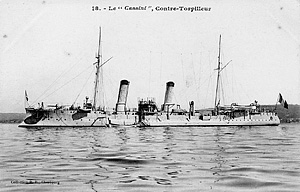
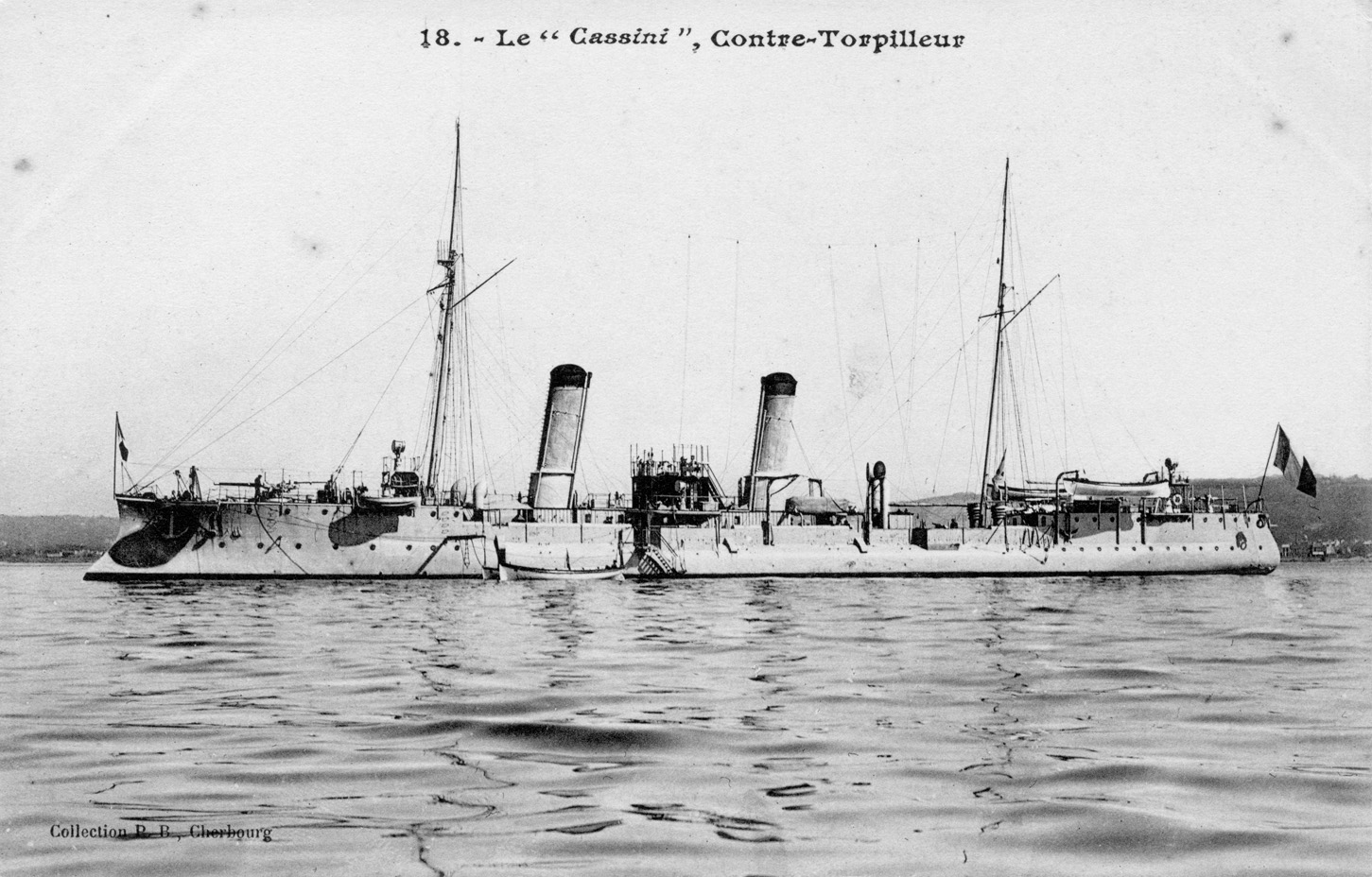
Cassini (French torpedo aviso). (Photo: Postcard by P.B. Cherbourg)
Cassini
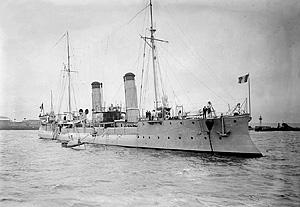
Cassini (French torpedo aviso) on 10 July 1905 during a visit of a British fleet to Brest. (Photo: Private digital collection from BNF-Btv1b532064546)
Casabianca
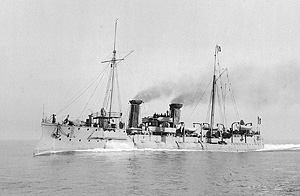
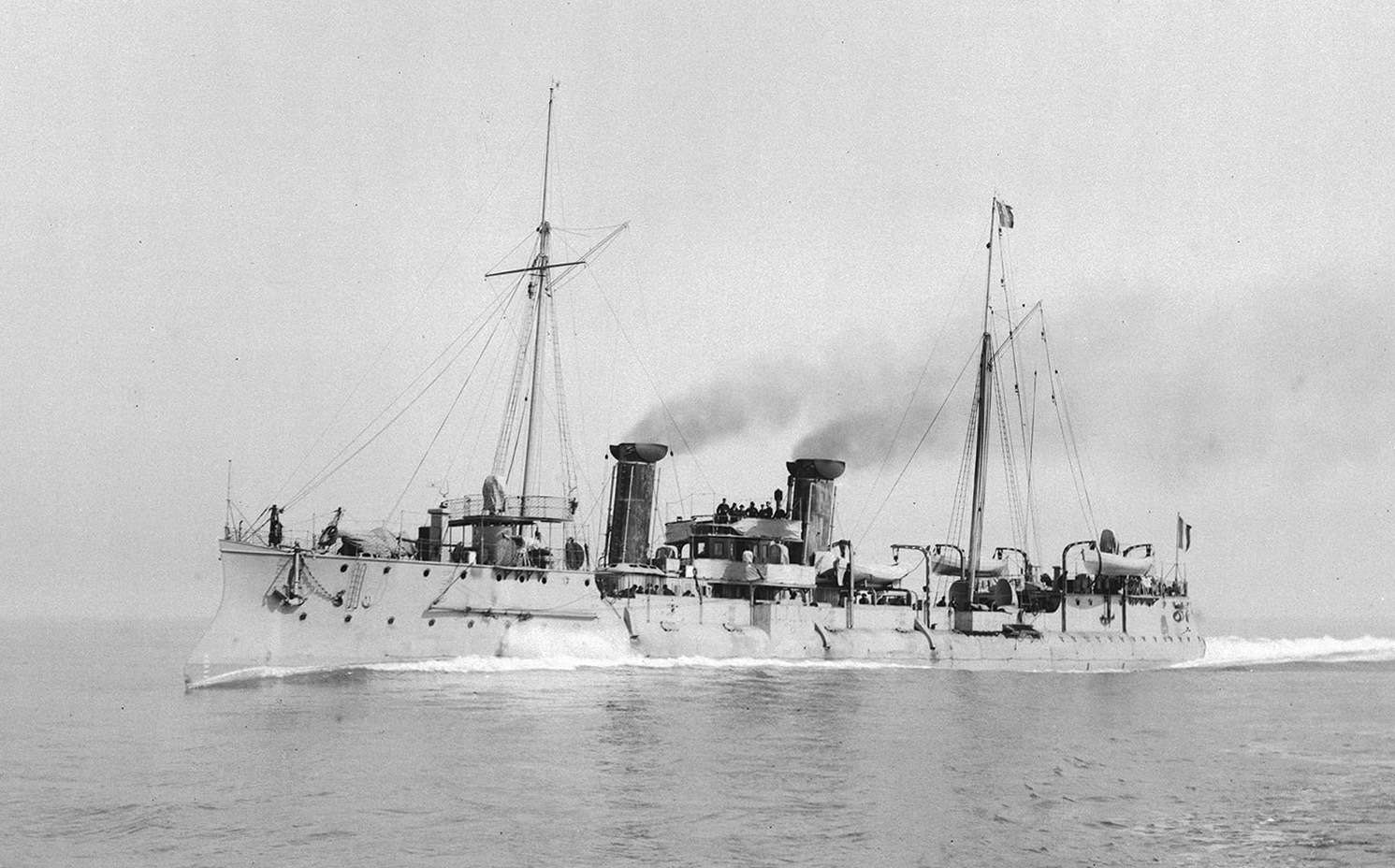
Casabianca (French torpedo aviso, Cassini class) on trials with funnel covers open. (Photo: Private digital collection and Wikimedia from SHD Archives Rochefort MR-5-G-117)
Casabianca
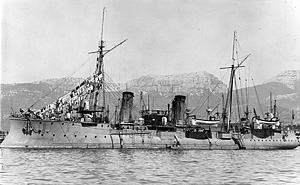
Casabianca (French torpedo aviso, Cassini class) with funnel covers closed. (Photo: NHHC Photo Archives NH-64457, from ONI)
Dunois class (1896)
This class, which first appeared on the fleet list in 1896 as Contre-torpilleurs d'escadre, was designed around four large double-ended Normand boilers of a new type which were to produce a speed of 22.5 knots. The hull lines were derived from the seagoing torpedo boat Dragon. and the hull above the waterline was lowered at the ends over about an eighth of the ship's length. Although they fell short of their designed speed and although they steered badly, the ships were well regarded as excellent sea boats.
Dunois
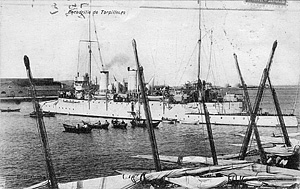
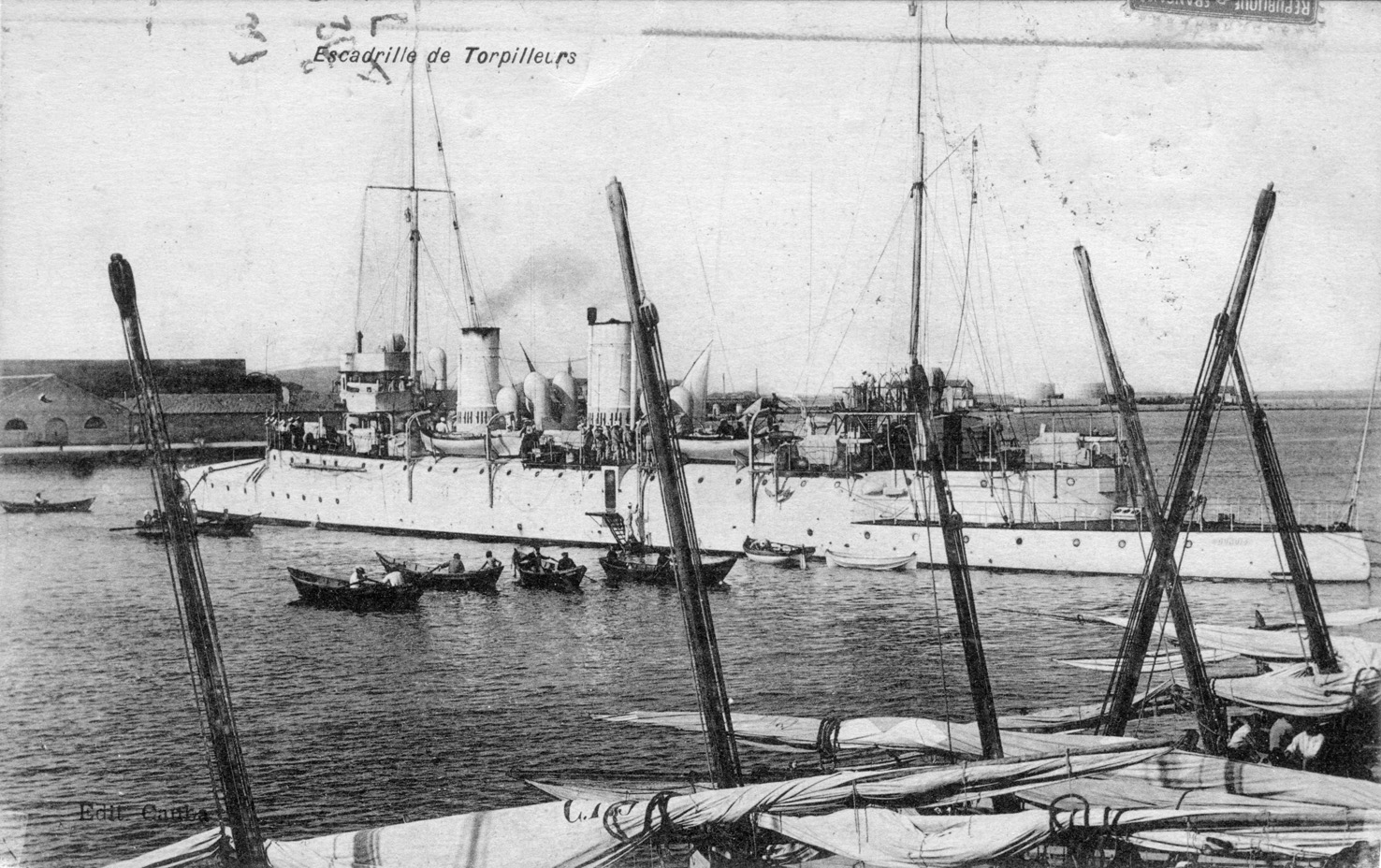
Dunois (French torpedo aviso) in a Mediterranean port. The publisher of the card, F. Cauba, was based in Cette and documented the Languedoc region. (Photo: Postcard by Edit. Cauba, Cette)
Dunois
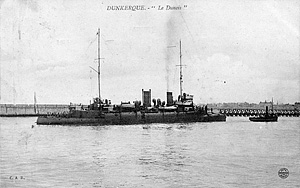
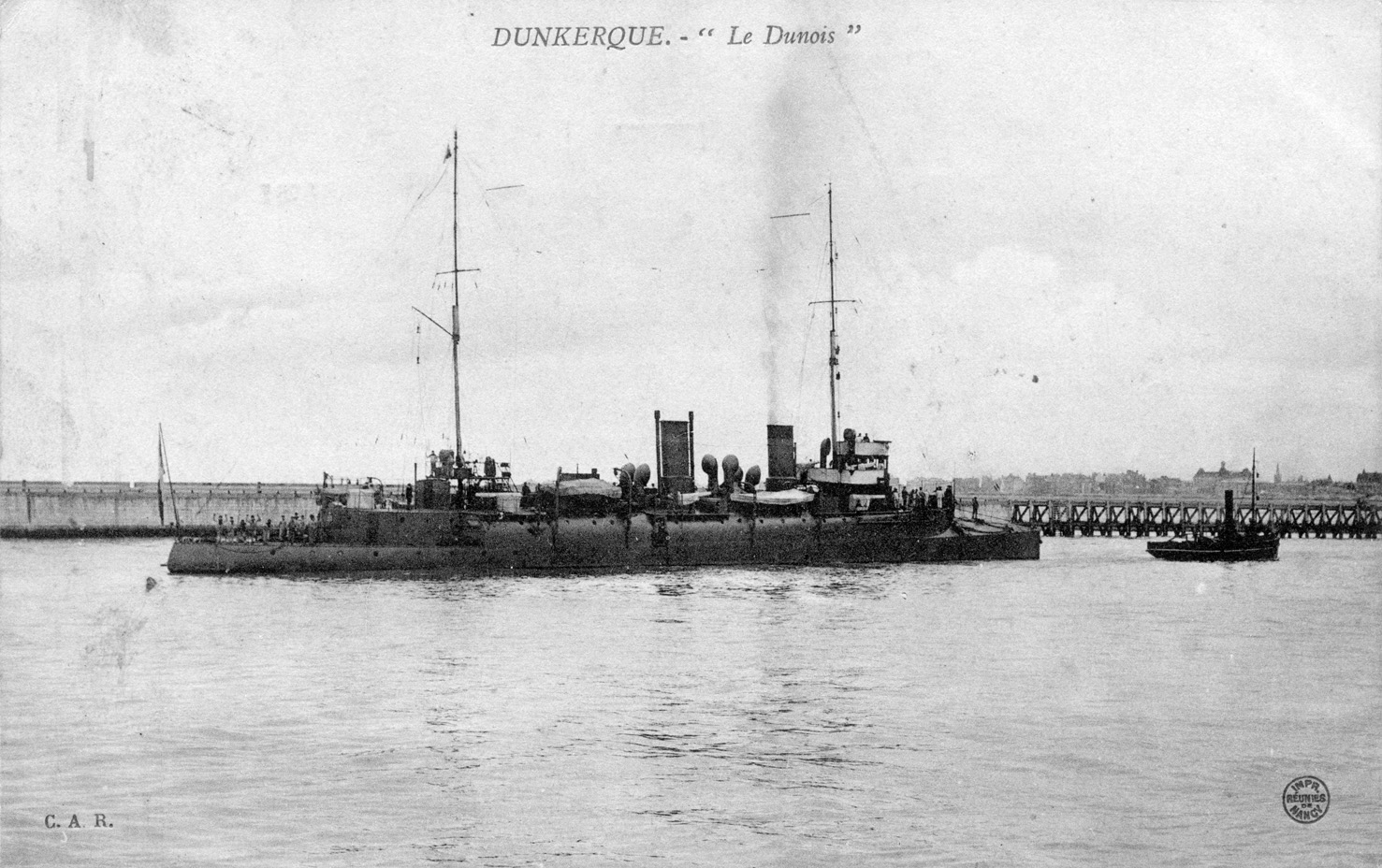
Dunois (French torpedo aviso) entering Dunkirk led by a tug or pilot boat. (Photo: Postcard by C.A.R., printed in Nancy)
Dunois
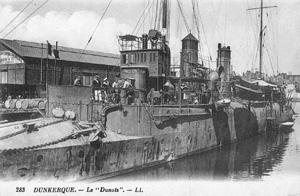
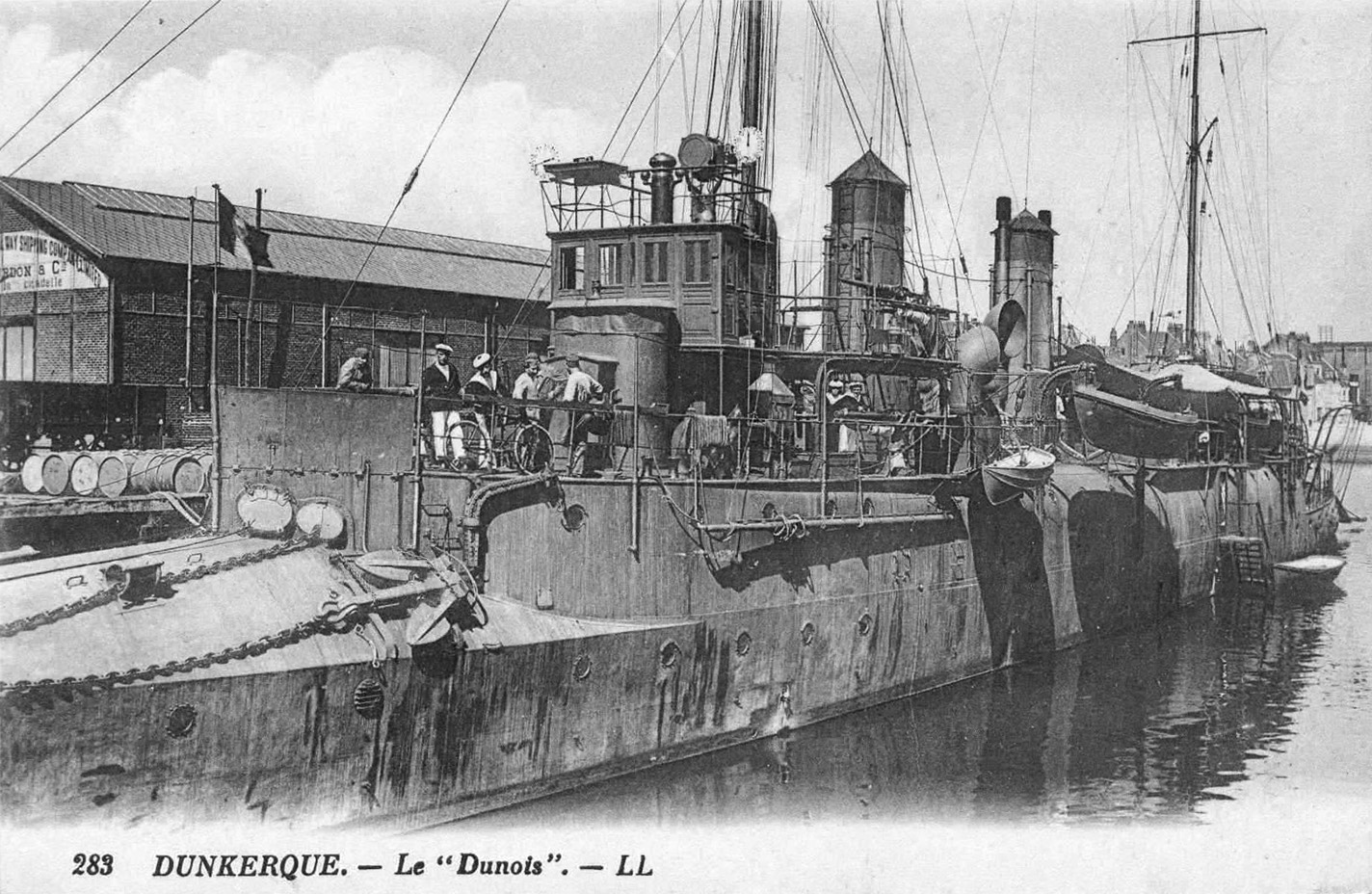
Dunois (French torpedo aviso) at Dunkirk showing details of her bow and upperworks. (Photo: Postcard by LL.)
La Hire
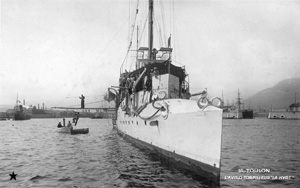
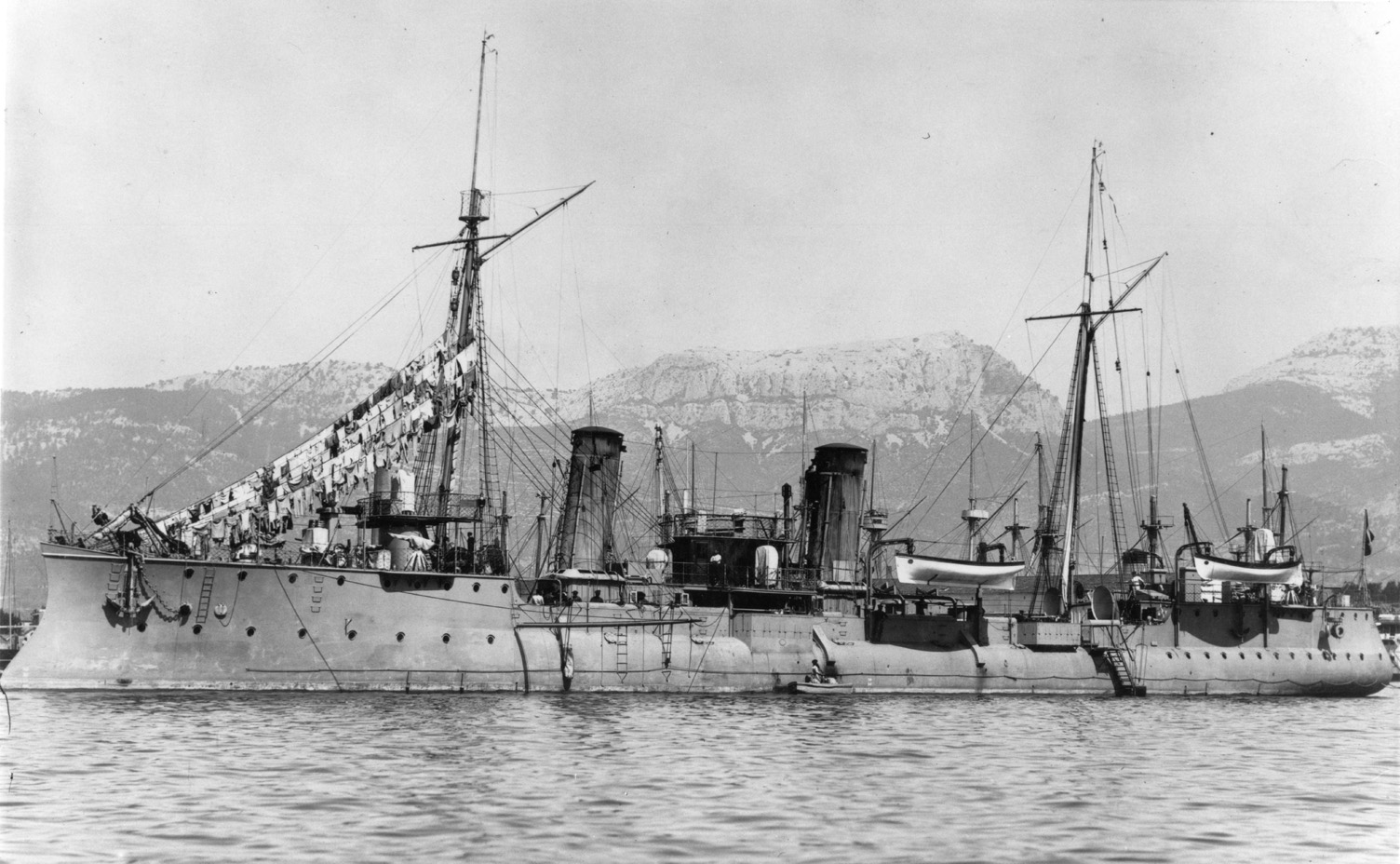
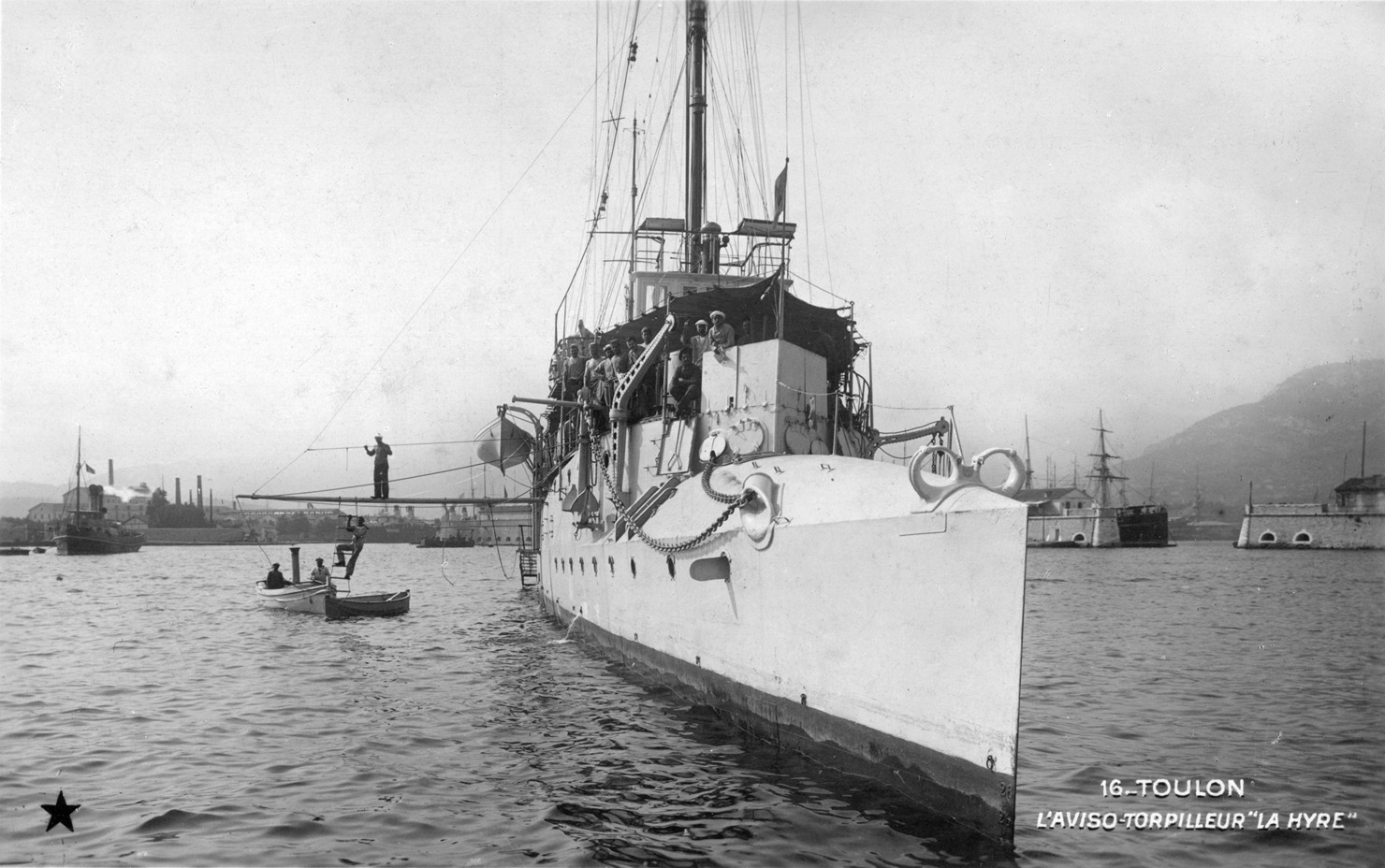
La Hire (French torpedo aviso) at Toulon showing the unusual arrangement of the bow in this class. (Photo: Photo card by Étoile, Paris)
La Hire
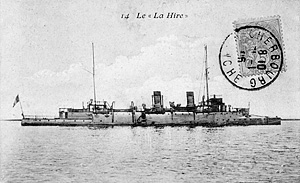
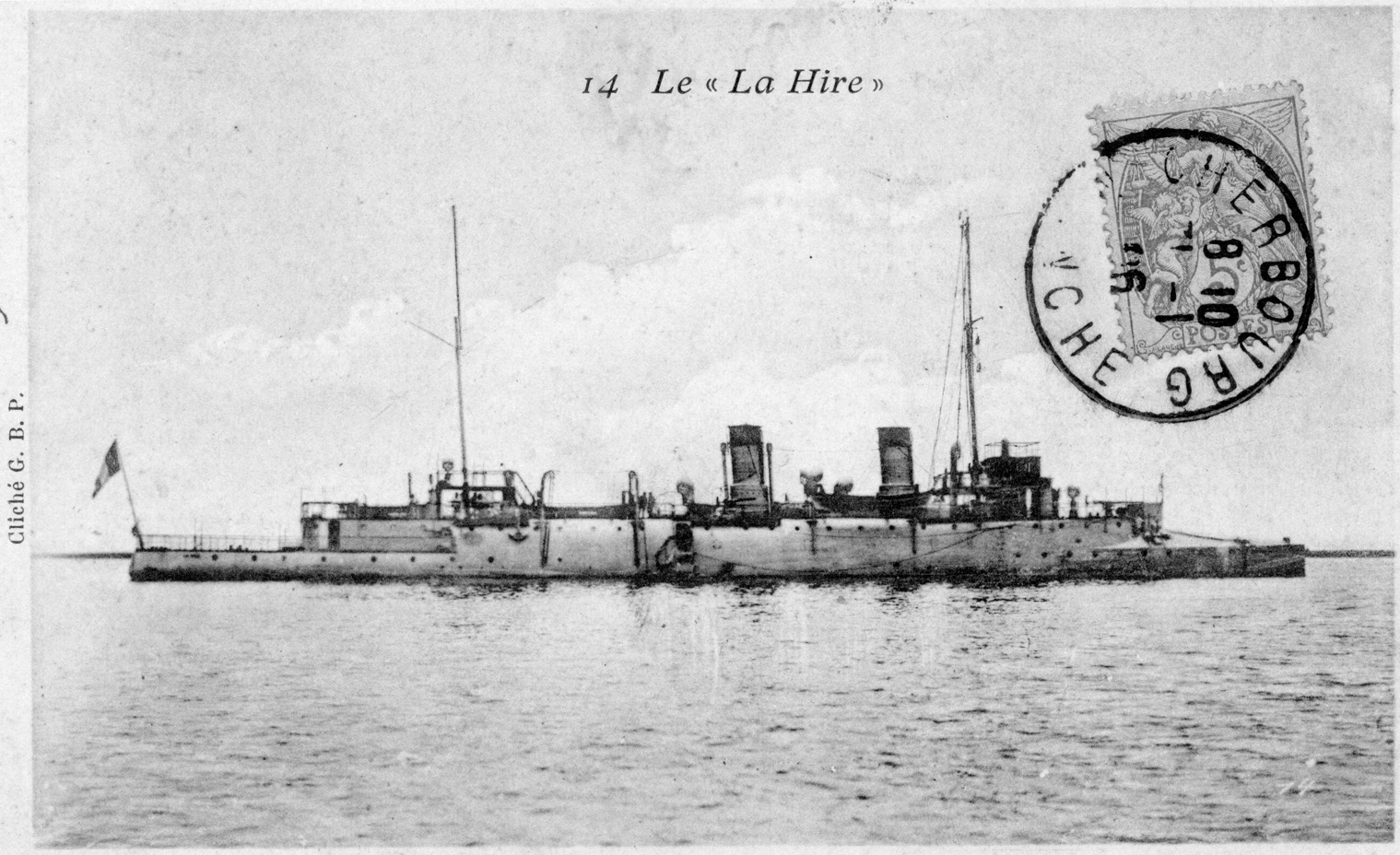
La Hire (French torpedo aviso) at Cherbourg on a postcard mailed in 1906. (Photo: Postcard by G.B.P.)