French Navy Photo Galleries Home
Smaller French Gunboats, 1859-1882: Photo Gallery
Gun Launches
In fleet lists as Chaloupes-canonnières
Click on a photo to prompt a larger view of the same image.
Canonnière No. 1 class (on list 1859)
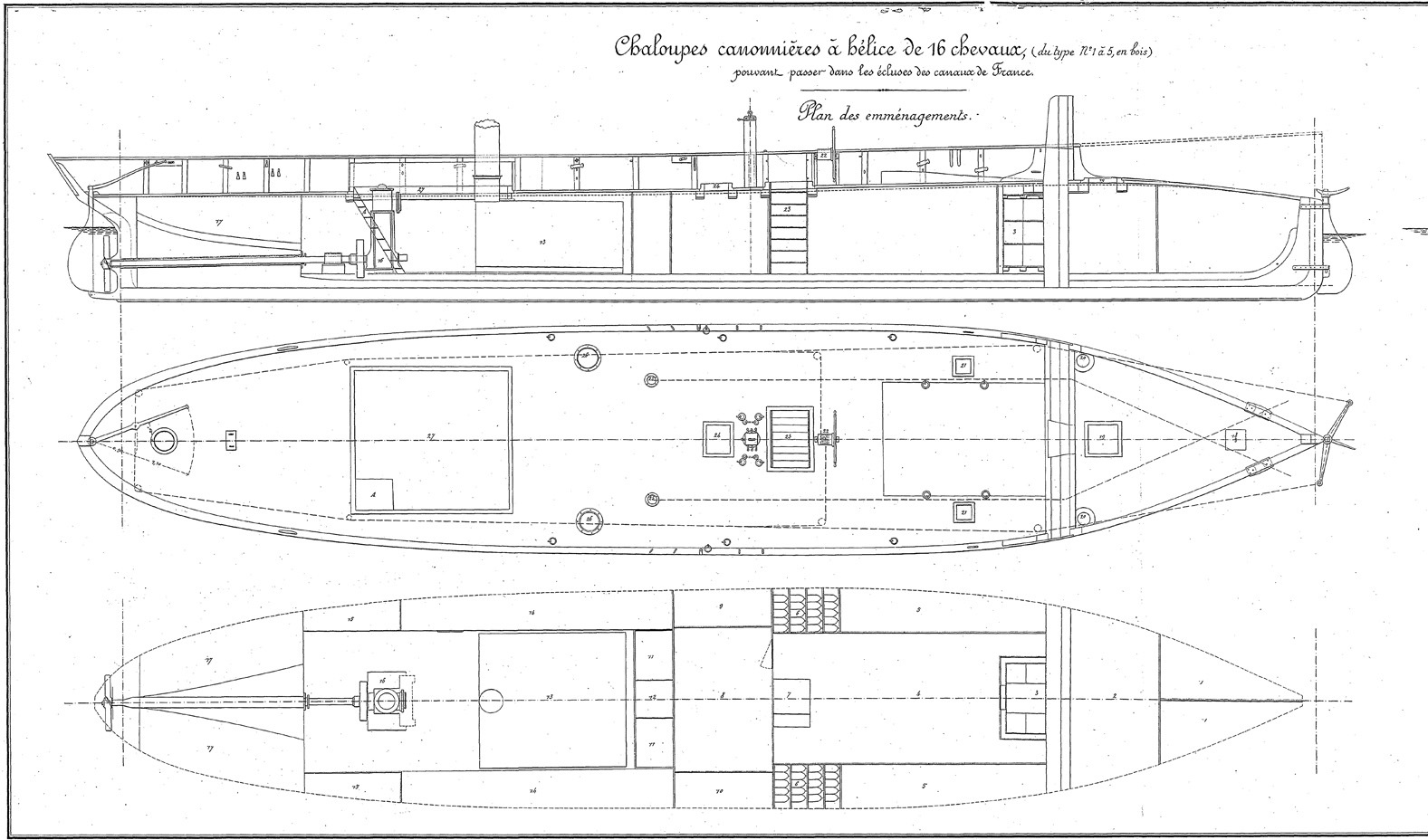
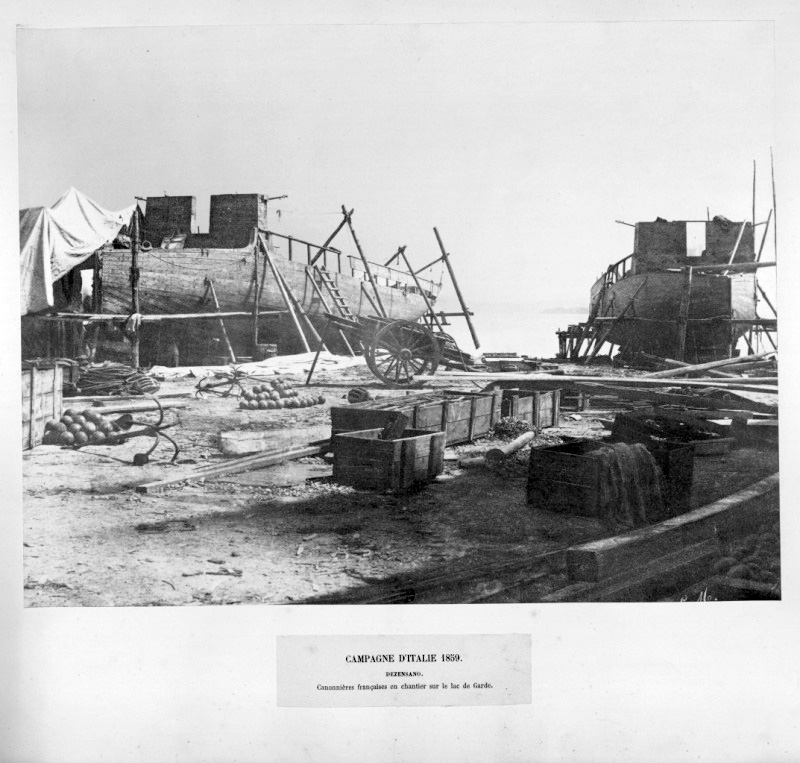
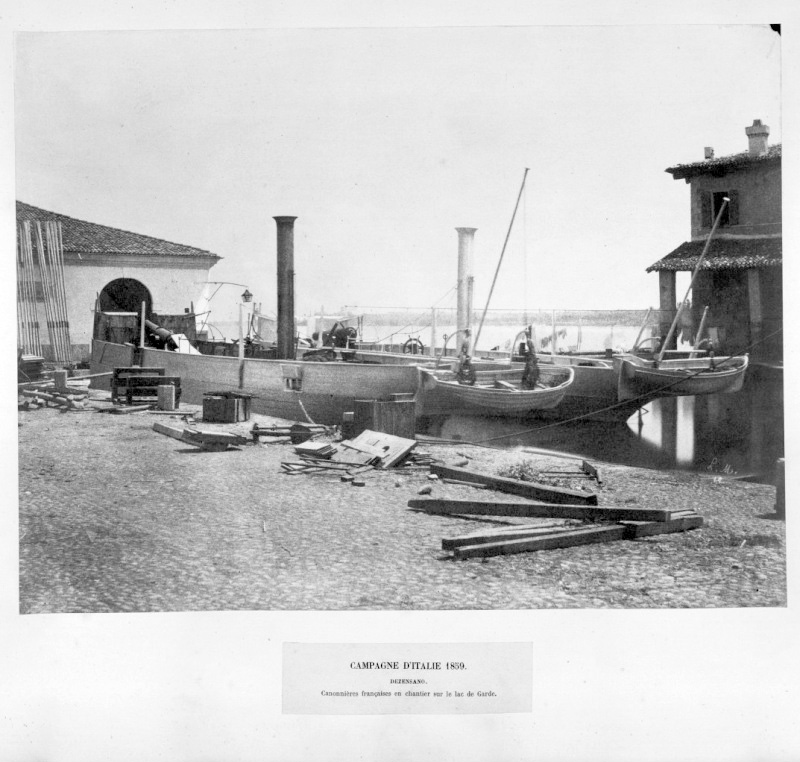
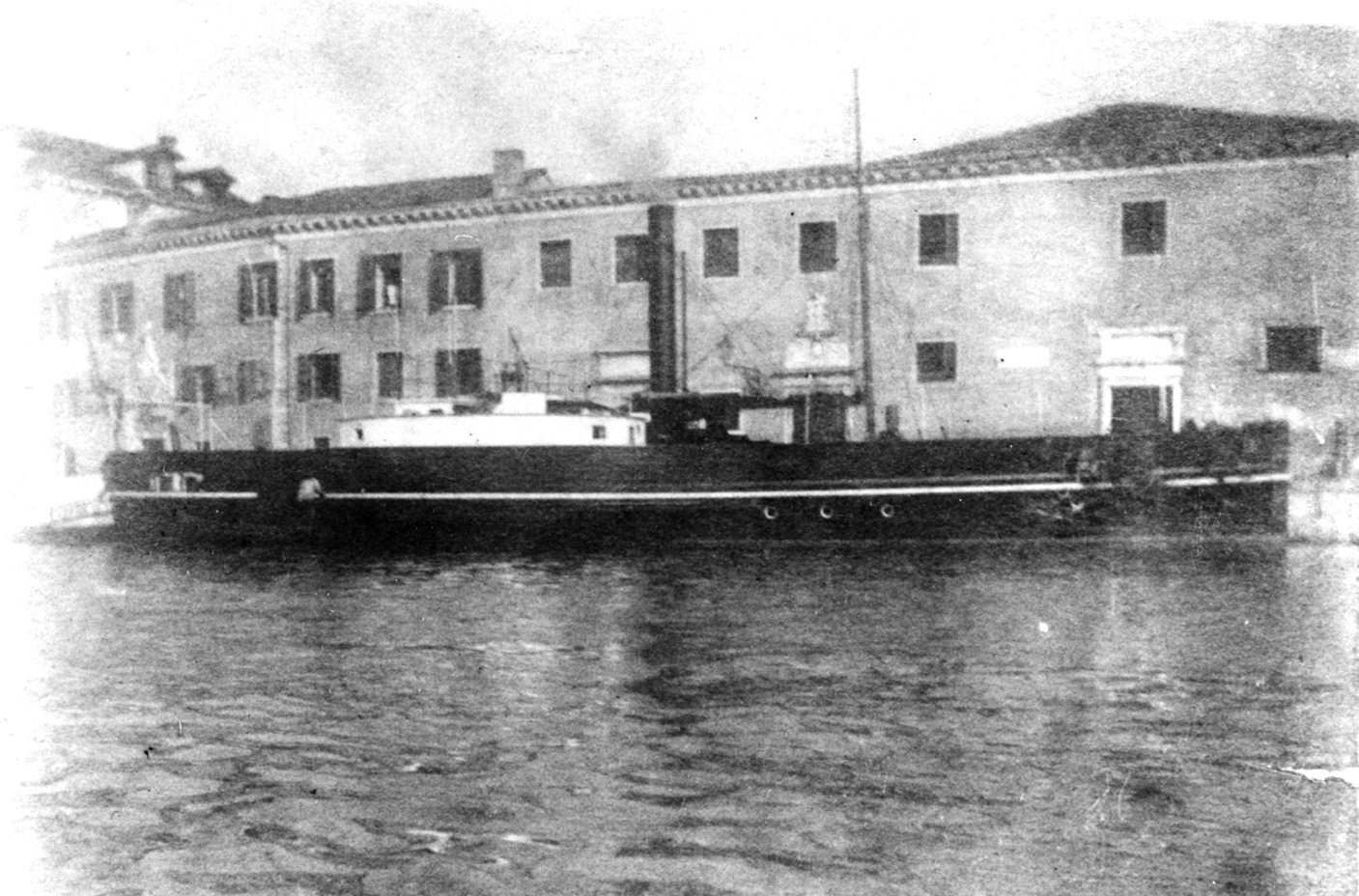
The first batch of ten gun launches (Nos. 1-10) was built in early 1859 for use on rivers and lakes in Napoleon III's northern Italian campaign. Designed by Dupuy de Lôme, they had wooden hulls, one gun behind a bulwark forward, one funnel, one removable mast, and a cutter rig. They were not capable of being dismantled for transportation but could pass through the locks of the canals in France.
Canonnière No. 1 class
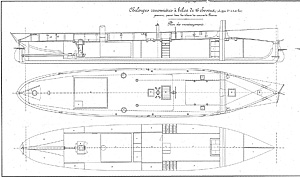
Canonnière No. 1 class (Chaloupe-canonnière). (Drawing: Atlas du Génie Maritime, 2e série, GM11PL0587)
Canonnière No. 1 class
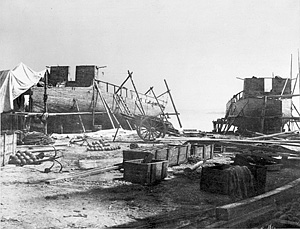
Canonnière No. 1 class (Chaloupe-canonnière) being assembled at Desenzano on Lake Garda in northern Italy. From an album of 11 photos by Léon Méhédin of the 1859 Italian campaign. (Photo: BNF gallica-btv1b610)
Canonnière No. 1 class
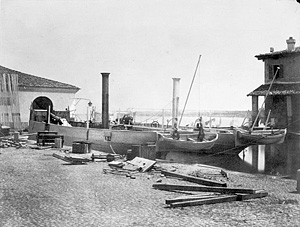
Canonnière No. 1 class (Chaloupe-canonnière) being assembled at Desenzano on Lake Garda in northern Italy. From an album of 11 photos by Léon Méhédin of the 1859 Italian campaign. (Photo: BNF gallica-btv1b611)
Canonnière No. 8
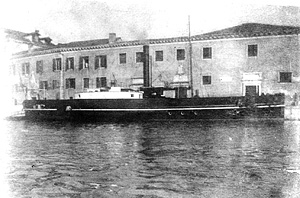
Canonnière No. 8 (Chaloupe-canonnière) in service with the Italian Navy between 1861 and 1878 as Torrione. (Photo: NHHC Photo Archive NH-88702)
Canonnière No. 11 class (1859)
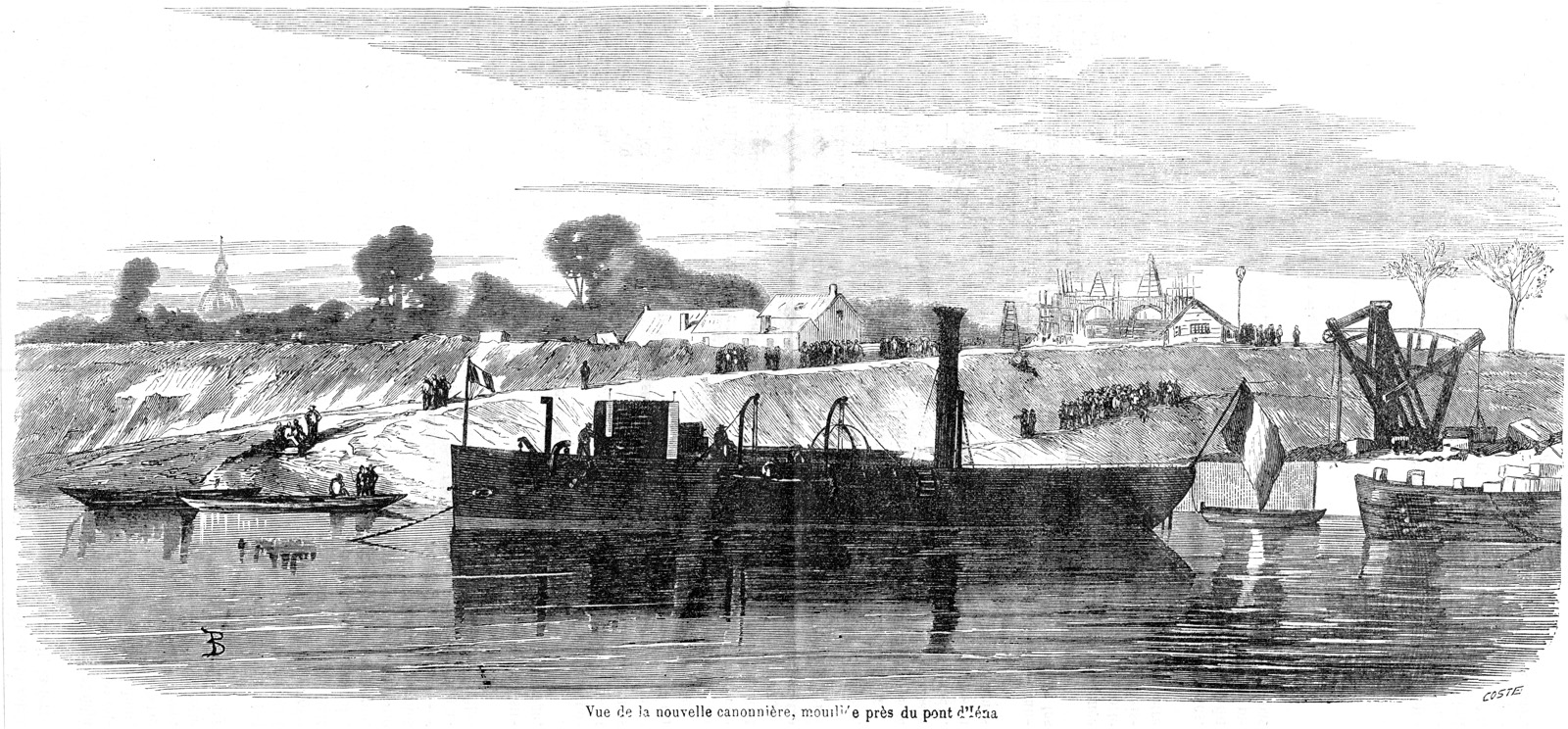
An additional wooden-hulled gun launch was built in early 1859 to plans by Captain Augustin Dupouy. She was designed to be capable of being dismantled for transportation. She was put on display in Paris in April 1859 before proceeding to the Adriatic.
Canonnière No. 11 (Guêpe)
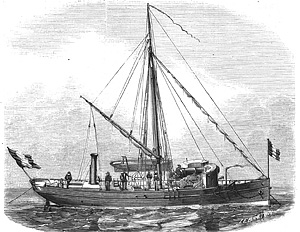
Canonnière No. 11 (Guêpe) (Chaloupe-canonnière) moored near the Pont d'Iéna at Paris in April 1859. She was designed by Capitaine de vaisseau Augustin Dupouy. (Drawing: L'Illustration, 23 April 1859, p. 261)
Canonnière No. 11 (Guêpe)
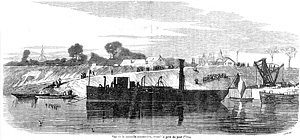
Canonnière No. 11 (Guêpe) (Chaloupe-canonnière) moored near the Pont d'Iéna at Paris in April 1859. She had come from Cherbourg where she had been commissioned after being built by Lucien Arman at Bordeaux. (Drawing: Contemporary press, Shipscribe collection)
Canonnière No. 12 class (1860)
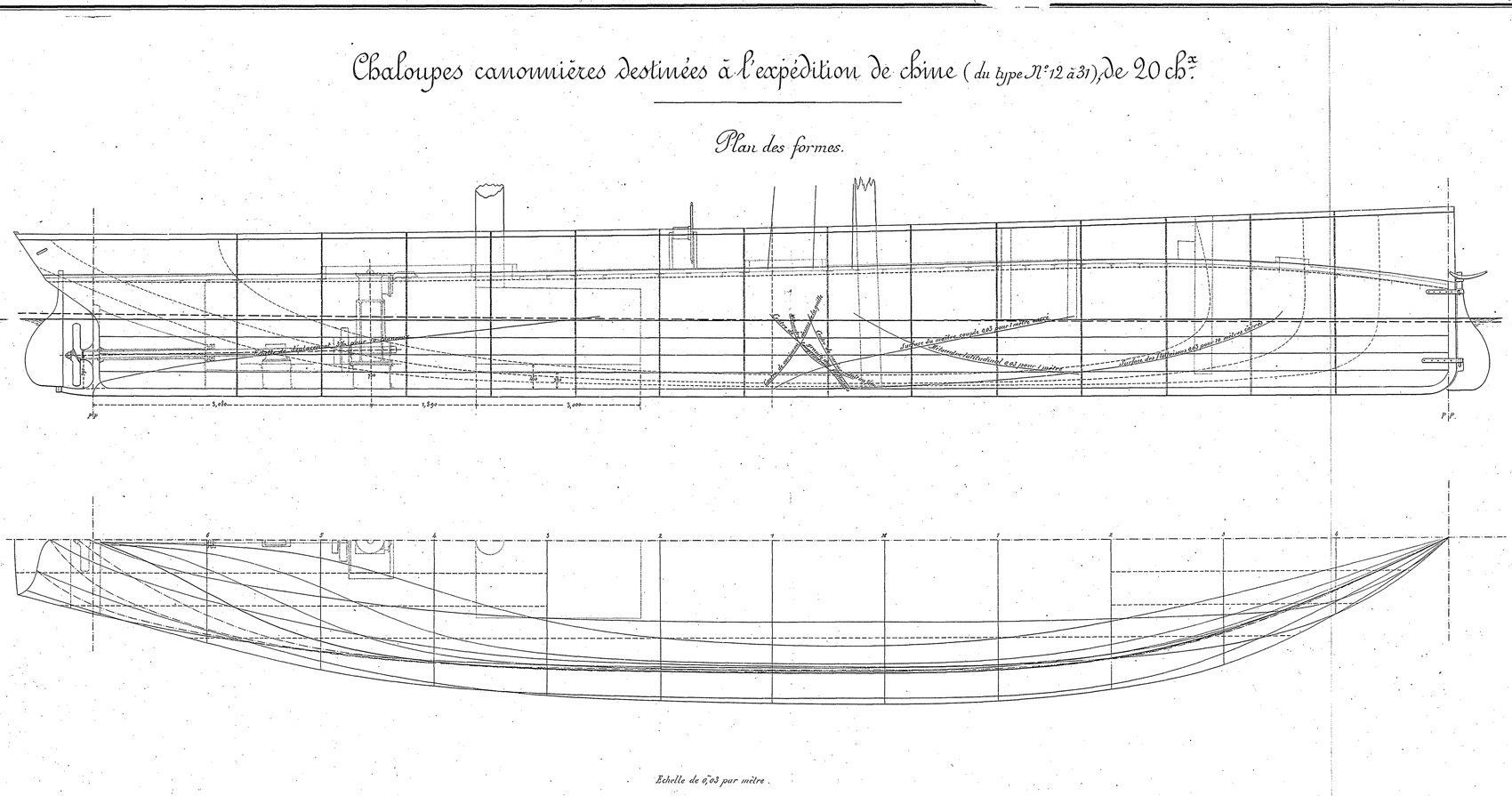
In late 1859 twenty gun launches (Nos. 12-31) were ordered for use in an expedition to northern China. Also designed by Dupuy de Lôme (Type 1859), they were generally similar in layout and appearance to the No. 1 type, but they had iron instead of wood hulls and were designed to be disassembled into 15 sections for transportation to China. Most were sent south to Cochinchina in 1861-62.
Canonnière No. 12 (Arc) class
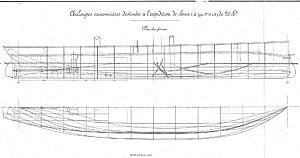
Canonnière No. 12 (Arc) class (Chaloupe-canonnière). (Drawing: Atlas du Génie Maritime, 2e série, GM11PL0590)
No. 12 or No. 32 class
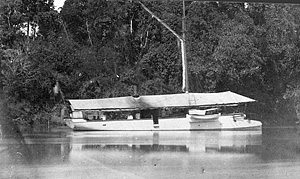
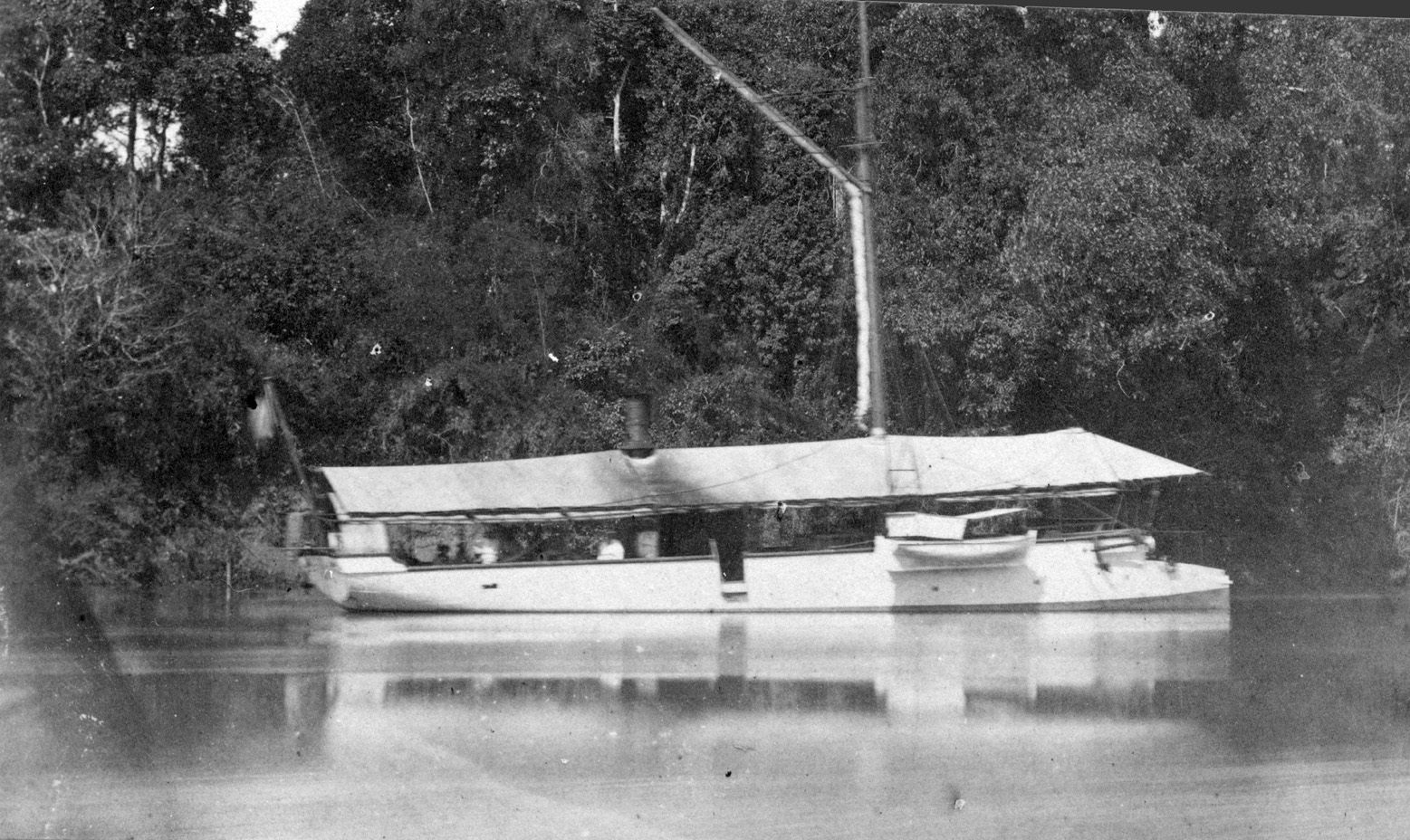
Chaloupe-canonnière of the No. 12 or No. 32 class. The No. 32 class, again designed by Dupuy de Lôme, was 1.55m longer than the No. 12 class but was otherwise similar. Both classes were built for service in Cochinchina. The canvas canopy over the entire hull became a permanent feature of these craft there, even during combat. (Photo: Shipscribe collection)
No. 12 or No. 32 class
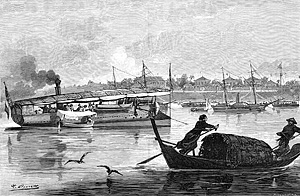
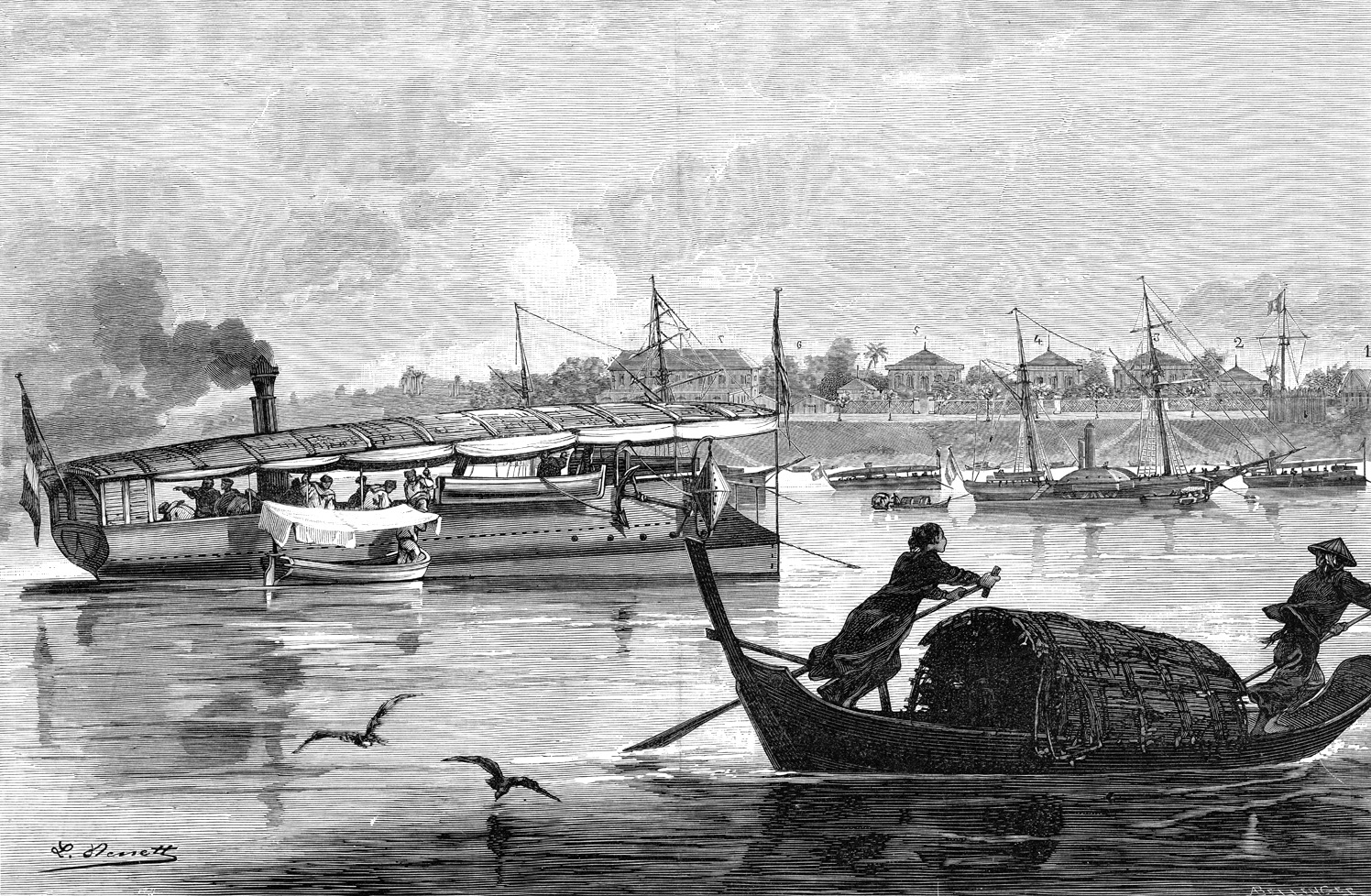
Chaloupe-canonnière in the roadstead of the French concession at Hanoi in early 1883 around the time that French operations on the Red River began. The most likely candidates are Carabine (No. 13) and Massue (No. 36), both of which participated in a bombardment of Hanoi in April 1882. (Drawing: L'Illustration, 28 April 1883, page 260)
Canonnière No. 32 class (1863)
The first eight vessels of this class (Nos. 32-39) were ordered in 1862 for an expedition to Cochinchina and one (No. 40) was added in late 1863 for use in New Caledonia. Their design (Type 1862), again by Dupuy de Lôme, essentially duplicated the No. 12 class but had more powerful engines, was 1.55m longer, and was divided into 16 instead of 15 sections.
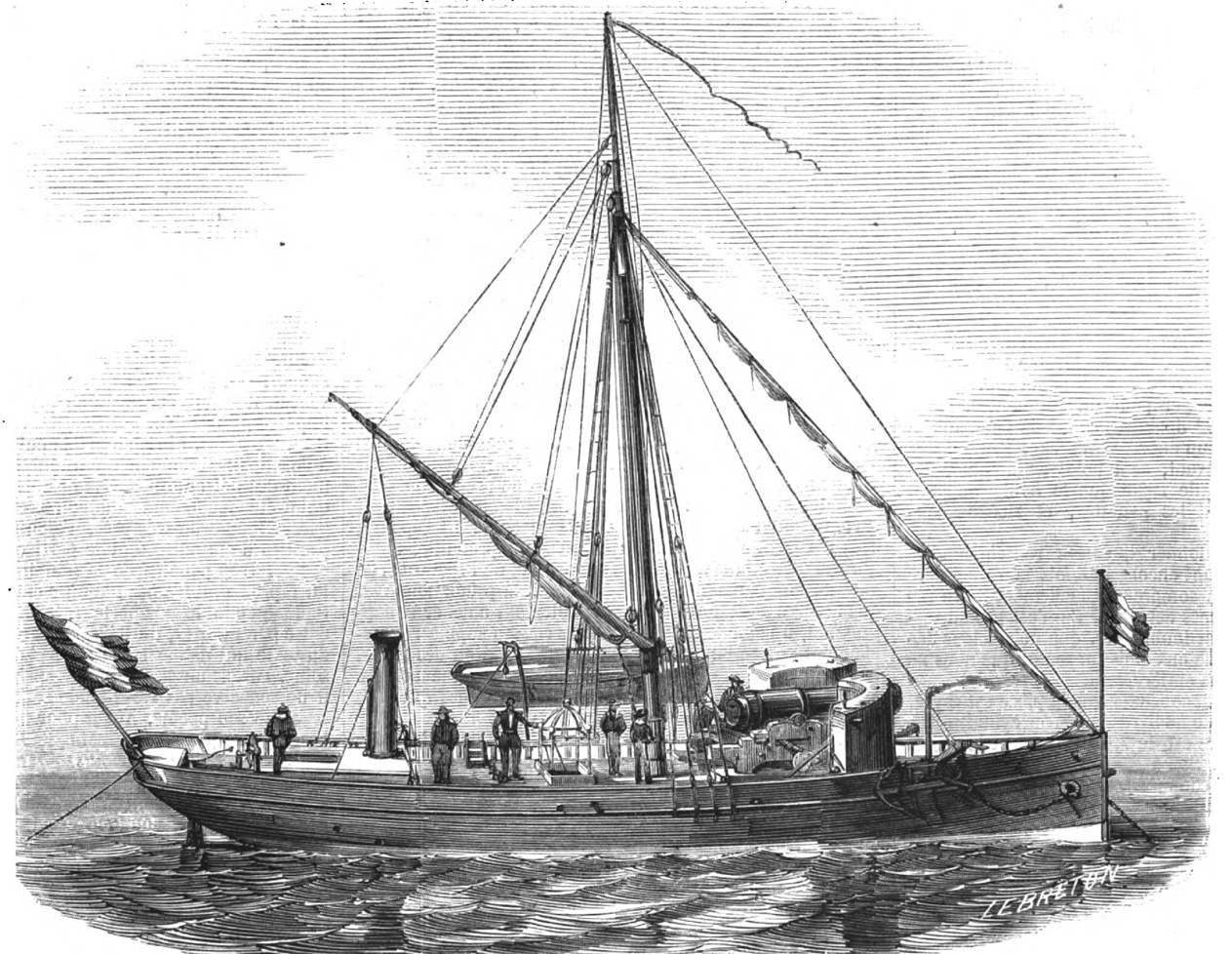
Canonnière No. 34 (Harpon)
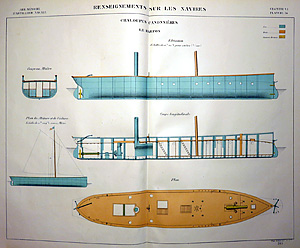
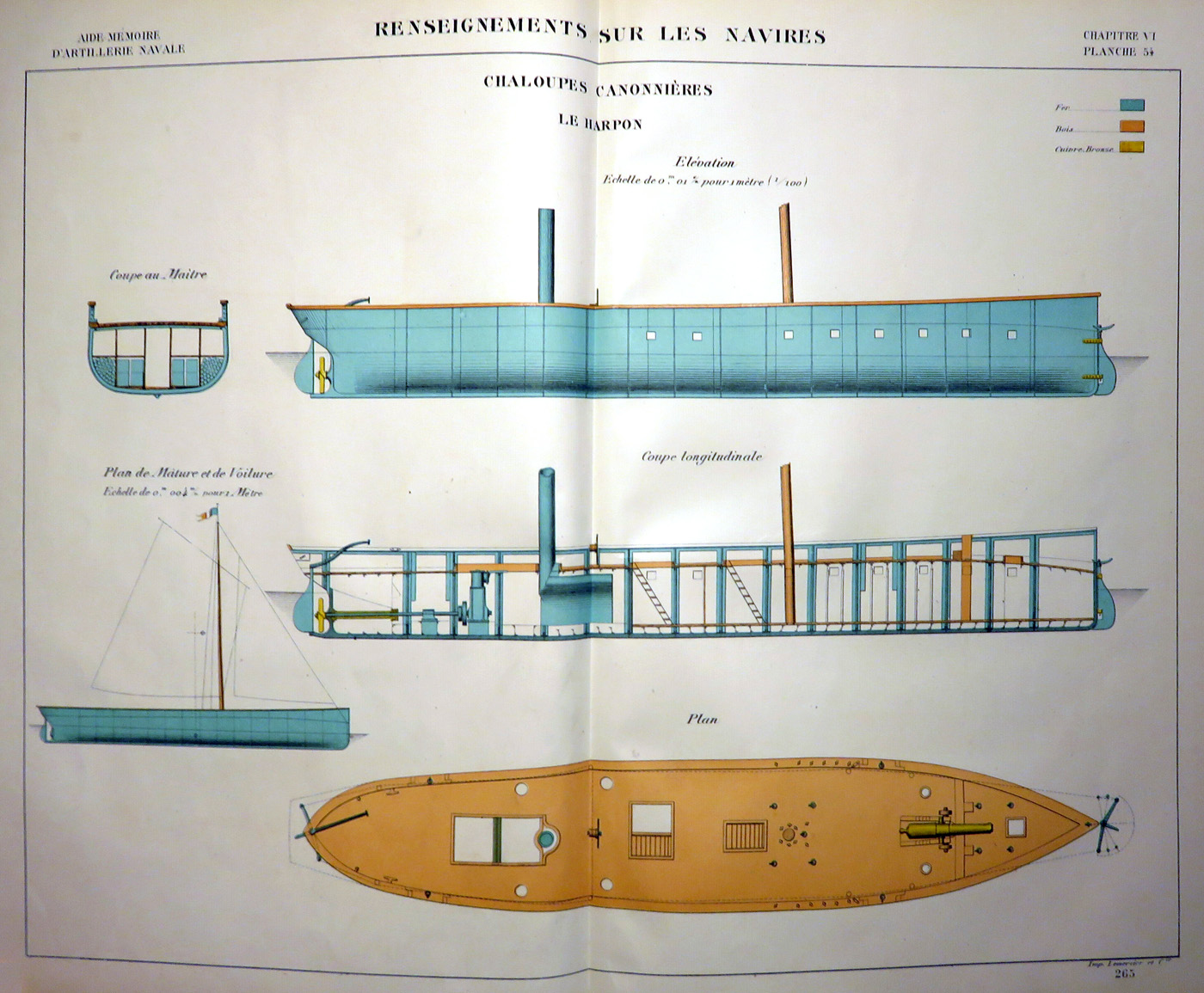
Canonnière No. 34 (Harpon) (Chaloupe-canonnière). (Drawing: Aide Mémoire d'Artilllerie Navale, 1881)
Canonnière No. 38 (Sagaïe)
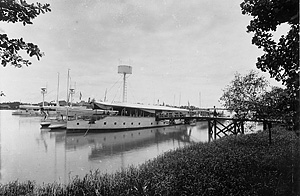
Canonnière No. 38 (Sagaïe) (Chaloupe-canonnière) at Saigon in 1894 as Bâtiment central de la défense mobile with torpedo boats (probably Nos. 50 and 52) alongside. Her machinery may have been removed. A later chaloupe-canonnière (perhaps Estoc) is in the background. (Photo: Private digital collection)
Canonnière No. 38 (Sagaïe)
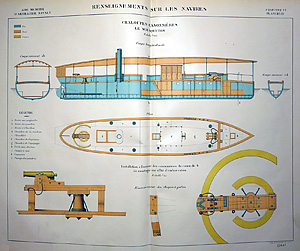
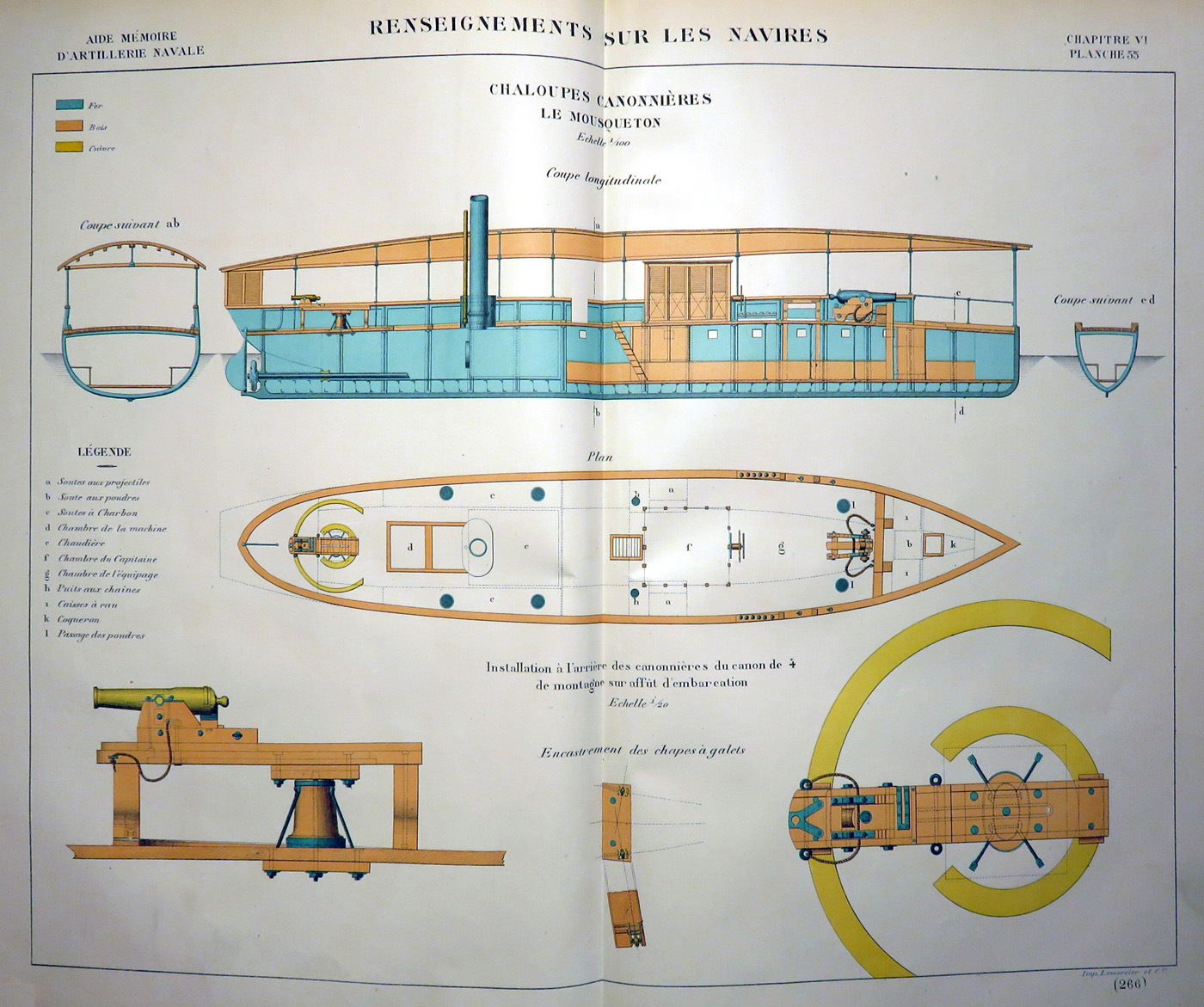
Canonnière No. 38 (Sagaïe) (Chaloupe-canonnière), probably shown as modified in Indochina. The bow rudder is gone, a canopy has been added, and so has a 4pdr mountain gun on the stern. The bottom of the drawing shows the mounting for that gun. (Drawing: Aide Mémoire d'Artilllerie Navale, 1881)
Arbalète and Baïonnette classes (1867, 1868)
The ten vessels of the Arbalète class were ordered in France by an unidentified foreign government but conditions in 1866 made delivery impossible and the Navy took them over. They were built to the plans for the iron hulled types of gun launches but had wooden hulls and were not sectional. The ten craft of the Baïonnette class (Type 1867) were designed by Dupuy de Lôme with iron hulls to the same general design as the 1859 and 1862 types but were slightly shorter than either and reverted to 15 sections.
Fronde
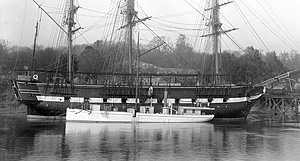
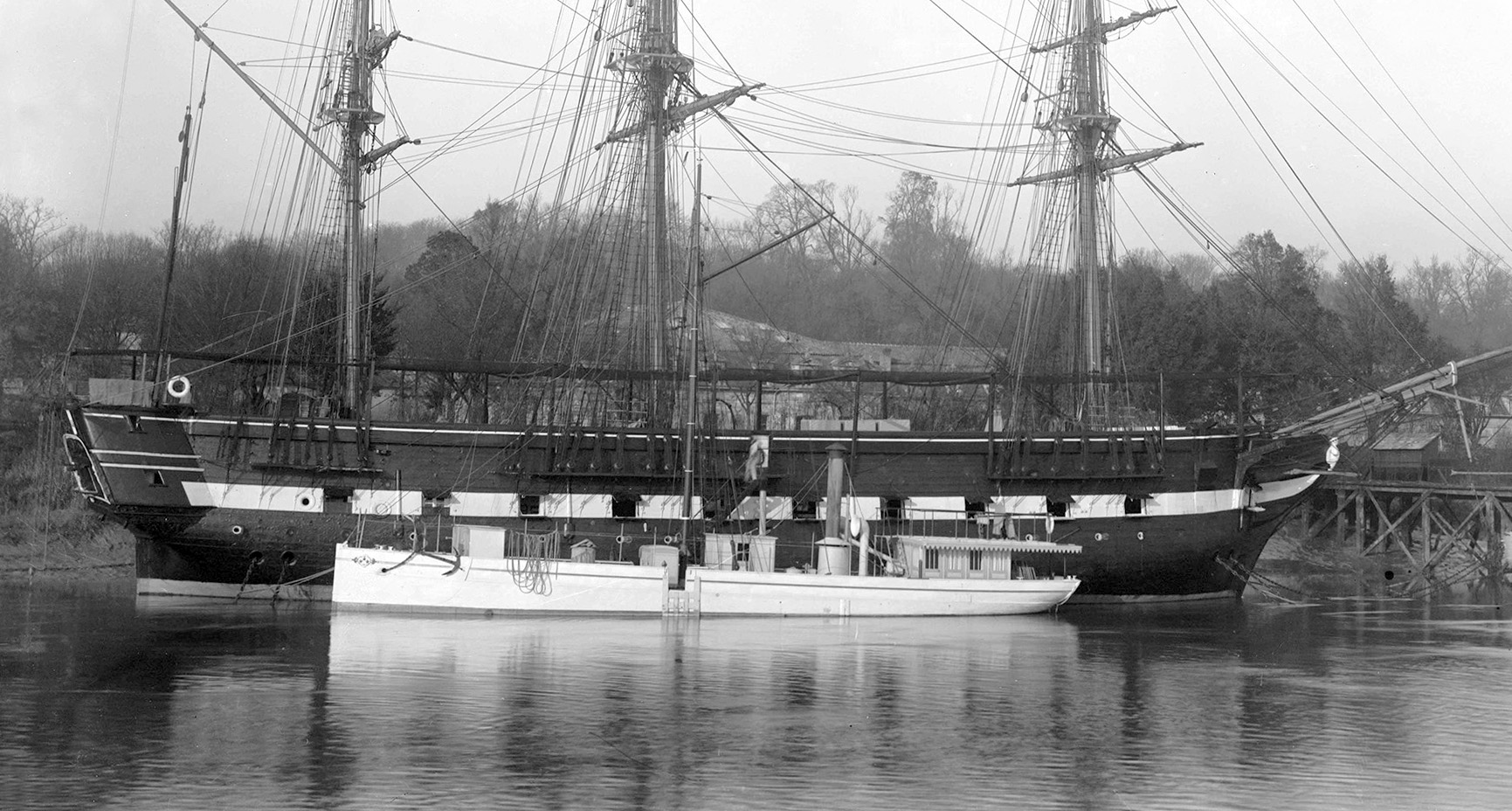
Fronde (chaloupe-canonnière, Arbalète class) alongside the sail corvette Cornélie (from 1879) or Constantine. The well-maintained Fronde bears markings indicating she was in use as a flag officer's launch or ferry. She was recommissioned "au matériel" in 1874, reduced to a service craft as Bâtiment d'arrière-garde in 1880, and broken up in 1884. (Photo: Private digital collection and Wikimedia from SHD Rochefort MR-5-G-144)
Javelot
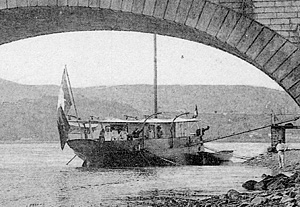
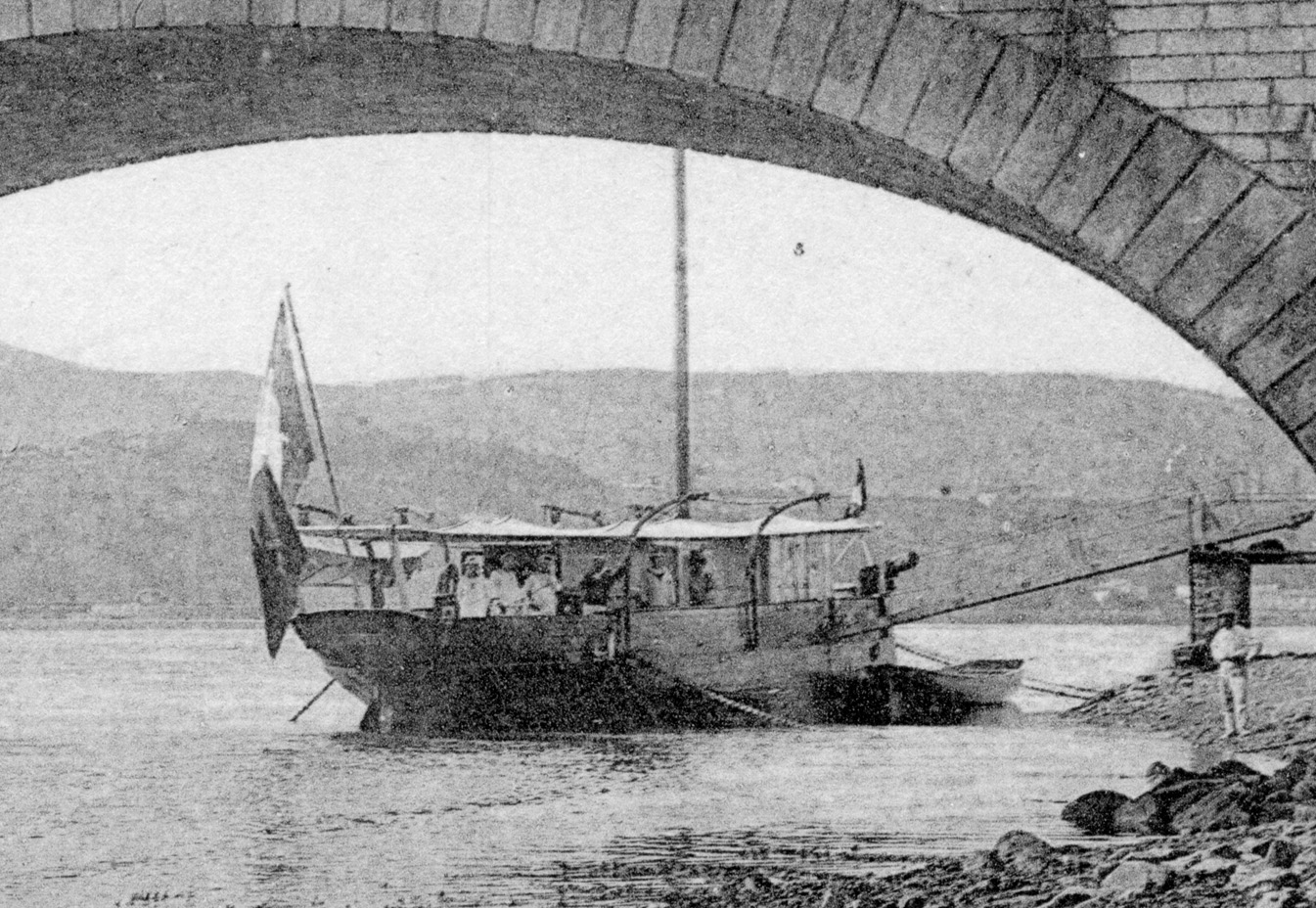
Javelot (Chaloupe-canonnière, Arbalète class) on the Bidassoa river at Hendaye where she replaced sister Épieu as station ship in 1886. None of this class and only two of the later Baïonette class (1868) served in Indochina. (Photo: Postcard, Hendaye)
Javelot
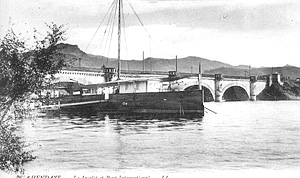
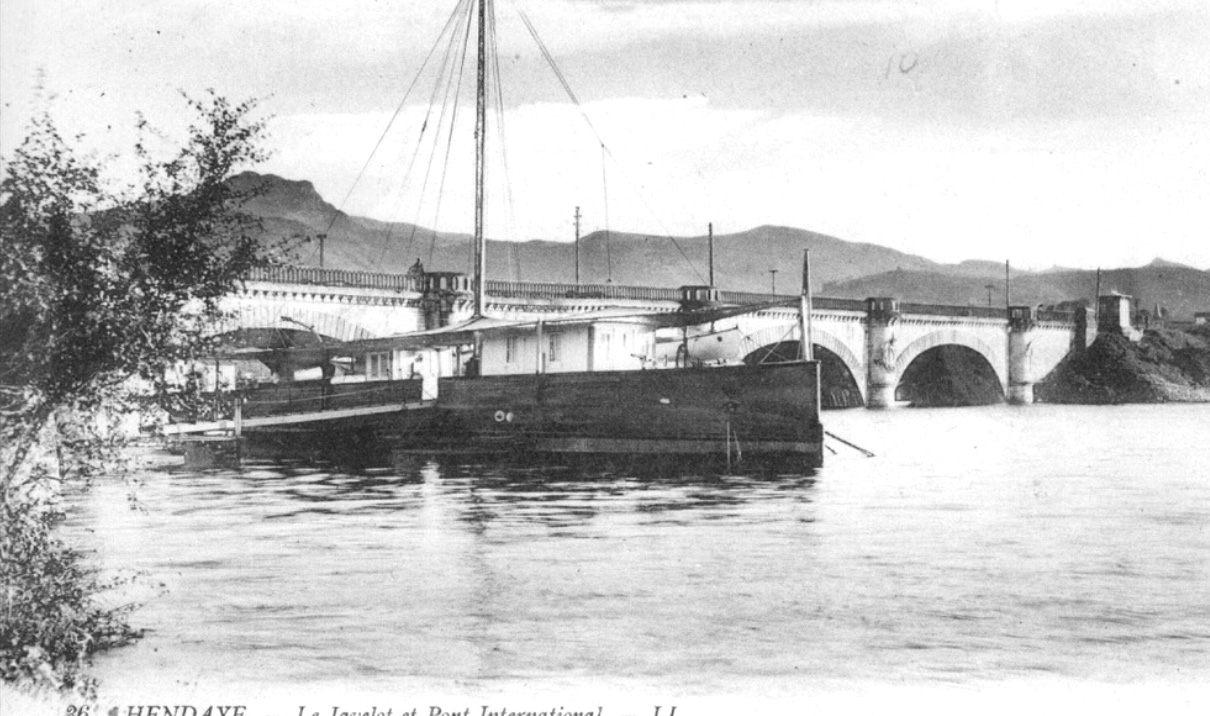
Javelot (Chaloupe-canonnière, Arbalète class) on the Bidassoa river as station ship at Hendaye after 1886. The international bridge to Spain is behind her. The downward curve of the deck behind the bulwarks is barely visible under the hawse pipe. (Photo: Postcard, Hendaye)
Baïonnette
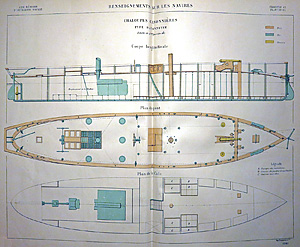
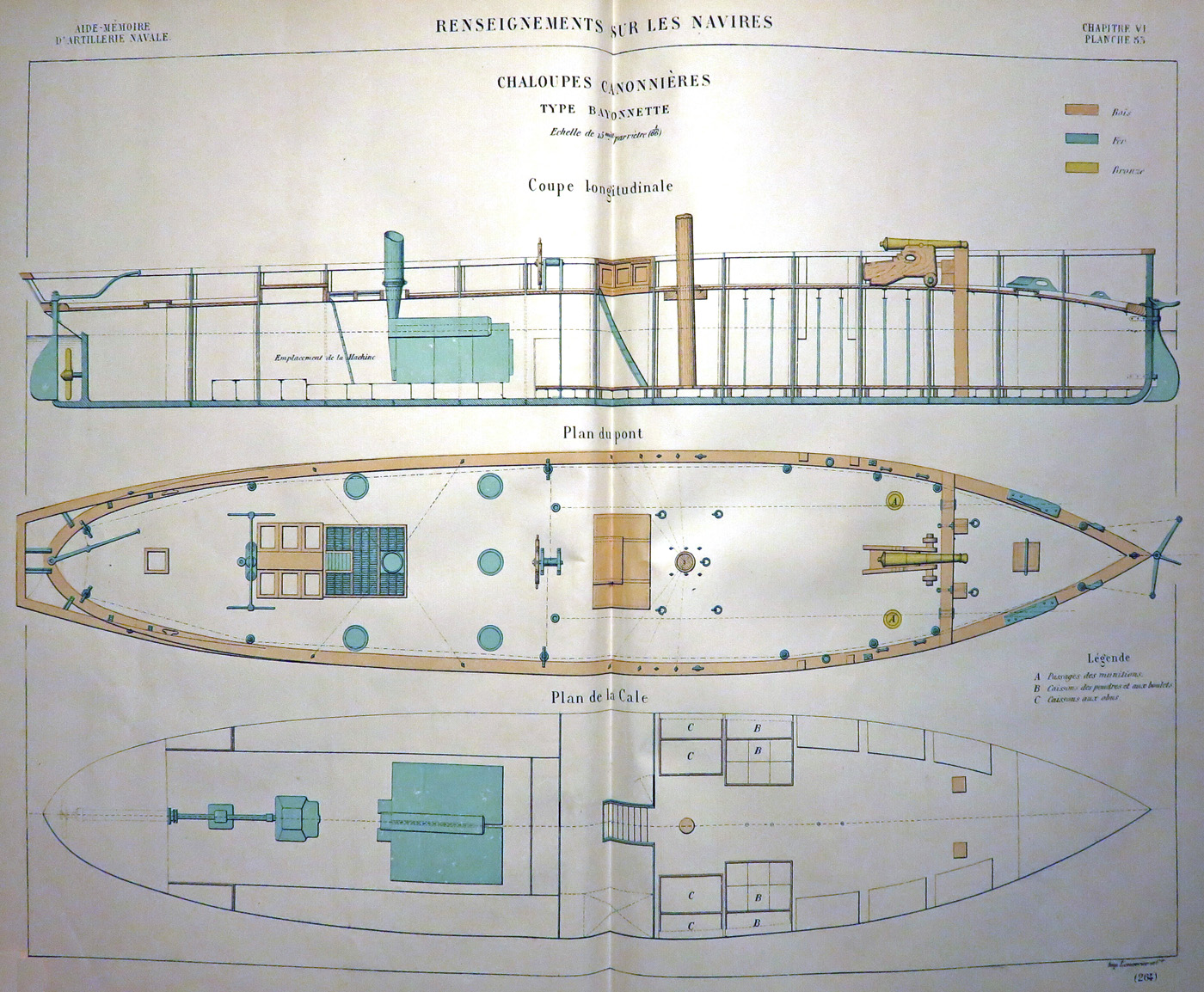
Baïonnette (Chaloupe-canonnière). (Drawing: Aide Mémoire d'Artilllerie Navale, 1881)
Mitrailleuse class (1870)
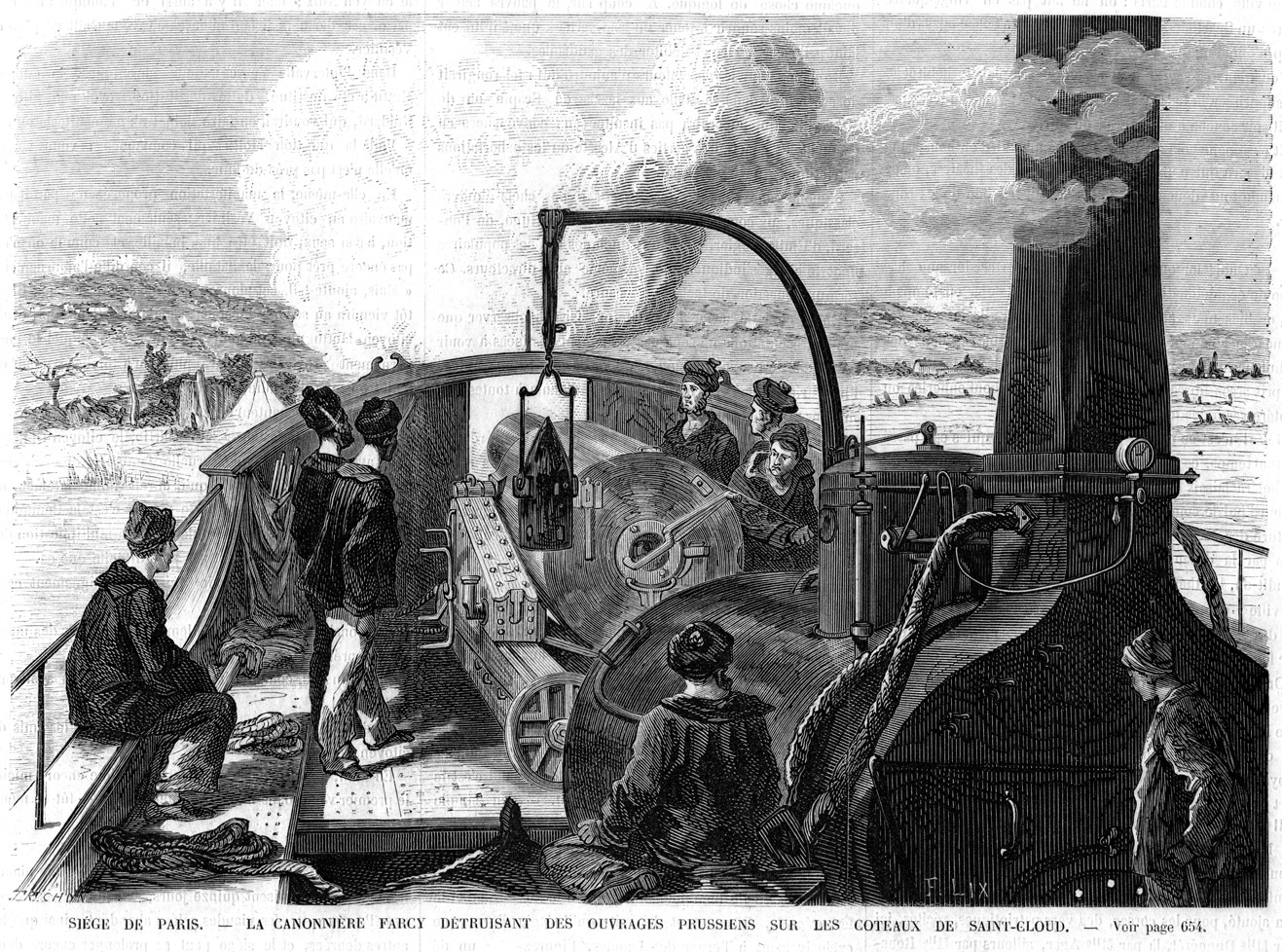
The designer of these two vessels, Lieutenant J. E. Farcy, was an advocate for small launches with large guns for coastal defense. When the French Navy took an interest in the type developed in England by George Rendel, Farcy built two craft with equivalent guns in much smaller hulls. The Navy purchased both in 1869-70.
Revolver
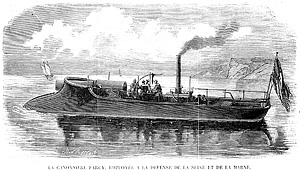
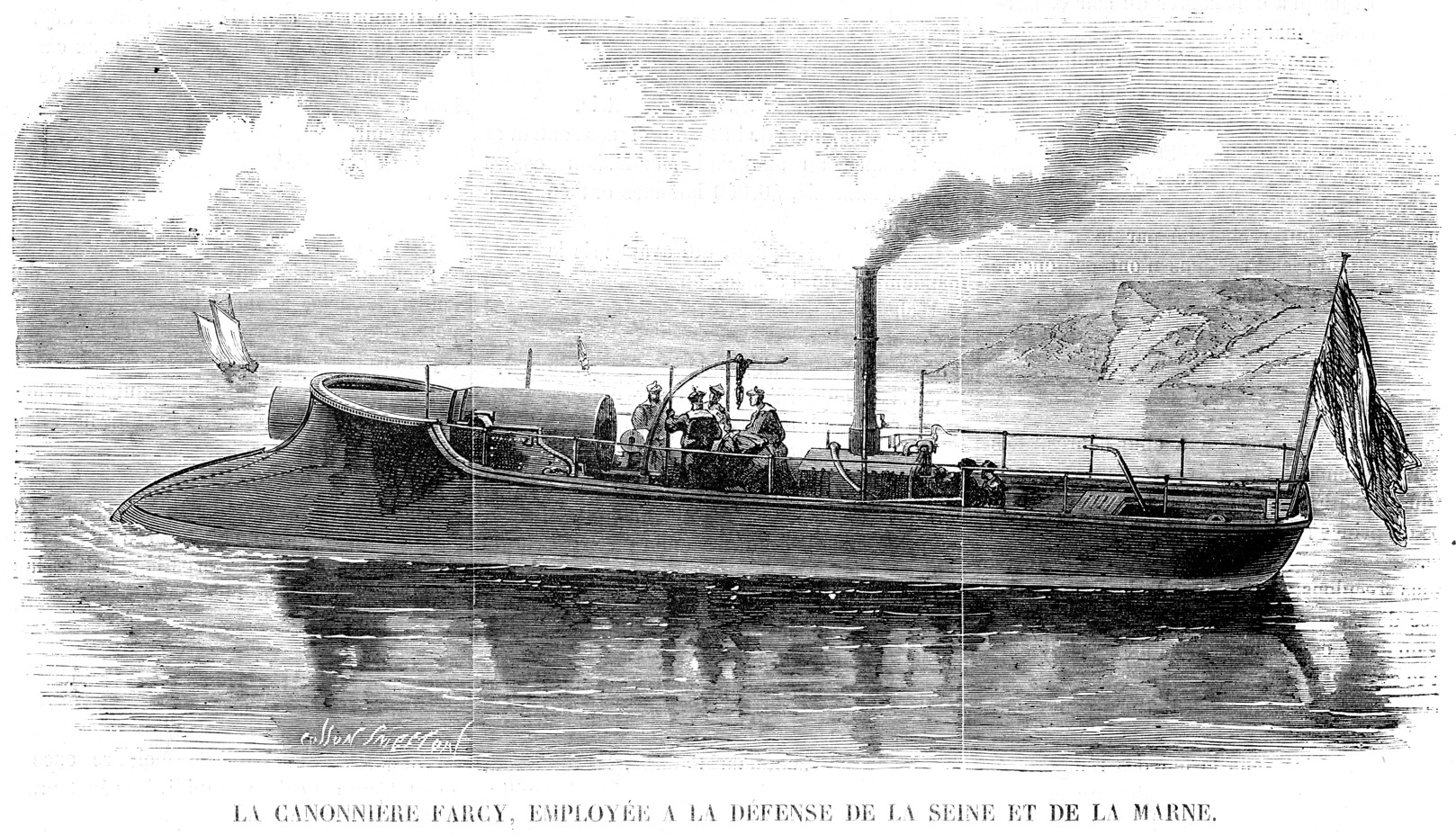
Revolver (Chaloupe-canonnière) in action as the Canonnière Farcy during the Franco-Prussian War before acquisition by the Navy. Small launches with large guns were advocated by Lieutenant de vaisseau, who designed and built this one. (Drawing: La Guerre Illustrée, 7 September 1870, p. 108)
Revolver
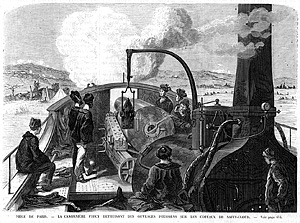
Revolver (Chaloupe-canonnière) in action as the Canonnière Farcy during the German siege of Paris in late 1870 before acquisition by the Navy. Note the system for handling shells while loading the gun. (Drawing: L'Univers Illustré, 29 October 1870)
Épée and Tromblon classes (1873)
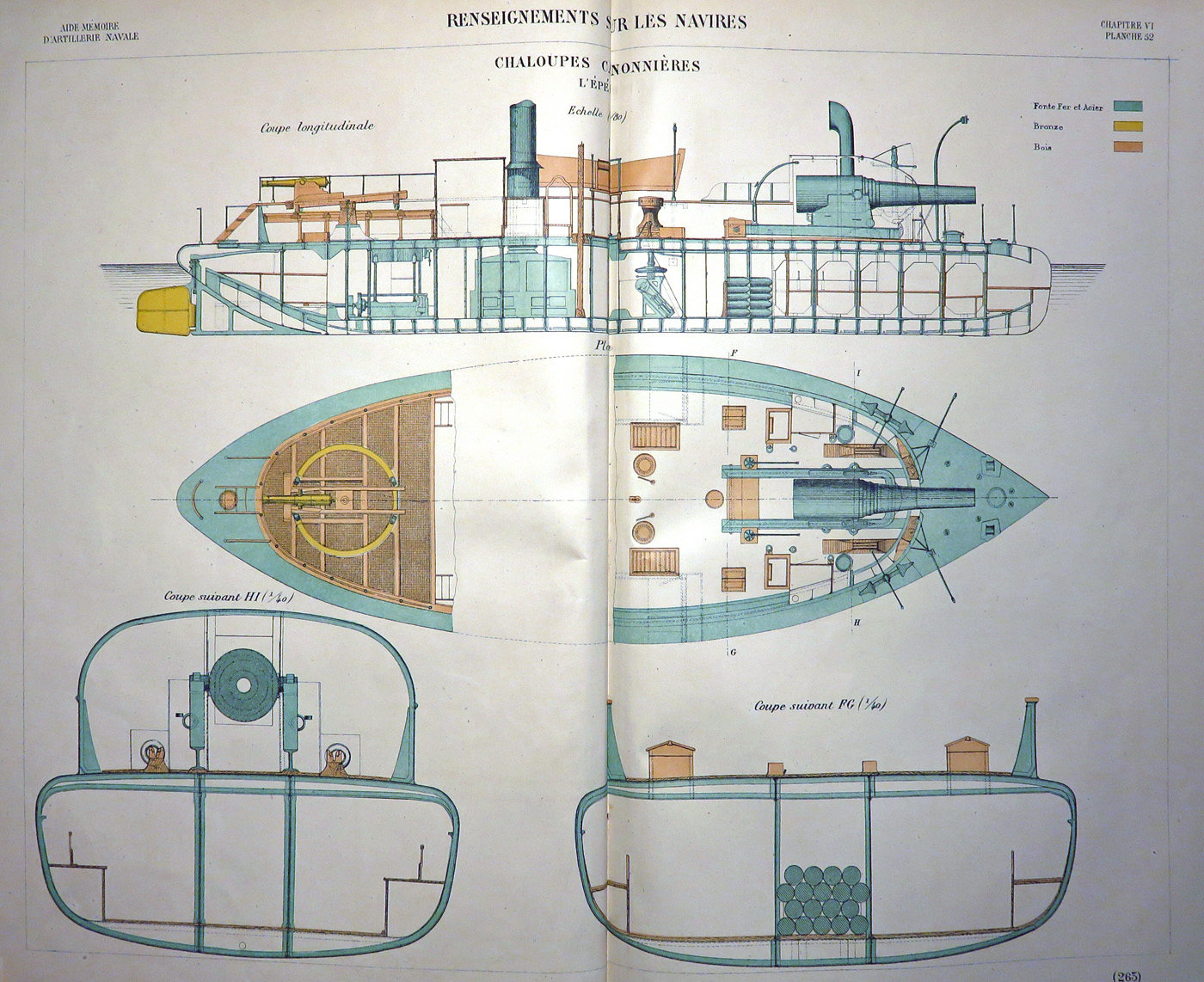
In 1868 the Minister of Marine asked the naval ports to develop plans for vessels resembling the 'flatiron' gunboats being built by George Rendel in England. Lorient produced Épee and Toulon produced Tromblon. Note that the maximum beam of the latter was well below the waterline.
Épée
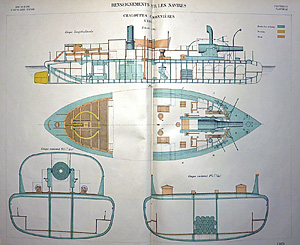
Épée (Chaloupe-canonnière). (Drawing: Aide Mémoire d'Artilllerie Navale, 1881)
Tromblon
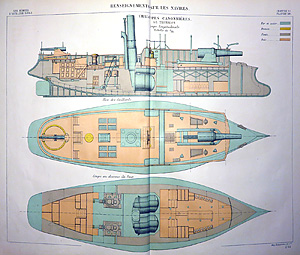
Tromblon (Chaloupe-canonnière). (Drawing: Aide Mémoire d'Artilllerie Navale, 1881)