French Submarine Boats, 1859-1897: Photo Gallery
Click on a photo to prompt a larger view of the same image.
1859-1882In fleet lists as Bâtiment spécial à hélice, 1861-1872.
Class: Plongeur (On list 1861)
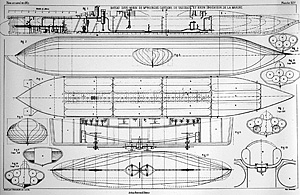
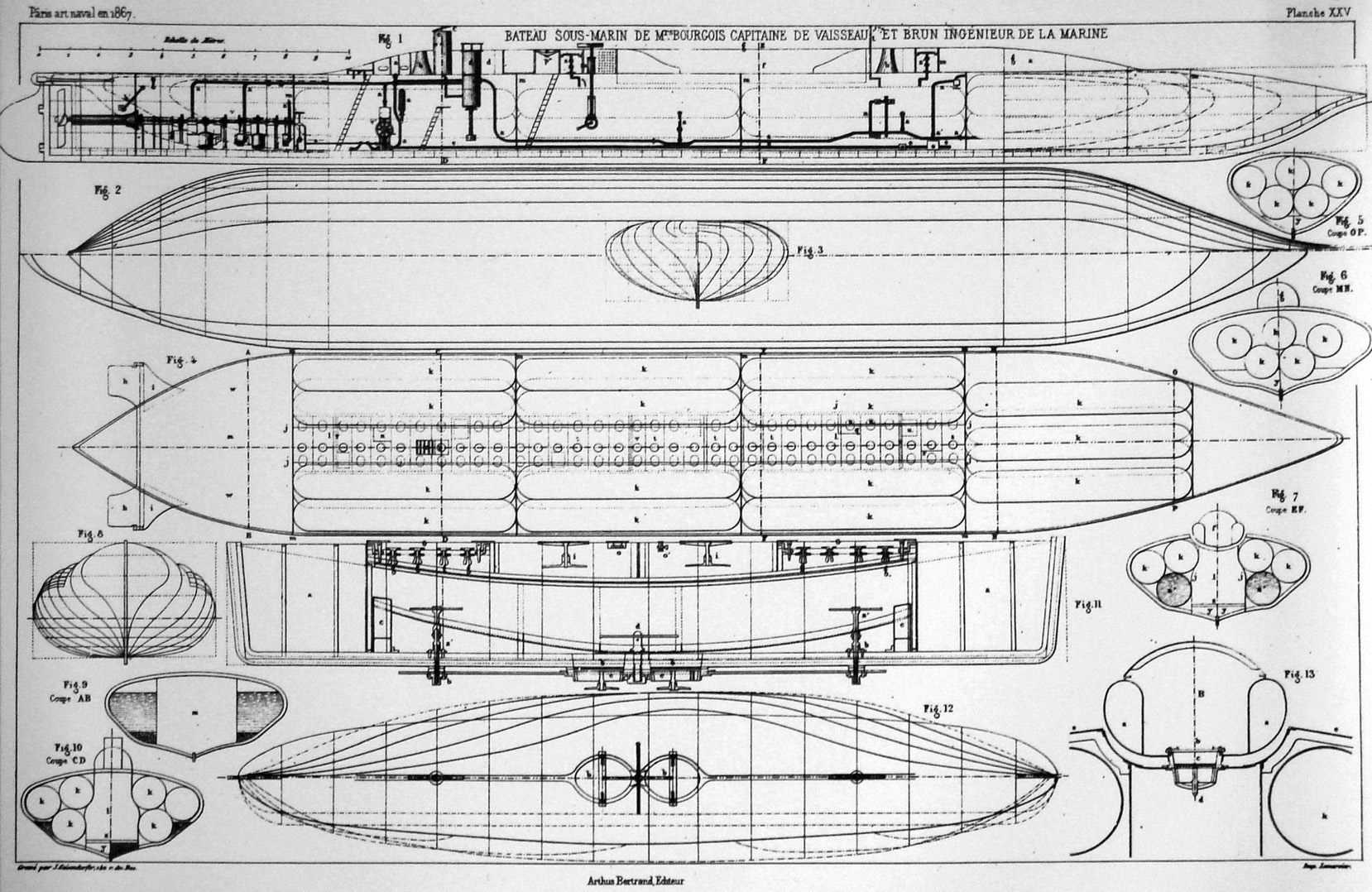
Plongeur (Bâtiment spécial à hélice). (Drawing: Vice Admiral Pâris, Art Naval en 1867, and Wikimedia)
Class: Plongeur (1861)
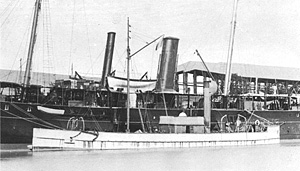
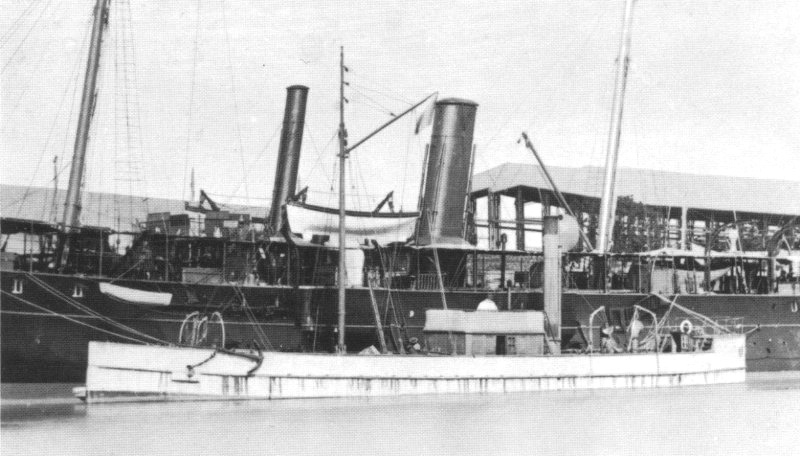
Plongeur as a water tender (citerne) at the Rochefort arsenal. She is alongside a Troude class cruiser. (Photo: Wikimedia)
1882-1897
In fleet lists as Bâteaux sous-marins.
Class: Goubet (Ordered 1886)
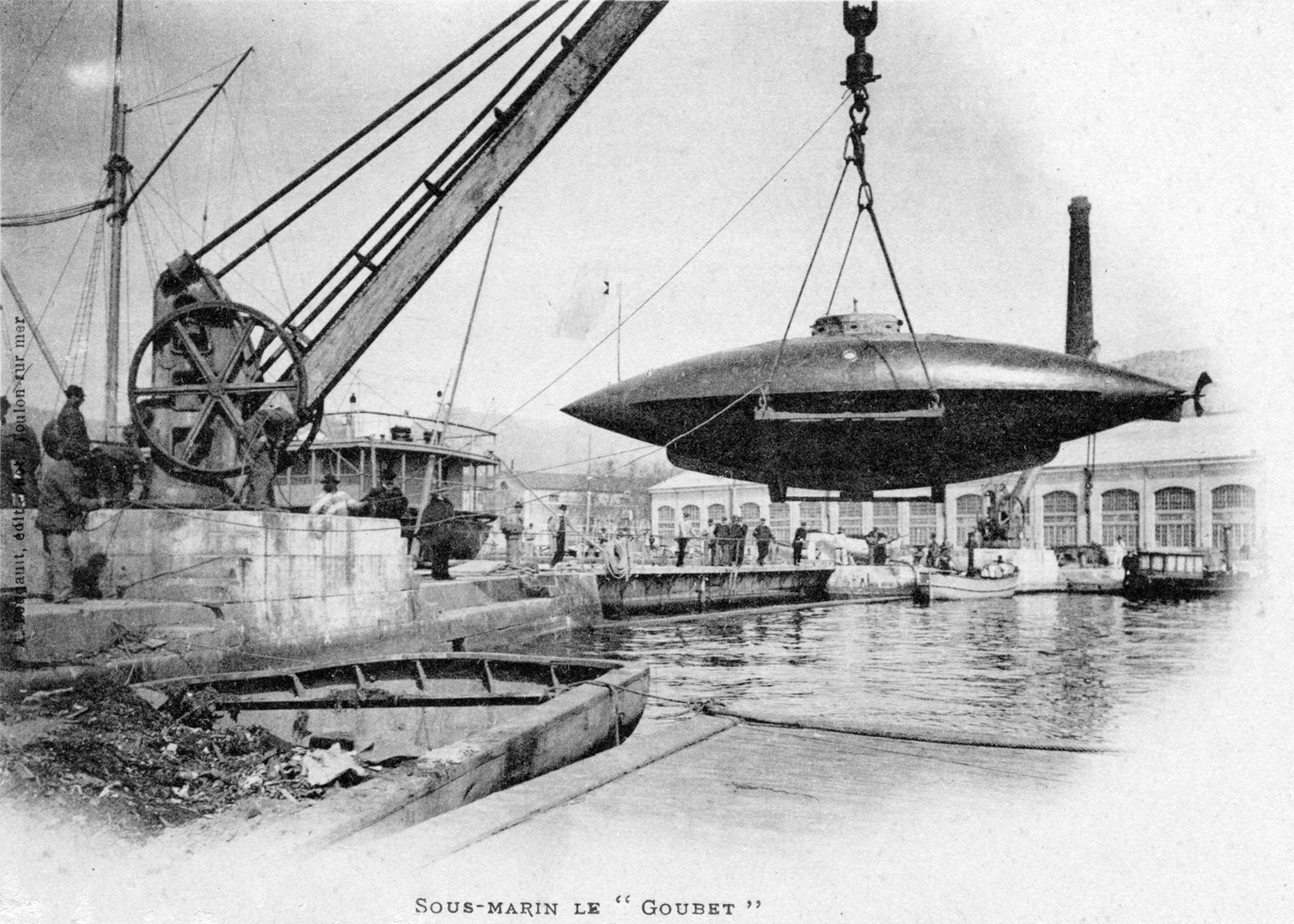
Goubet (Bâteau torpilleur sous-marin) at Toulon. Two men sat under the cupola where they maneuvered the craft, towing a "torpedo" (mine) under the hull of an enemy ship and later detonating it through an electric wire. This may be the Goubet II, built privately in 1895 with a crew of three and tested at Toulon in 1900. (Photo: Postcard by A. Bougault, Toulon)
Class: Gymnote (On list 1888)
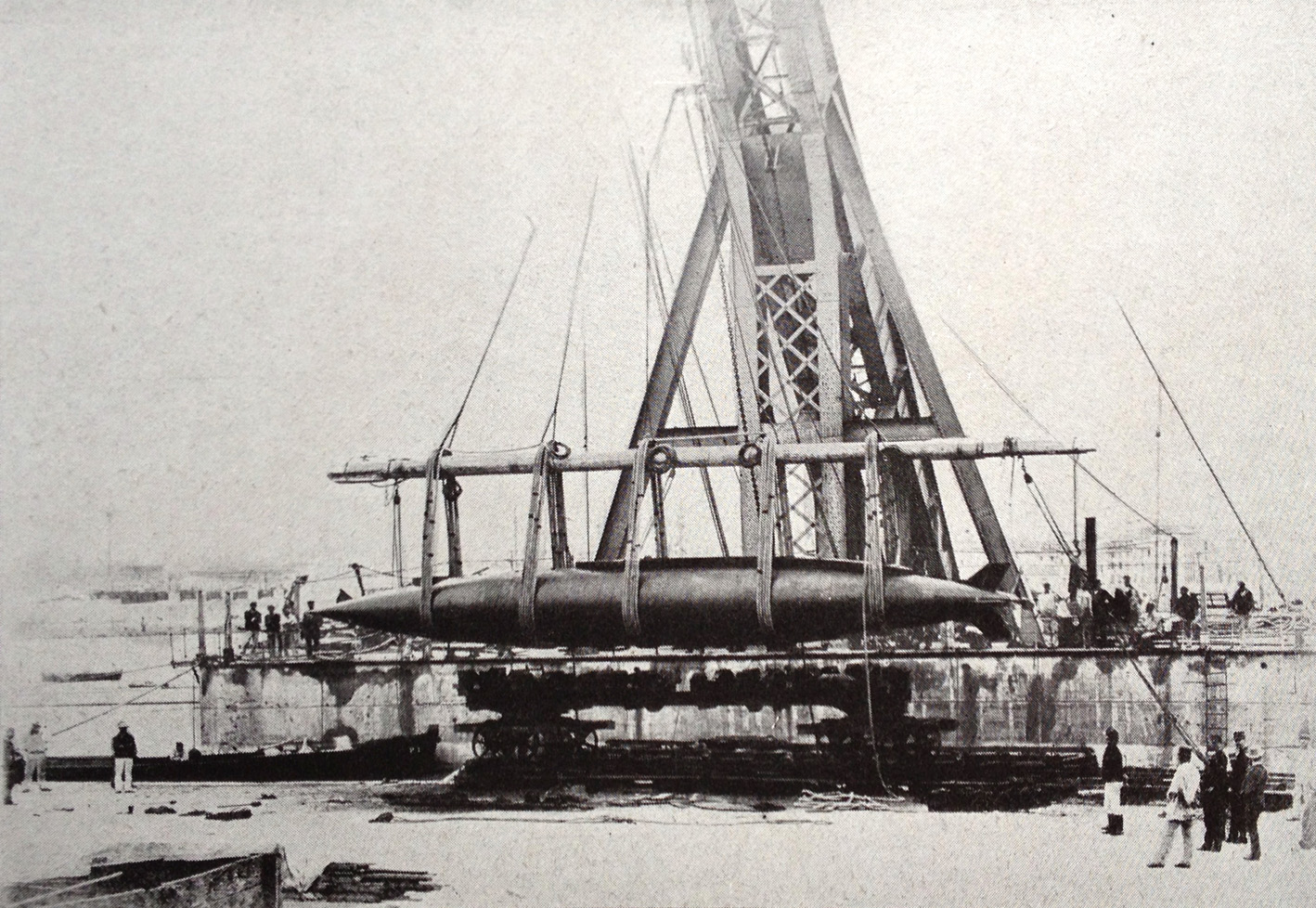
Gymnote (Bâteau sous-marin) being launched from a transport wagon into a dock at Toulon in 1888. The vessel in this initial configuration was controlled from a small cupola amidships that could be raised out of the hull (not visible here). She was an experimental vessel that only received a torpedo armament when rebuilt in 1897-1900. (Photo: Shipscribe)
Class: Gustave Zédé (1892)
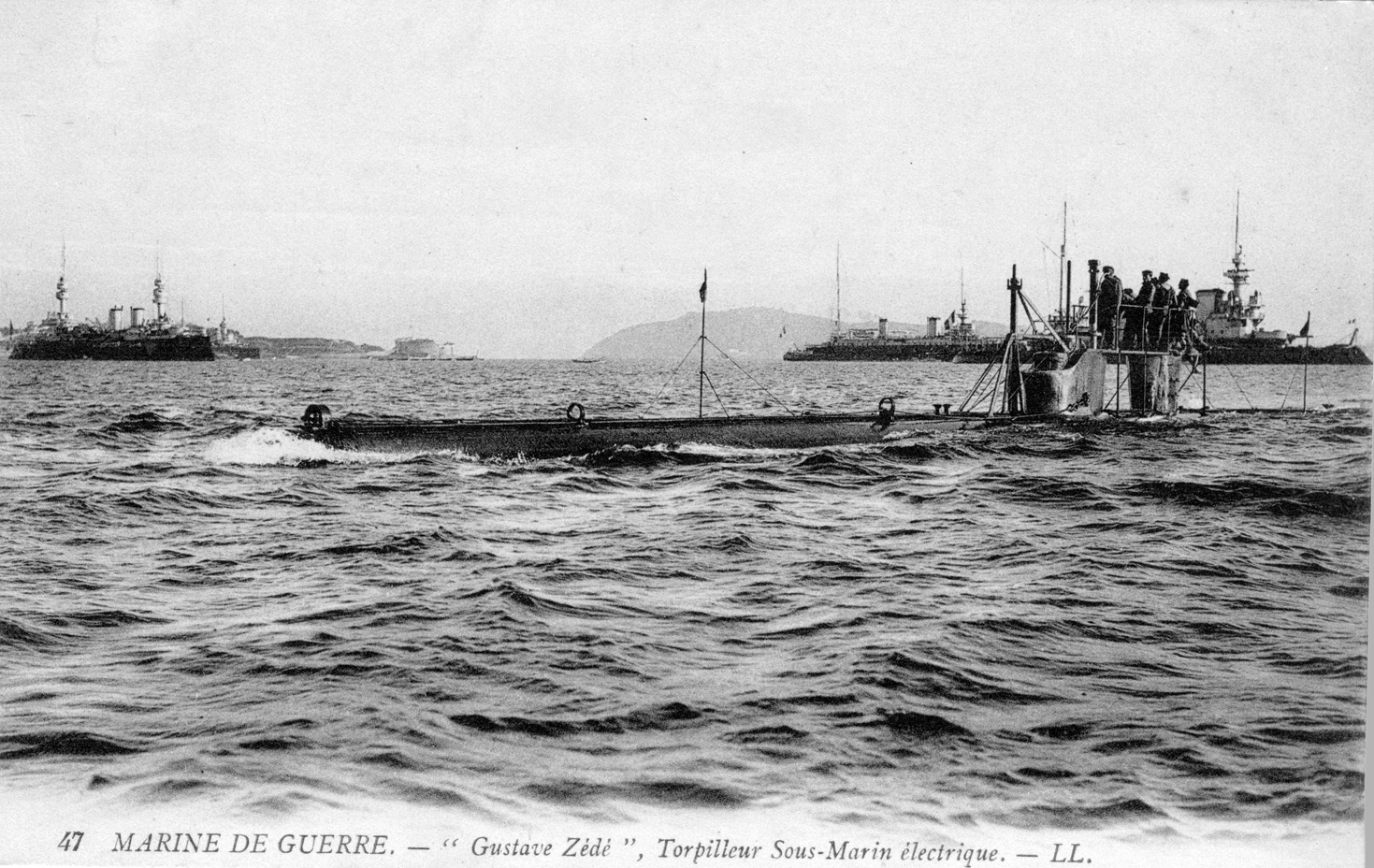
Gustave Zédé (Bâteau sous-marin), ex Sirène, at Toulon in 1903 in her fourth and last configuration (1903-09). The battleships in the background are Jaureguiberry (left), Carnot, and Hoche. These early "electric" submarines were propelled entirely by battery power. (Photo: Postcard by LL.)
Class: Morse (1893)
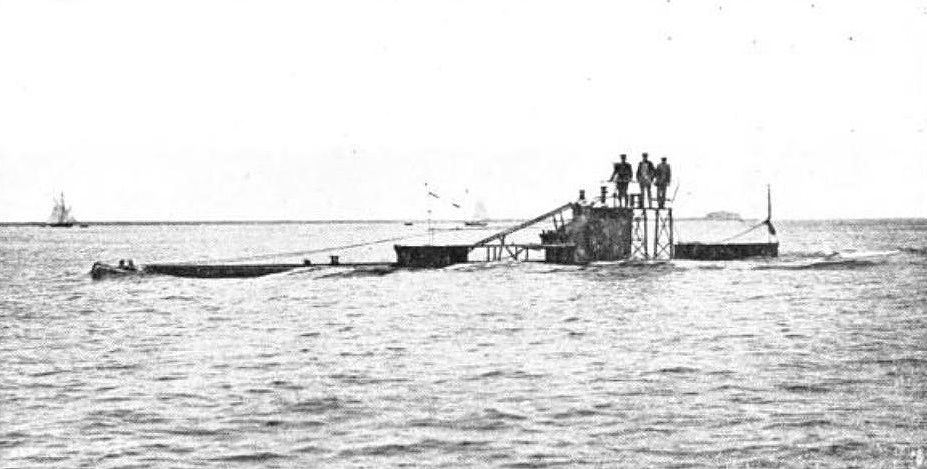
Morse (Bâteau sous-marin) at Cherbourg. She was completed in 1900 and is shown here in her second configuration (1902-11). Like Gustave Zédé she had a hull made of bronze and a single torpedo tube in her bow. (Photo: Wikimedia)