White Sands (AGDS 1) Class: Photographs
| These photographs were selected to show the original configuration of this class and major subsequent modifications. For more views see the former NHHC (now Hyperwar) Online Library of Selected Images and the NavSource Photo Archive. |
Click on the small photograph to prompt a larger view of the same image.
|
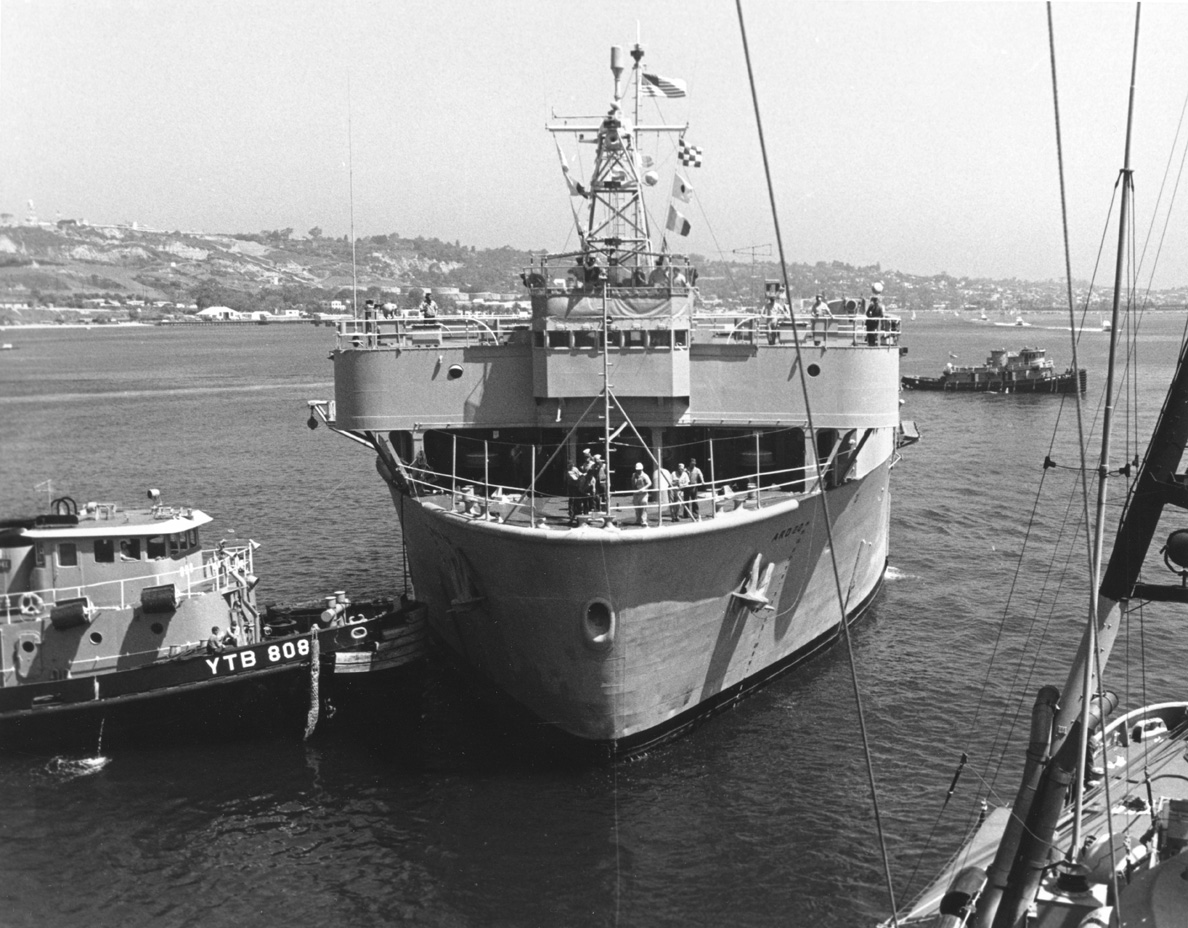
USS White Sands (ARD 20) The Integral Operating Unit making up the tow in San Diego Bay in August 1972 before heading to a dive site. White Sands is being moved into position by Wenatchee (YTB 808), on the left, to pass a tow line to Apache (ATF 67), on the right. The third member of the IOU, the bathyscaph Trieste, is in the docking well of White Sands. Photo No. USN 1153267 Source: U.S. Naval History and Heritage Command (L-file) |
 |
|
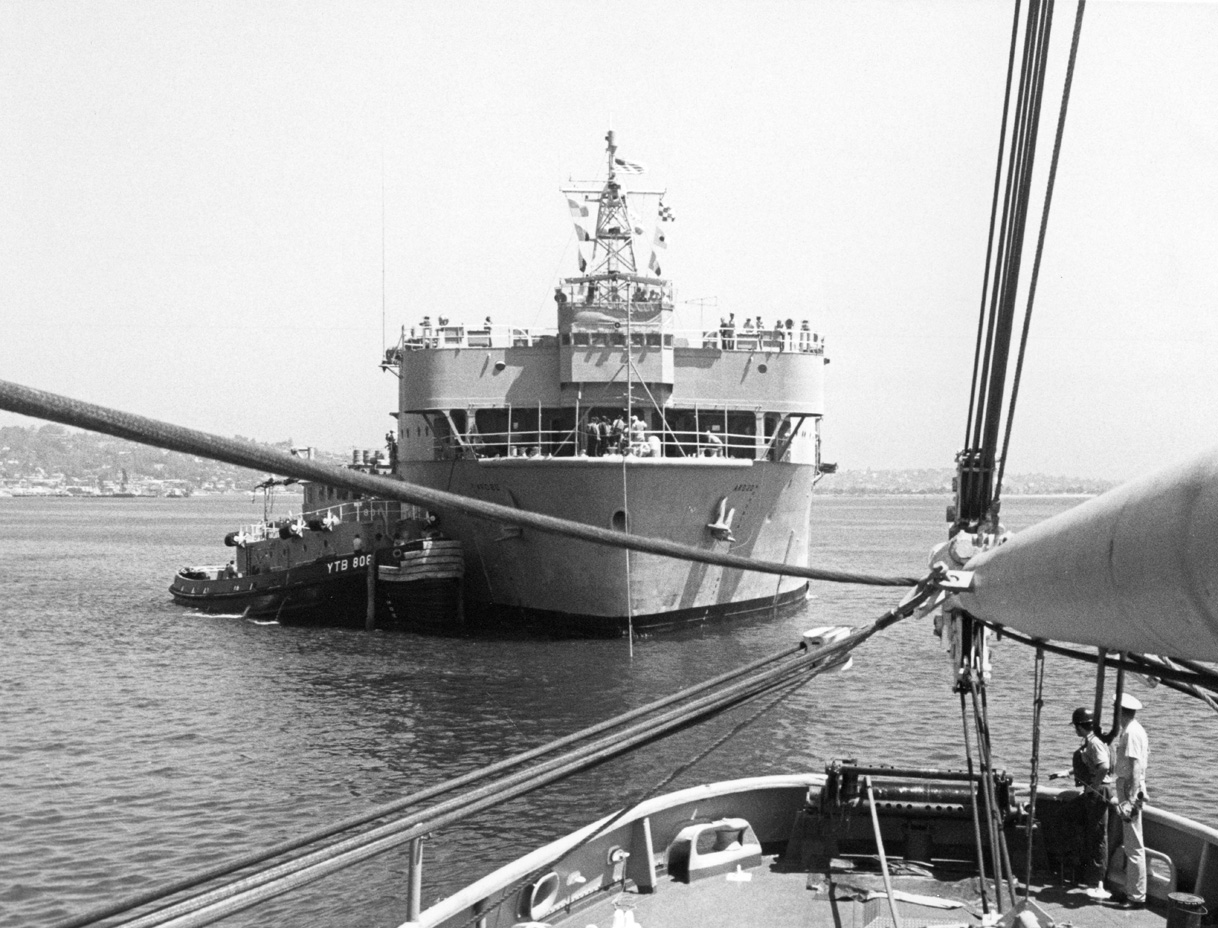
USS White Sands (ARD 20) The Integral Operating Unit making up the tow in August 1972 enroute to a dive site. The tow line has been passed from White Sands to Apache (ATF 67) but strain has not yet been taken up on the line. Wenatchee (YTB 808) remains in attendance. Photo No. USN 1153264 Source: U.S. Naval History and Heritage Command (L-file) |
 |
|
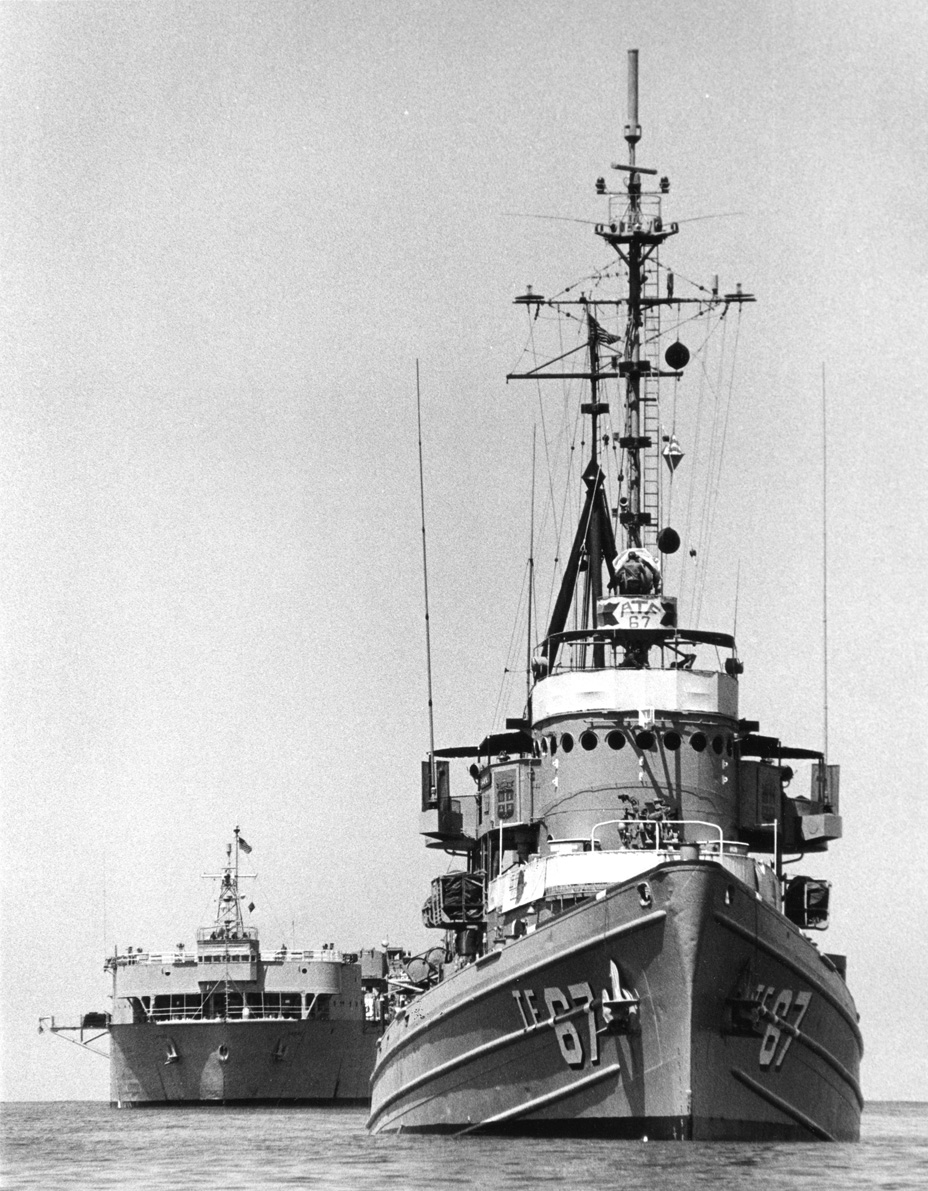
USS Apache (ATF 67) The Integral Operating Unit underway during a tow to a dive site. Apache was permanently assigned to provide mobility to White Sands (ARD 20) in which the bathyscaph Trieste was embarked. Once at the dive site Apache would cast off the tow line and White Sands would operate independently in support of Trieste. Photo No. Unknown Source: U.S. Naval History and Heritage Command |
 |
|
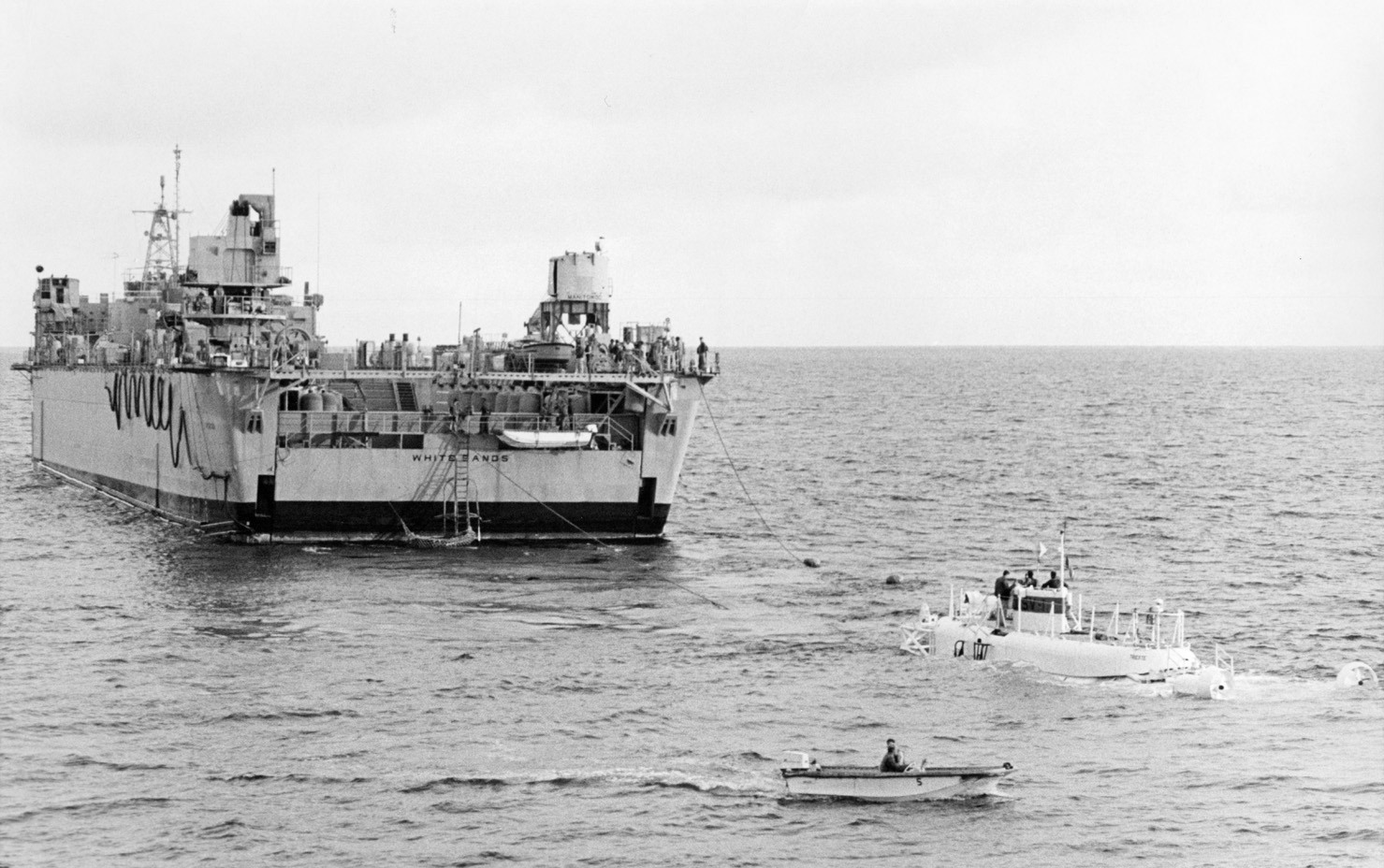
USS White Sands (ARD 20) The Integral Operating Unit preparing for a dive in August 1972. White Sands is standing by while Trieste operates independently before diving. Photo No. USN 1153268 Source: U.S. Naval History and Heritage Command (L-file) |
 |
|
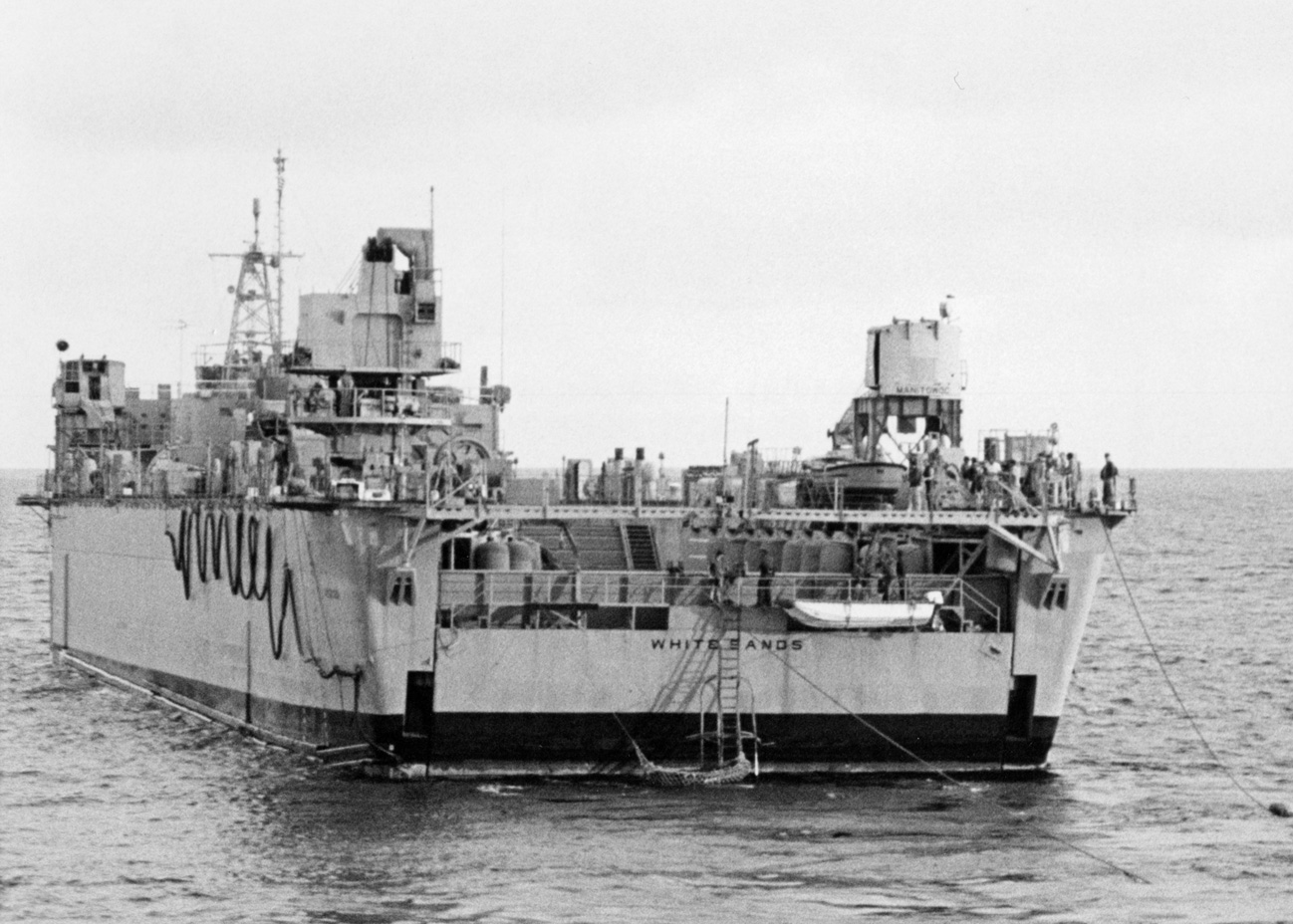
USS White Sands (ARD 20) A close-up of the floating drydock from the above photo. White Sands was reclassified from ARD 20 to AGDS 1 effective 1 August 1973. Photo No. USN 1153268 Source: U.S. Naval History and Heritage Command (L-file) |
 |
|
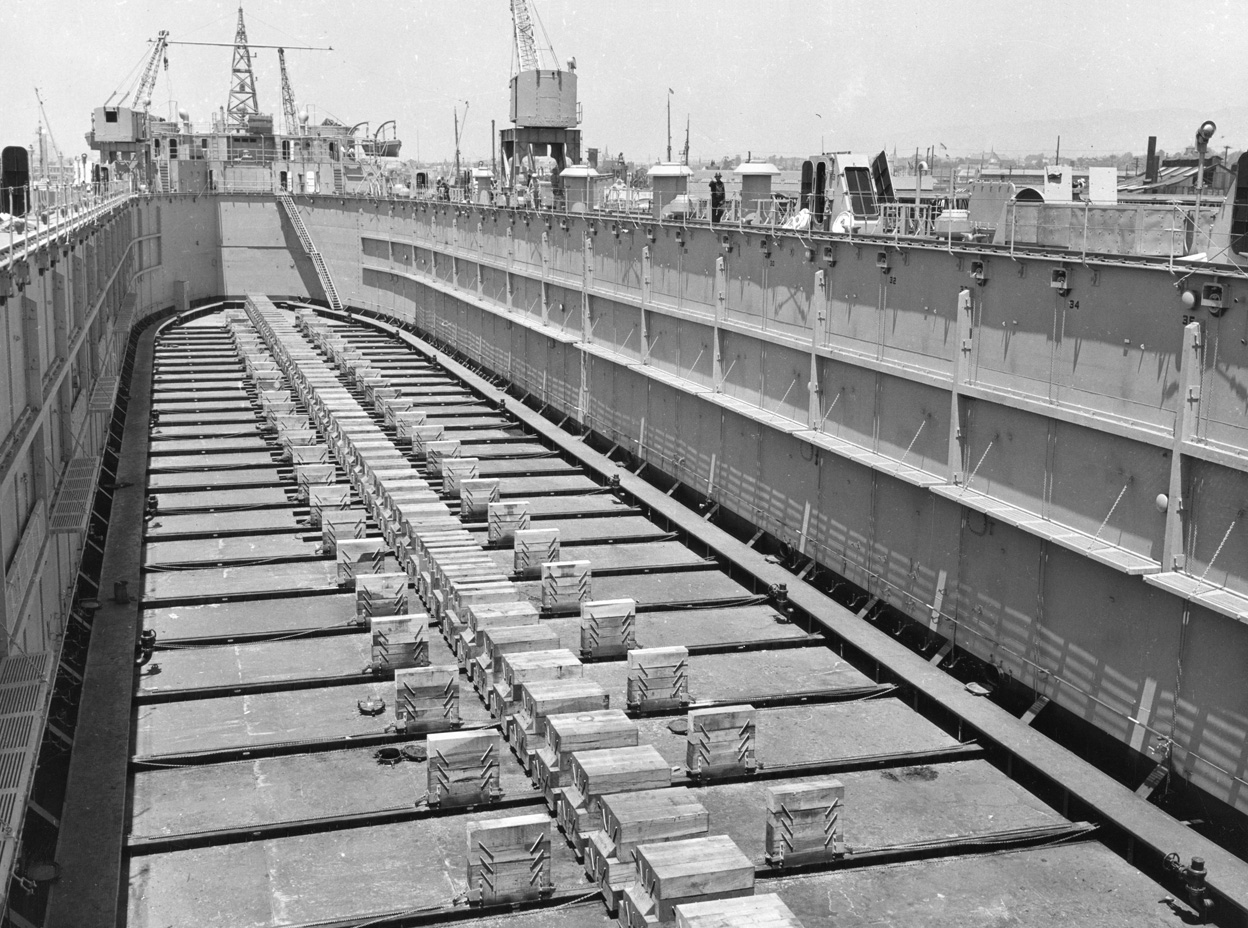
A typical World War II ARD This World War II view of an unidentified ARD shows the inside of the dock with the most distinctive feature of the ARD, a closed bow with a bridge on top. A crane ran on rails on each sidewall. The ARD 2 class was designed to dock destroyers and submarines, and the ARD 12 class had the same 3,500-ton lift capacity but was broadened ten feet to accommodate LSTs as well. Photo No. Unknown Source: U.S. Naval History and Heritage Command (L-file) |
 |