Watertown (T-AGM 6) Class: Photographs
| These photographs were selected to show the original configuration of this class and major subsequent modifications. For more views see the former NHHC (now Hyperwar) Online Library of Selected Images and the NavSource Photo Archive. |
Click on the small photograph to prompt a larger view of the same image.
|
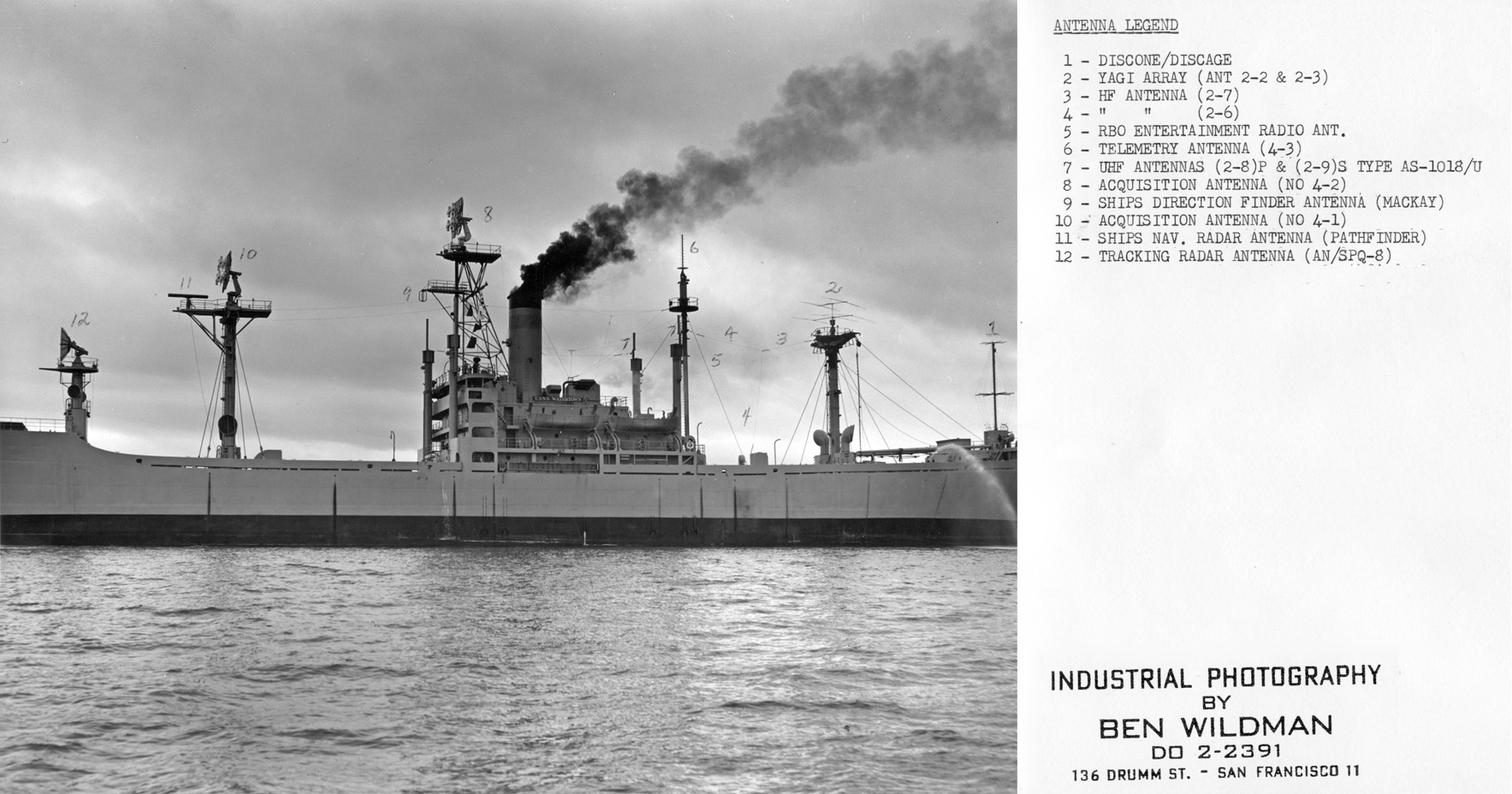
USNS Watertown (T-AGM 6) A guide to the antennas on the ship in her original configuration. The legend on the right is from the back of the photo. The photographer added by hand the antenna numbers to the front of the image. Photo No. Unknown Source: U.S. Naval History and Heritage Command (MSC) |
 |
|
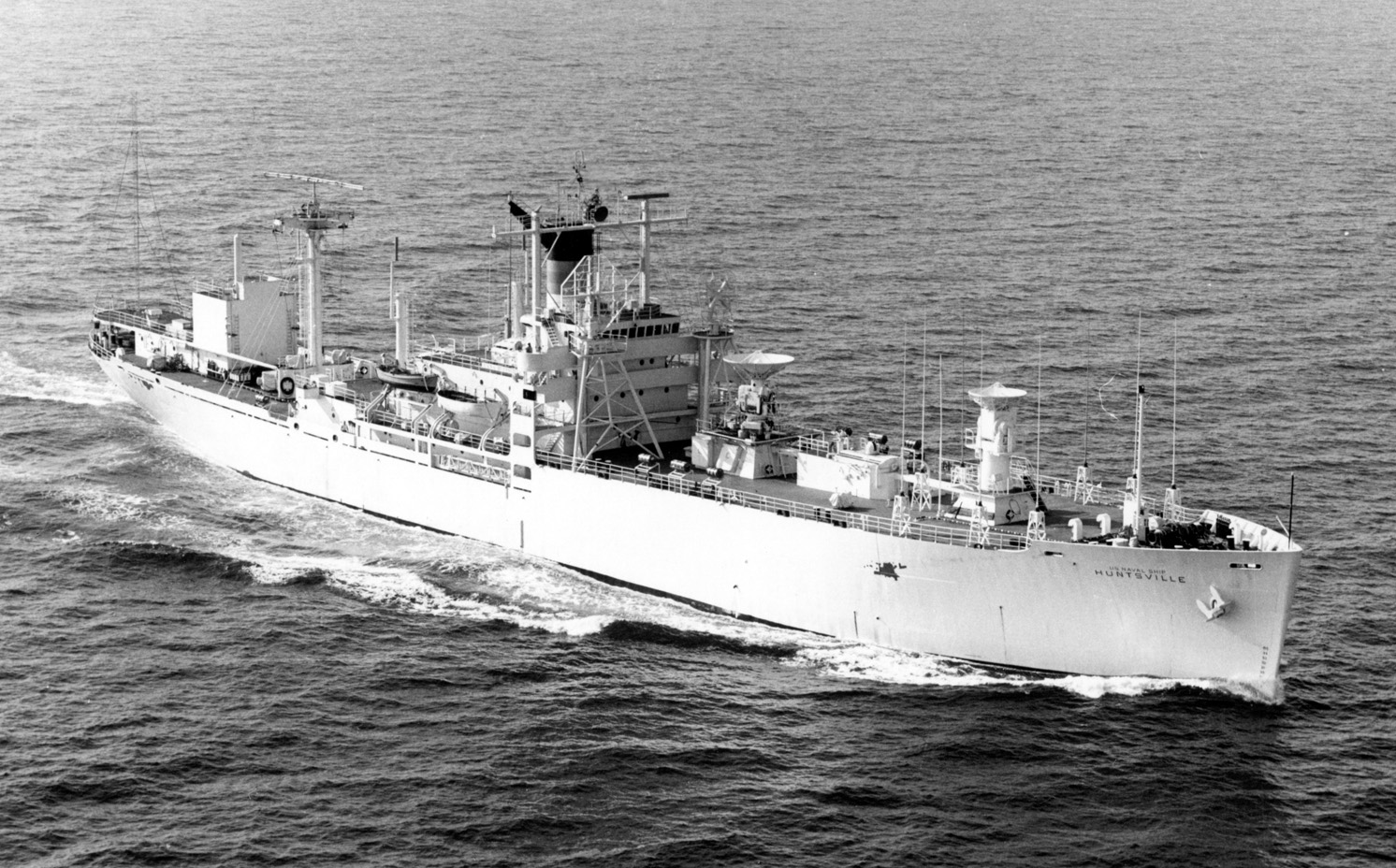
USNS Huntsville (T-AGM 7) Underway in her original configuration. The key elements of her range instrumentation suite were the AN/SPQ-8 tracking dish antenna on the stump of the old foremast and two square quadruple-element acquisition antennas, one on top of the second mast and the other atop the tripod mast. Photo No. Unknown Source: U.S. Naval History and Heritage Command (L-file) |
 |
|
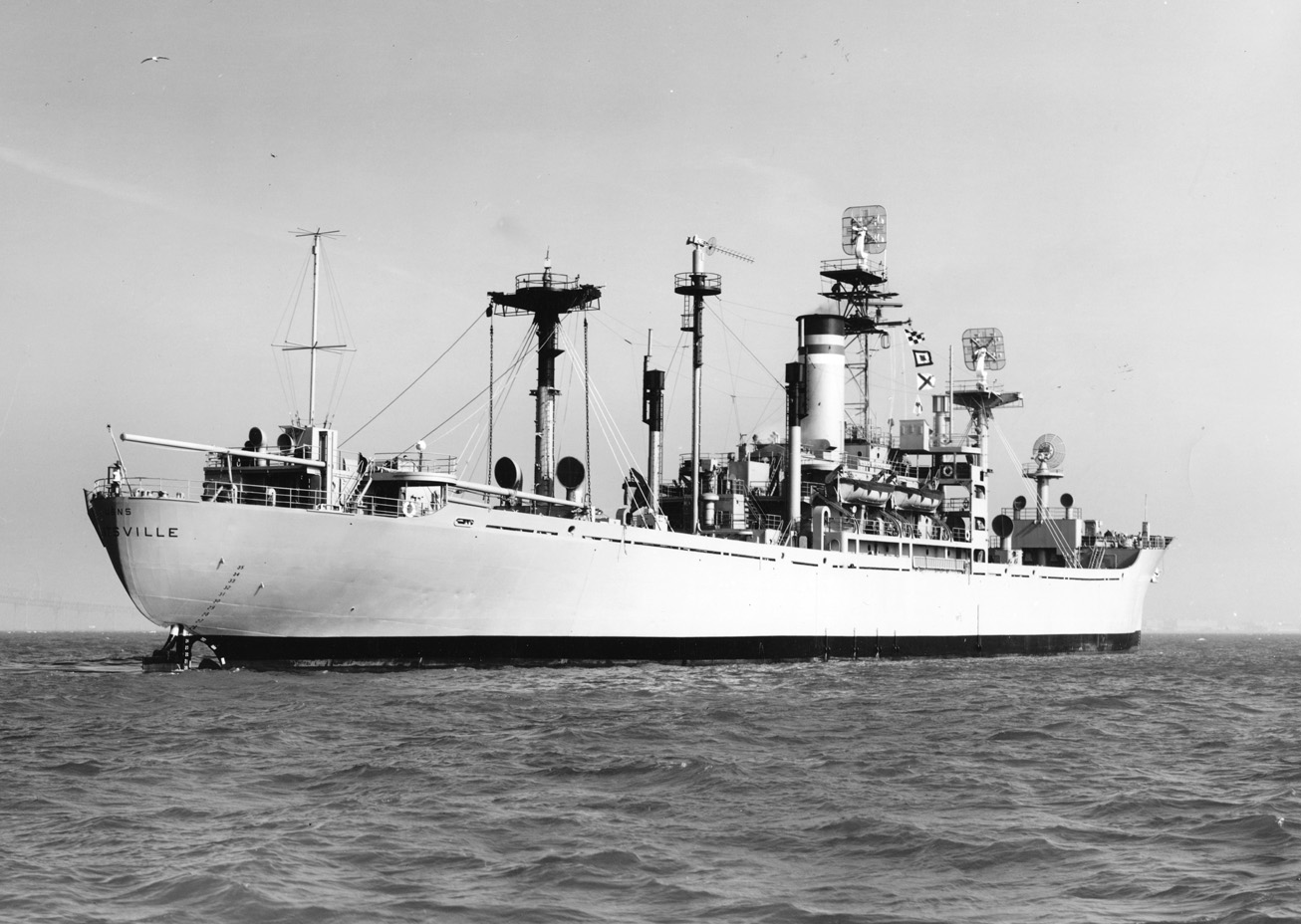
USNS Huntsville (T-AGM 7) Underway in her original configuration. Her main communications antennas were aft, with a standard Navy high frequency broadband discage HF transmitting antanna on the stern, a nearly invisible log periodic antenna on top of the after mast, and a prominent single helix telemetry antenna on a new slender mast ahead of it. Photo No. Unknown Source: U.S. Naval History and Heritage Command (L-file) |
 |
|
USNS Huntsville (T-AGM 7) Underway on 25 October 1961. Between March and October 1961 one quadruple-element acquisition antenna was moved from the top of the second mast to the cover to No. 3 hatch just forward of the bridge house. Photo No. USN 1058327 Source: U.S. Naval History and Heritage Command (MSC) |
 |
|
USNS Watertown (T-AGM 6) Photographed by the Pacific Missile Range on 27 March 1962. The two quadruple element tracking antennas have been replaced with a lattice dish on the masthead and a cross-shaped antenna on the cover to No. 3 hatch. A way to tell the two ships apart at this time is that Watertown had her navigation radar on the old second mast while Huntsville had hers on a platform on the tripod. Photo No. NH 88079 Source: U.S. Naval History and Heritage Command (MSC) |
 |
|
USNS Huntsville (T-AGM 7) Underway on 30 December 1963. Her high frequency communications have received a major upgrade with an extra-tall lattice transmitting discage antenna on the stern and a much enlarged log periodic antenna on the old after mast. Photo No. Unknown Source: U.S. Naval History and Heritage Command (MSC) |
 |
|
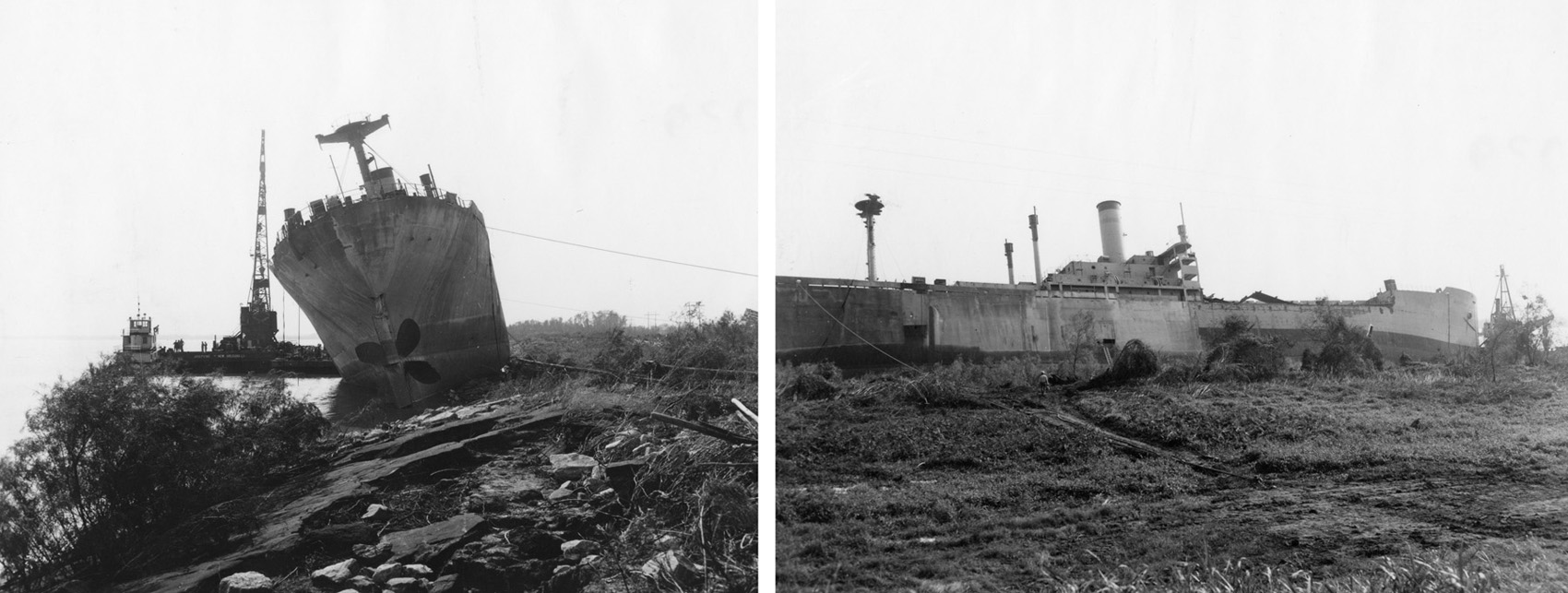
USNS Watertown (T-AGM 6) Two snapshots of the ship in September 1965 after winds and high water from Hurricane Betsy drove her high up on the apron of the Mississippi River levee near Kenner, La., about ten miles above New Orleans. She had begun conversion to an AGM for the Apollo program at Avondale and the hurricane seems to have interrupted work after the original AGM fittings were stripped out and before construction of the Apollo AGM fittings began. Photo No. None Source: U.S. Naval History and Heritage Command (MSC) |
 |
|
USNS Watertown (T-AGM 6) Photographed circa 1967 as an Apollo program AGM at Port Canaveral, Fla., by the Air Force Eastern Test Range. An entire deck level was added between the forecastle and bridge house to house the AN/FPS-16 tracking radar and the other electronics for her new Apollo mission. The antennas aft of amidships were for communications, including a large log periodic antenna on the after mast, a helical communications antenna on top of the weather balloon hangar, and a tall conical monopole antenna on the stern. Photo No. None Source: U.S. Naval History and Heritage Command (MSC) |
 |
|
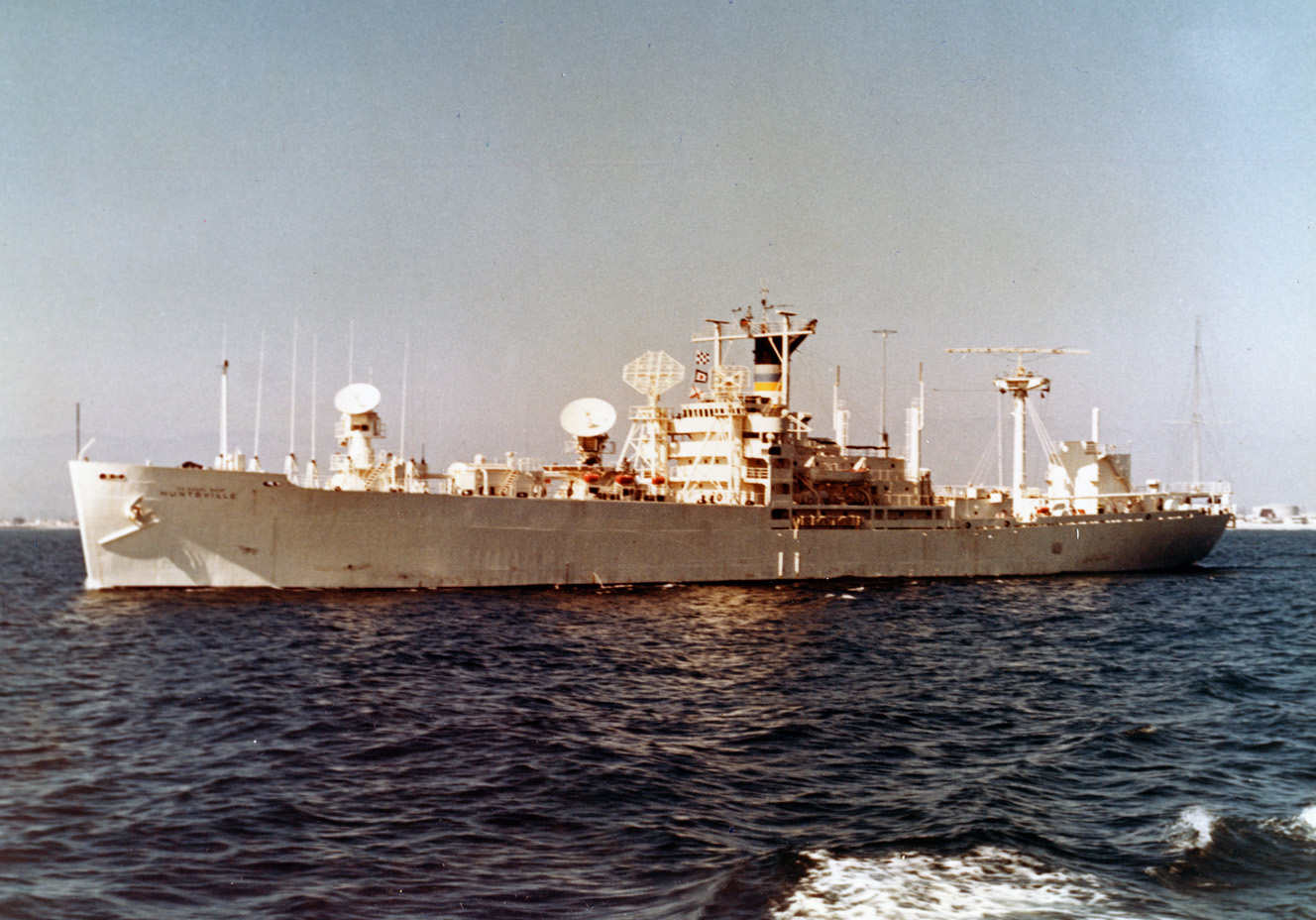
USNS Huntsville (T-AGM 7) After her conversion in 1967 to an AGM for the Apollo program. The dish antenna nearest to the bridge was an AN/FPS-16 tracking radar, a modified C-Band radar system that provided data for spacecraft acquisition during reentry. It was installed at Jacksonville, Fla., after the ship completed conversion near New Orleans. The parabolic dish antenna nearest the bow was a unified S-band radar. The two stands forward of the bridge face held a telemetry antenna to starboard and a steerable UHF communications antenna to port. Photo No. Unknown Source: U.S. Naval History and Heritage Command (MSC) |
 |
|
USNS Huntsville (T-AGM 7) According to a public affairs caption, this view shows the ship steaming in 1968 towards her station in the Western Pacific to serve as a tracking and communications station for the Apollo VII mission. Photo No. Unknown Source: U.S. Naval History and Heritage Command (MSC) |
 |