Twin Falls (T-AGM 11) Class: Photographs
| These photographs were selected to show the original configuration of this class and major subsequent modifications. For more views see the former NHHC (now Hyperwar) Online Library of Selected Images and the NavSource Photo Archive. |
Click on the small photograph to prompt a larger view of the same image.
|
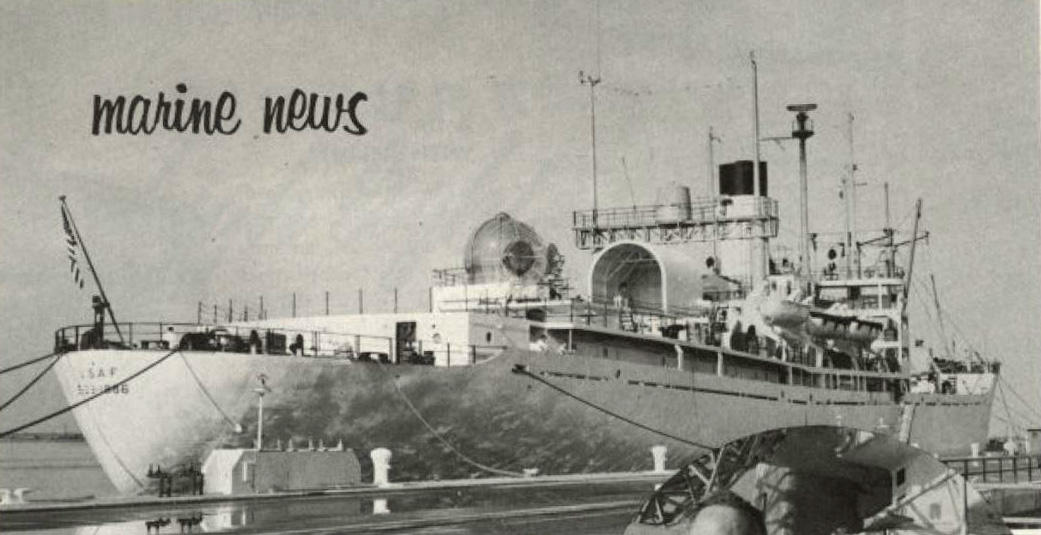
USAFS Twin Falls (E-23-1886, later T-AGM 11) A view of the ship probably in its original configuration. She has an enclosed dome offset to port and an AN/FPS-16 radar dish, which was the major part of her instrumentation, on the centerline aft of a small hangar with a round top. Photo No. None Source: Shipscribe, from an official journal |
 |
|
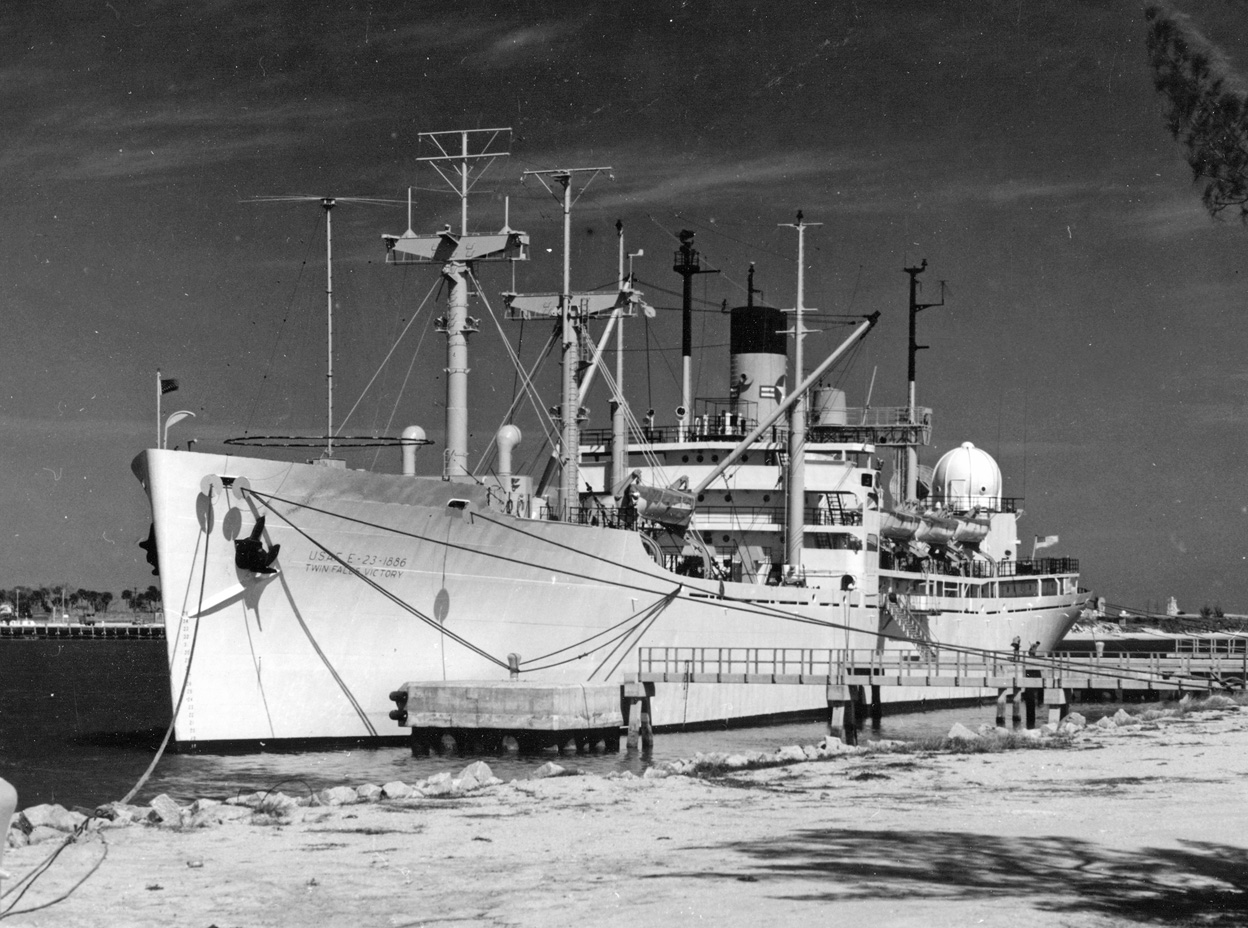
USAFS Twin Falls (E-23-1886, later T-AGM 11) The AN/FPS-16 radar dish and the enclosed dome to port aft are visible in this undated view, probably taken at Port Canaveral. The ship was so configured by November 1960. Note the HF transmitting discone antenna on the bow. At this time she was used primarily for tracking re-entry of Pershing missiles at sea. Photo No. Air Force PL-63-17980 Source: U.S. Naval History and Heritage Command (MSC) |
 |
|
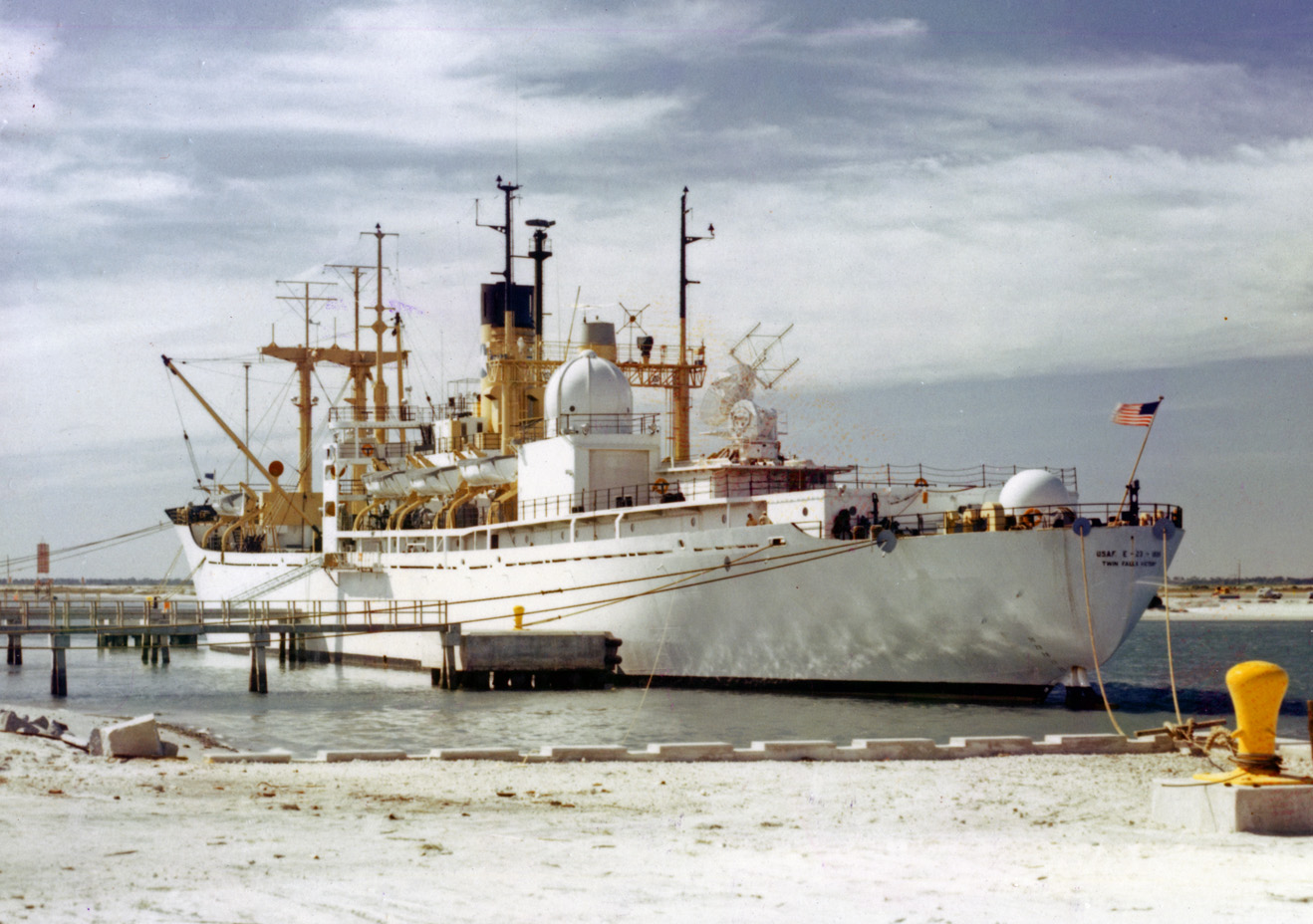
USAFS Twin Falls (E-23-1886, later T-AGM 11) A large triple helix telemetry antenna has been added, probably on the starboard side opposite the enclosed dome to port. That dome is on a small hangar that might be for weather balloons. There is also small new dome on the stern. The AN/FPS-16 radar dish remains in place but the hangar forward of it is gone. Photo No. Unknown Source: U.S. Naval History and Heritage Command (MSC) |
 |
|
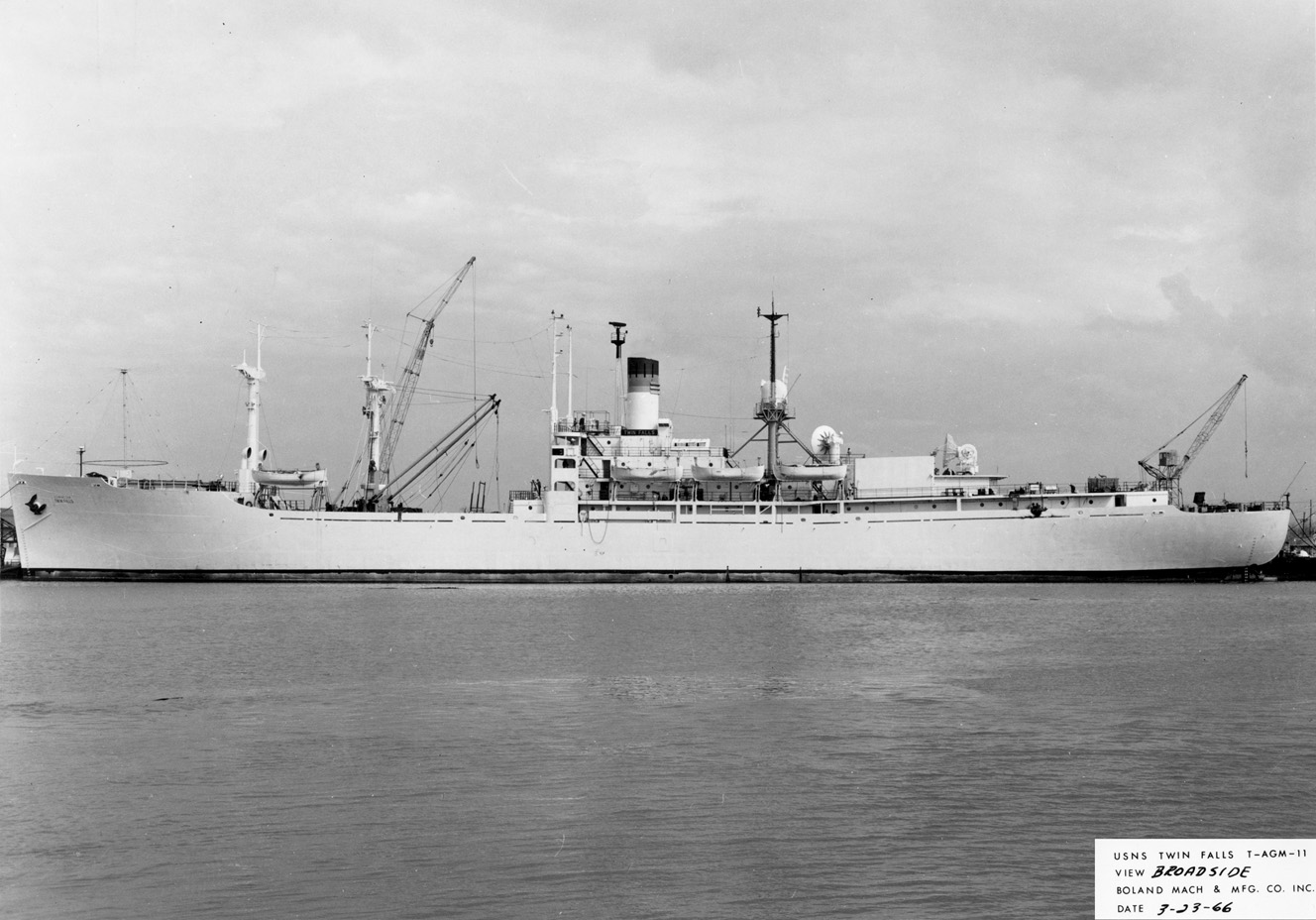
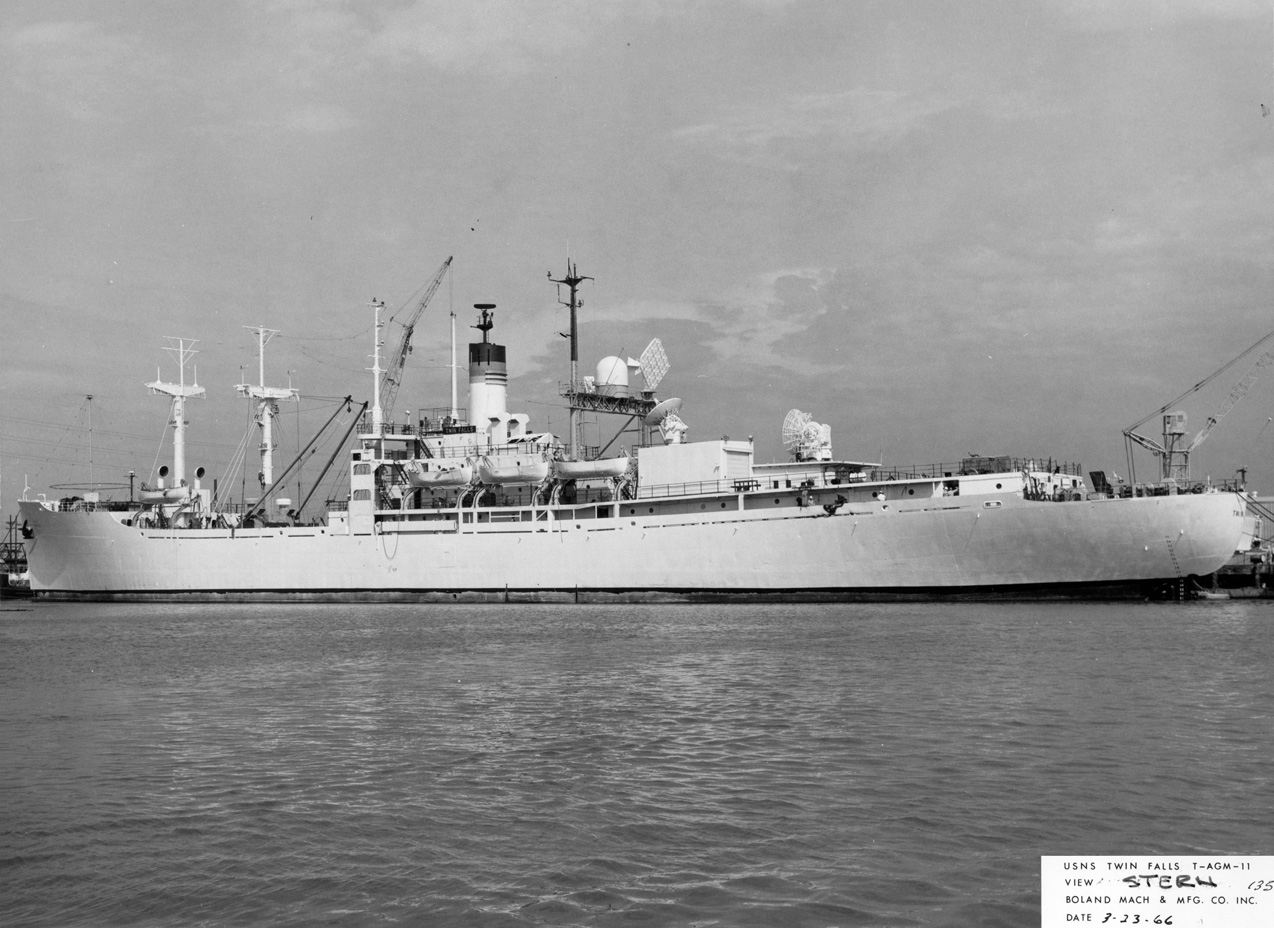
USNS Twin Falls (T-AGM 11) At the Boland Machine & Mfg. Co., New Orleans, on 23 March 1966 after modifications for the Apollo program. The AN/FPS-16 radar dish remains in place, but the dome on the small port side hangar is gone and there is a new dish antenna on the centerline just forward of it. There are also a new large diamond-shaped antenna and a new dome (possibly moved from the stern) on the reinforced double kingpost structure just forward of the new dish antenna. Photo by Chas. L. Franck of New Orleans. Photo No. None Source: U.S. Naval History and Heritage Command (MSC) |
 |
|
USNS Twin Falls (T-AGM 11) At the Boland Machine & Mfg. Co., New Orleans, on 23 March 1966 after modifications for the Apollo program. This port quarter view gives a clear view of the primary antennas aft. Photo No. None Source: U.S. Naval History and Heritage Command (MSC) |
 |
|
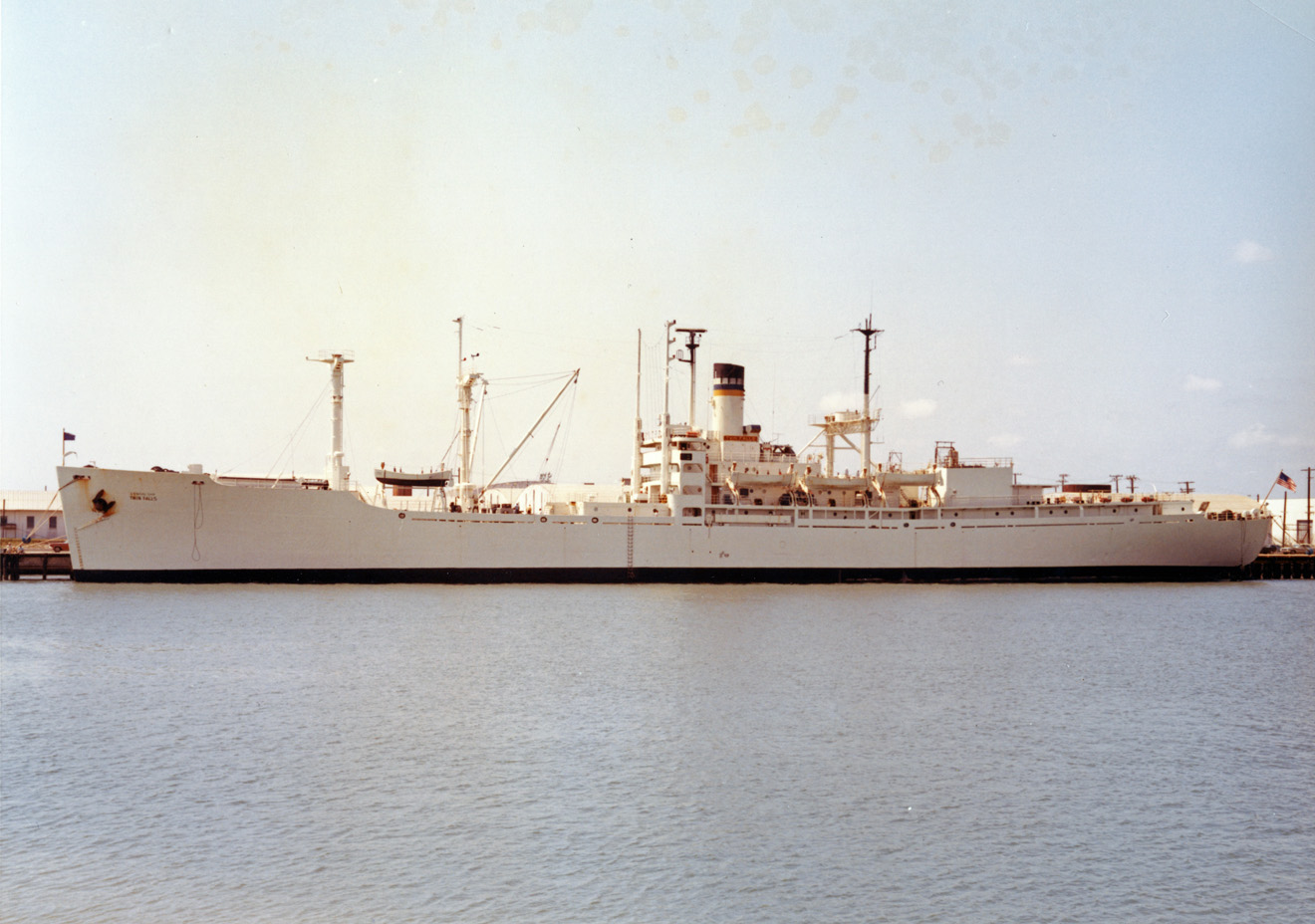
USNS Twin Falls (T-AGM 11) At Port Canaveral in a photo from a series dated 17 April 1970 but probably taken earlier. All antennas have been removed. Other photos in this series show her leaving Port Canaveral under her own power. She is known to have been deactivated on 14 November 1969 and transferred to MARAD for layup the next day. Photo No. Air Force PL 70-21354 Source: U.S. Naval History and Heritage Command (MSC) |
 |
|
SS John W Brown II (ex-T-AGM 11) Alongside the original Liberty Ship John W Brown on the Hudson River in New York City in May 1978 while serving as part of that city's Metropolitan Vocational High School. Plans to have her replace the Liberty ship as training ship for maritime students fell through and she was sold for scrap in 1982 while the Liberty ship is now an operational museum ship at Baltimore, Md. Photo No. None Source: NavSource, photo by Gerhard Mueller-Debus |
 |