Mission Capistrano (T-AG 162) Class: Photographs
| These photographs were selected to show the original configuration of this class and major subsequent modifications. For more views see the former NHHC (now Hyperwar) Online Library of Selected Images and the NavSource Photo Archive. |
Click on the small photograph to prompt a larger view of the same image.
|
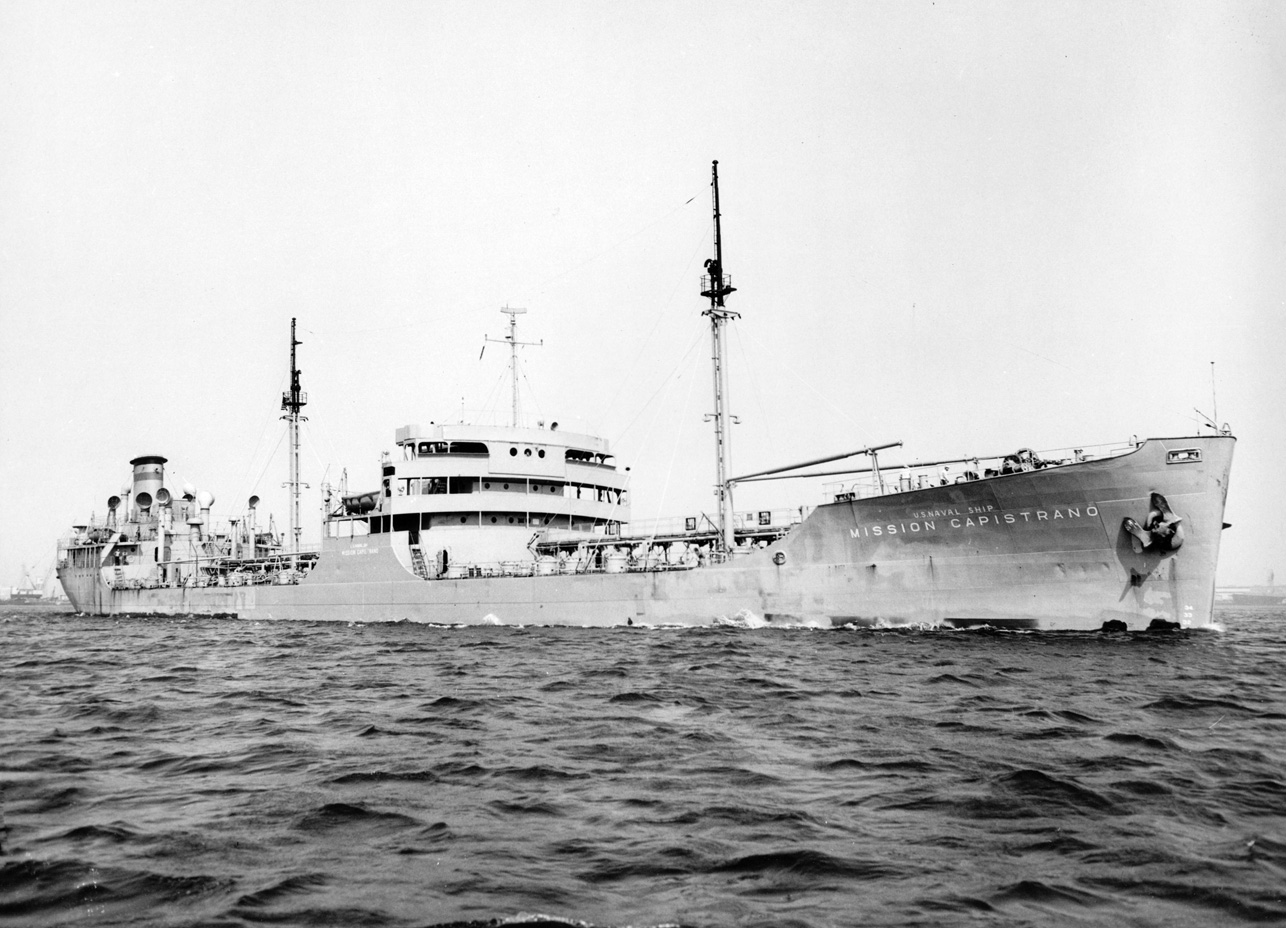
USNS Mission Capistrano (T-AO 112) Underway as a U.S. Naval Ship during the 1950s, probably in San Pedro Bay. Photo No. None Source: Shipscribe |
 |
|
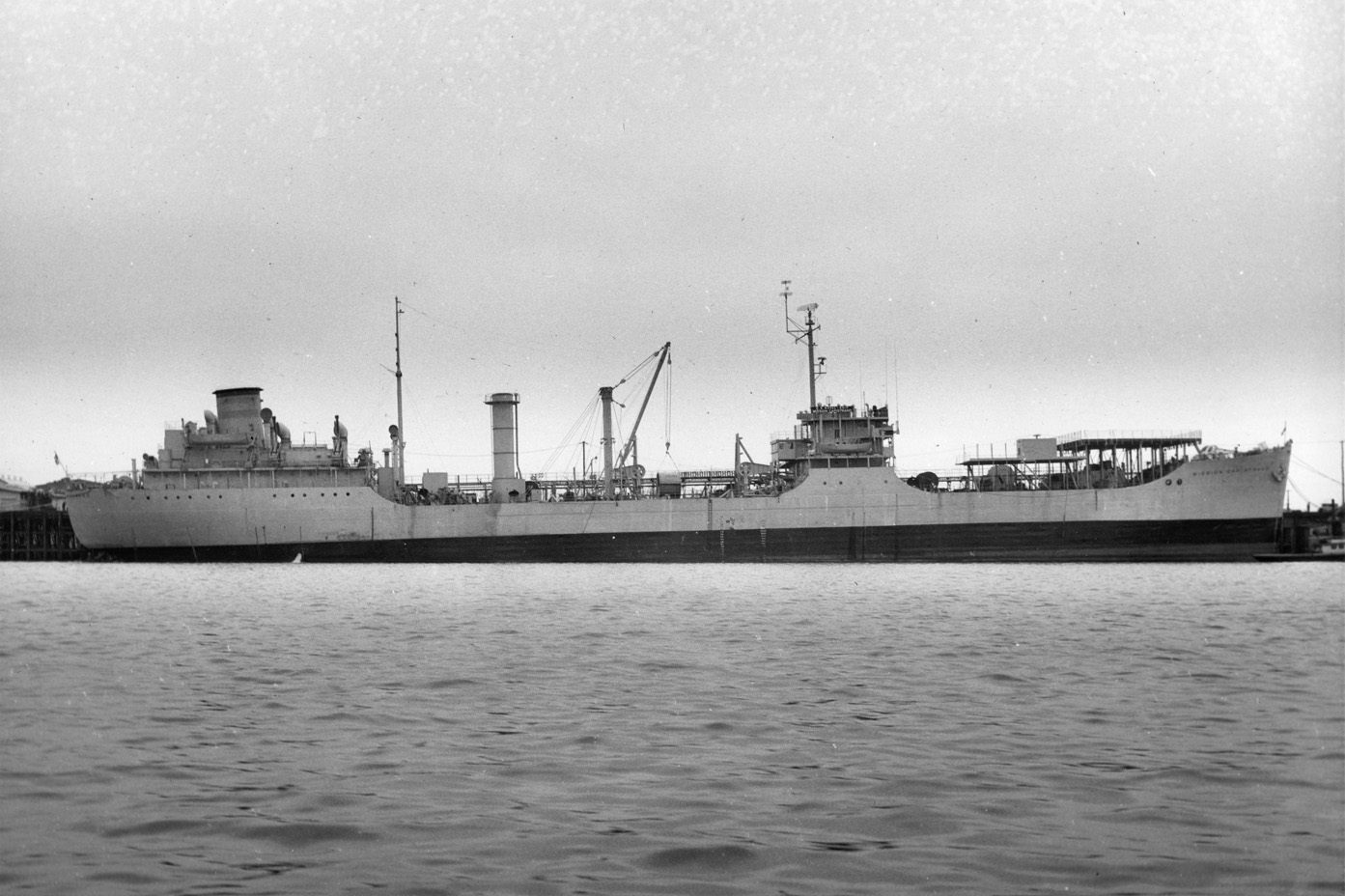
USNS Mission Capistrano (T-AG 162) This ship was converted in 1960 to a sound testing ship for participation in Project ARTEMIS by Avondale Marine Ways and the Todd Pacific Shipyards (ex Todd-Johnson, for drydocking), both at New Orleans. When completed she carried amidships a large flat transducer array (five stories high and with 20 modules) that was lowered and raised through a well in her bottom. She is probably seen here at New Orleans before March 1961 without the array and its large support structure. Photo No. Unknown Source: U.S. Naval History and Heritage Command (UA-281) |
 |
|
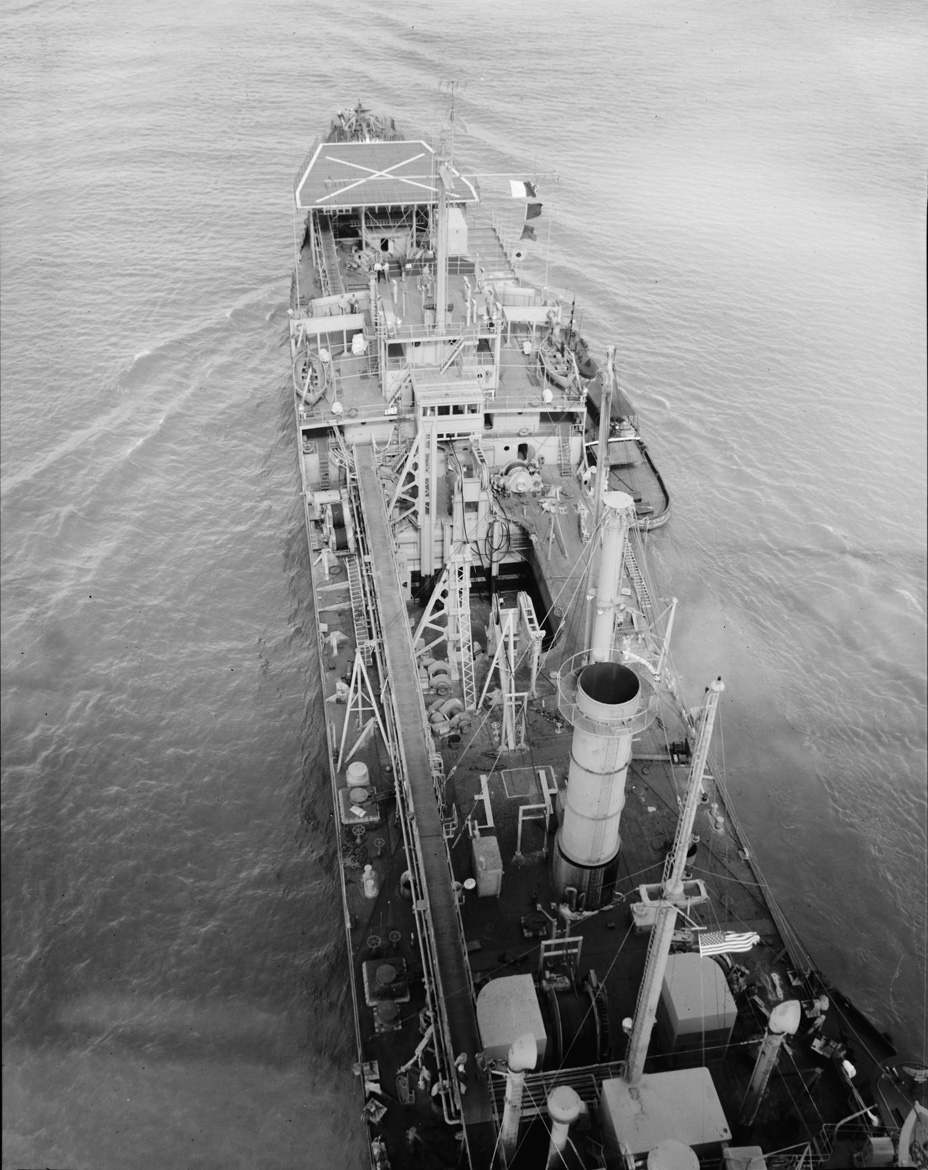
USNS Mission Capistrano (T-AG 162) An overhead view showing the well for the transducer array and other details of the ship's layout. She is probably shown here at New Orleans before March 1961 without the array and its large support structure. Note that the kingpost to service the array and its well is offset to starboard. At the bottom of the picture are the tall exhaust stack for the gas turbine generator for the array and two low covers for the air intakes for the generator. Photo No. BUSHIPS 162843, NAID 6929075 Source: U.S. National Archives (RG-19-NN, negatives) |
 |
|
USNS Mission Capistrano (T-AG 162) A drawing of the equipment arrangement on the ship from a 1962 NRL report. Note the transducer array in its well amidships with a sliding door at the bottom, the winches fore and aft that lowered and raised the array with wire ropes, the reels for the array's electric control cables in the forward holds, the gas turbine generator that powered the array in the after holds with its tall exhaust stack, the helicopter platform on the forecastle, and the thrust propeller in the bow. Photo No. None Source: apps.dtic.mil/sti/tr/pdf/ADA035001.pdf (8 Mar 1962) |
 |
|
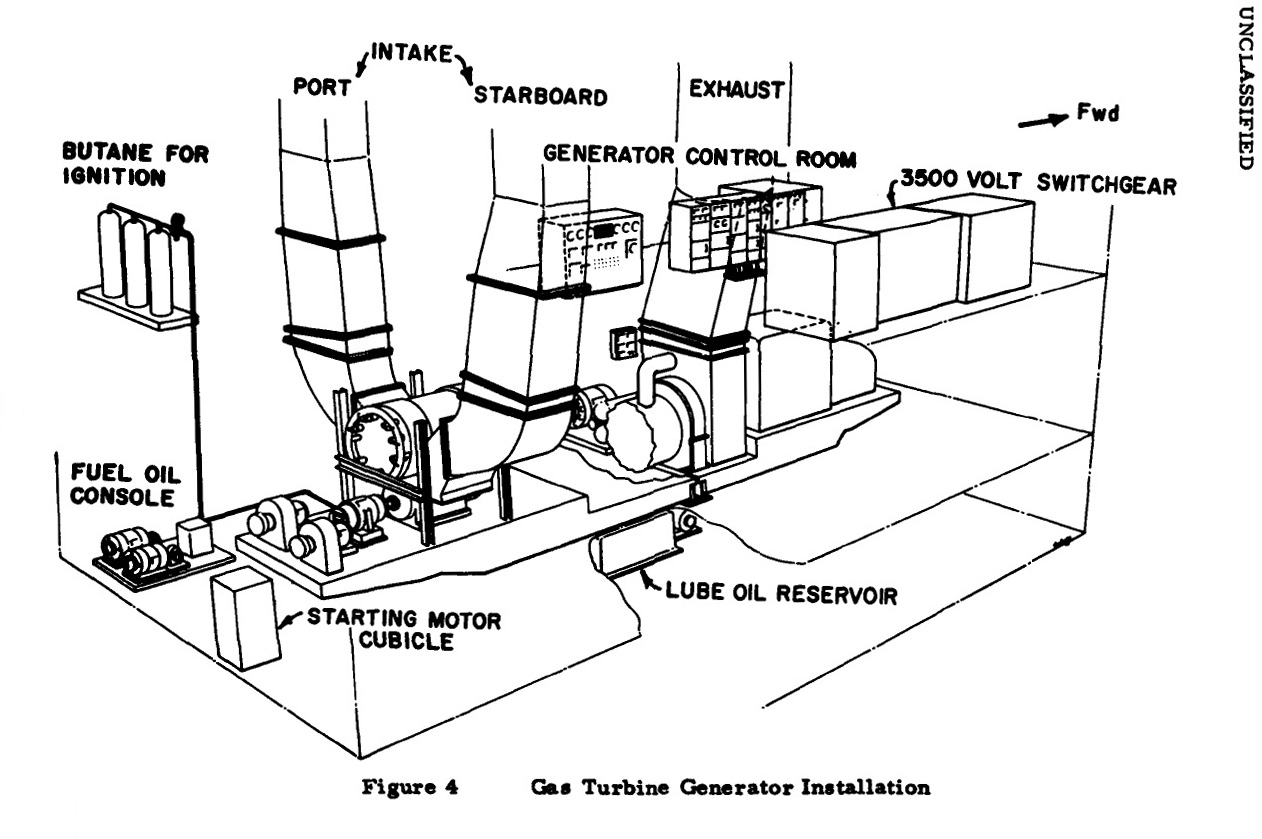
USNS Mission Capistrano (T-AG 162) The gas turbine generator installation in the after holds which powered the transducer array. It produced enough power to furnish lights for a town of 50,000 persons. The exhaust air at the upper center of the drawing passed up the very tall stack aft of the array, while the intake air entered through two low enclosures just forward of the after mast. Photo No. None Source: apps.dtic.mil/sti/tr/pdf/ADA035001.pdf (8 Mar 1962) |
 |
|
USNS Mission Capistrano (T-AG 162) Shown in March-April 1961 at New Orleans with the first two modules installed on the transducer array for testing. Note the two large raised platforms forward, one for helicopters and one for drill pipe stowage, and the transducer array on its large support structure aft of the bridge. Photo No. Unknown Source: U.S. Naval History and Heritage Command (UA-164) |
 |
|
USNS Mission Capistrano (T-AG 162) The deck forward of the bridge photographed in March-April 1961 at New Orleans showing the forward cable reel used to lower and raise the transducer array and the opening in the bridge deckhouse to allow passage of the cable back to the array. Photo No. BUSHIPS 162855, NAID 6929088 Source: U.S. National Archives (RG-19-NN, negatives) |
 |
|
USNS Mission Capistrano (T-AG 162) A view from aft in March-April 1961 at New Orleans showing the transducer array on its large support structure. At this time two modules were mounted on the array for testing. Photo No. BUSHIPS 162850, NAID 6929083 Source: U.S. National Archives (RG-19-NN, negatives) |
 |
|
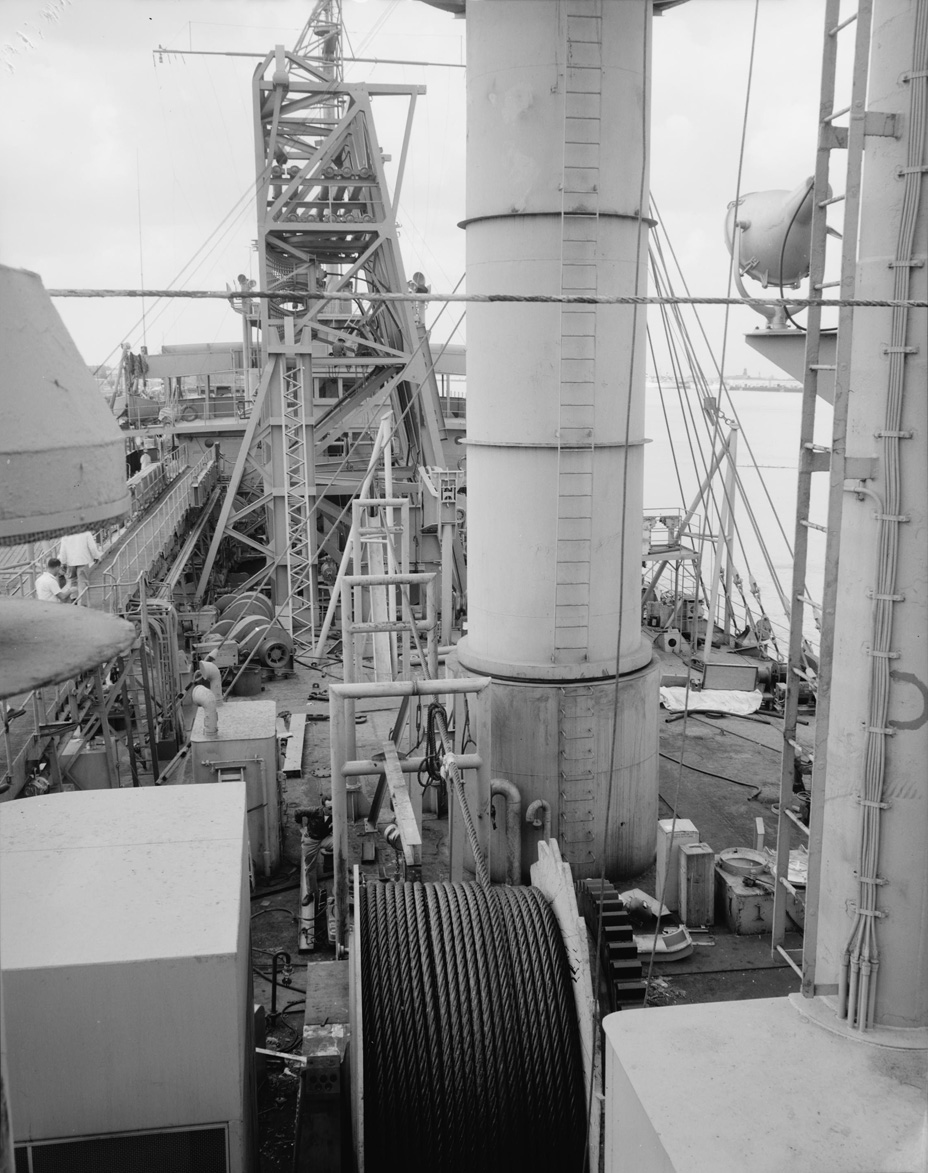
USNS Mission Capistrano (T-AG 162) A view from further aft in March-April 1961 at New Orleans showing the transducer array on its large support structure with, in the foreground, the exhaust stack for the gas turbine electric generator for the array and, at the bottom left, one of the air intakes for the generator and the after cable reel used to lower and raise the array. Photo No. BUSHIPS 162863, NAID 6929096 Source: U.S. National Archives (RG-19-NN, negatives) |
 |
|
USNS Mission Capistrano (T-AG 162) At the U.S. Naval Station, New Orleans, La. in March-April 1961 with two modules on the transducer array and with USS Salish (ATA 187) moored ahead. Salish was based at New Orleans from January 1947 to July 1961 and was frequently assigned to support experimental projects, including cable laying operations off Bermuda in June-September 1960. Photo No. BUSHIPS 162847, NAID 6929080 Source: U.S. National Archives (RG-19-NN, negatives) |
 |
|
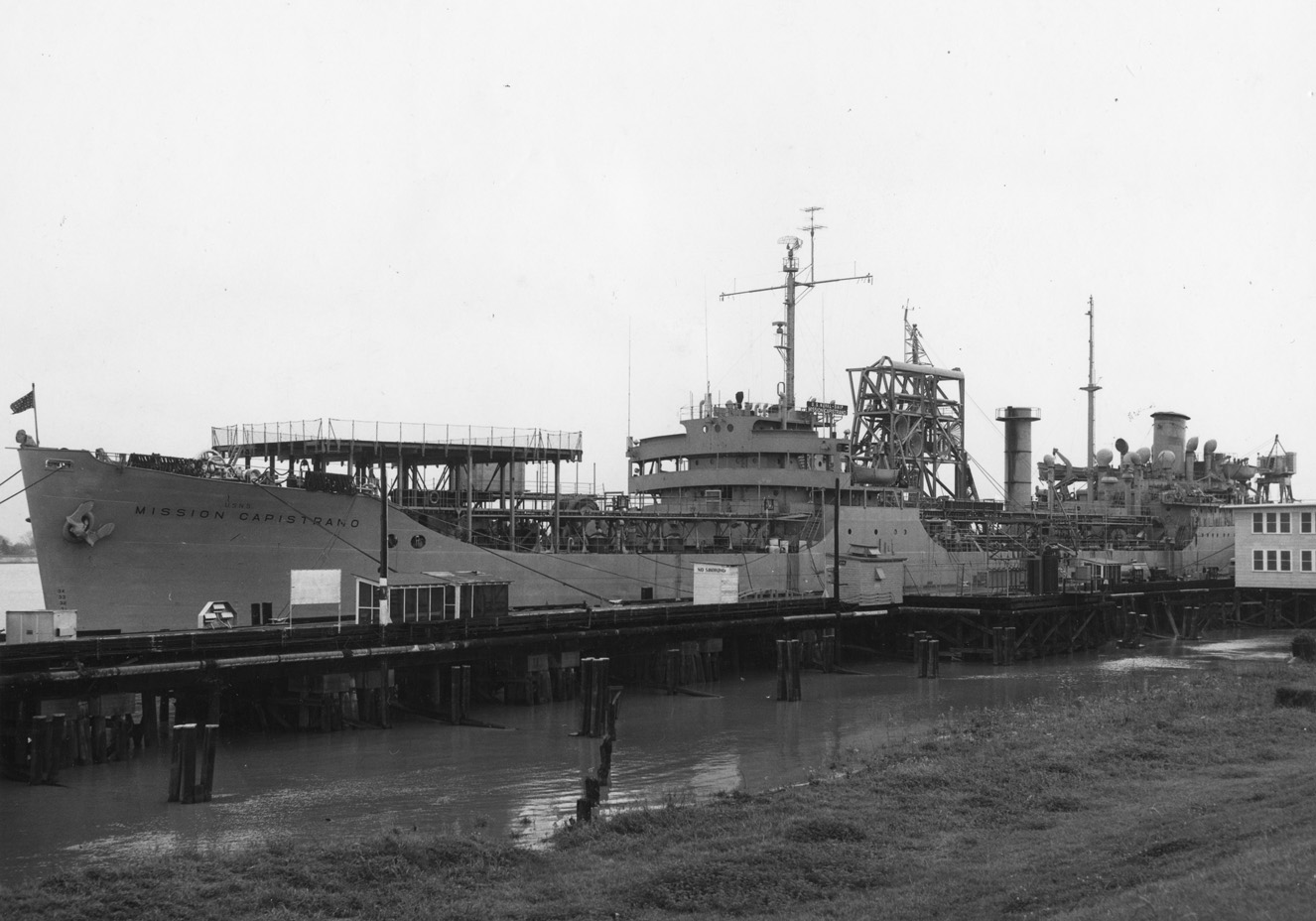
USNS Mission Capistrano (T-AG 162) Photographed in March-April 1961, probably at New Orleans and probably with the first two modules installed on the transducer array for testing. Photo No. Unknown Source: U.S. Naval History and Heritage Command (MSC) |
 |
|
USNS Mission Capistrano (T-AG 162) Photographed between August 1961 and November 1962 or between March 1963 and April 1964 showing the transducer array with 15 of its 20 modules installed. Massa Products Corp., which had a contract to upgrade this Project Artemis system, described it as the "World’s Largest Sonar Projector." Photo No. None Source: www.massa.com/wp-content/uploads/2018/06/Military-Low-Frequency-High-Power-Sonars.pdf |
 |
|
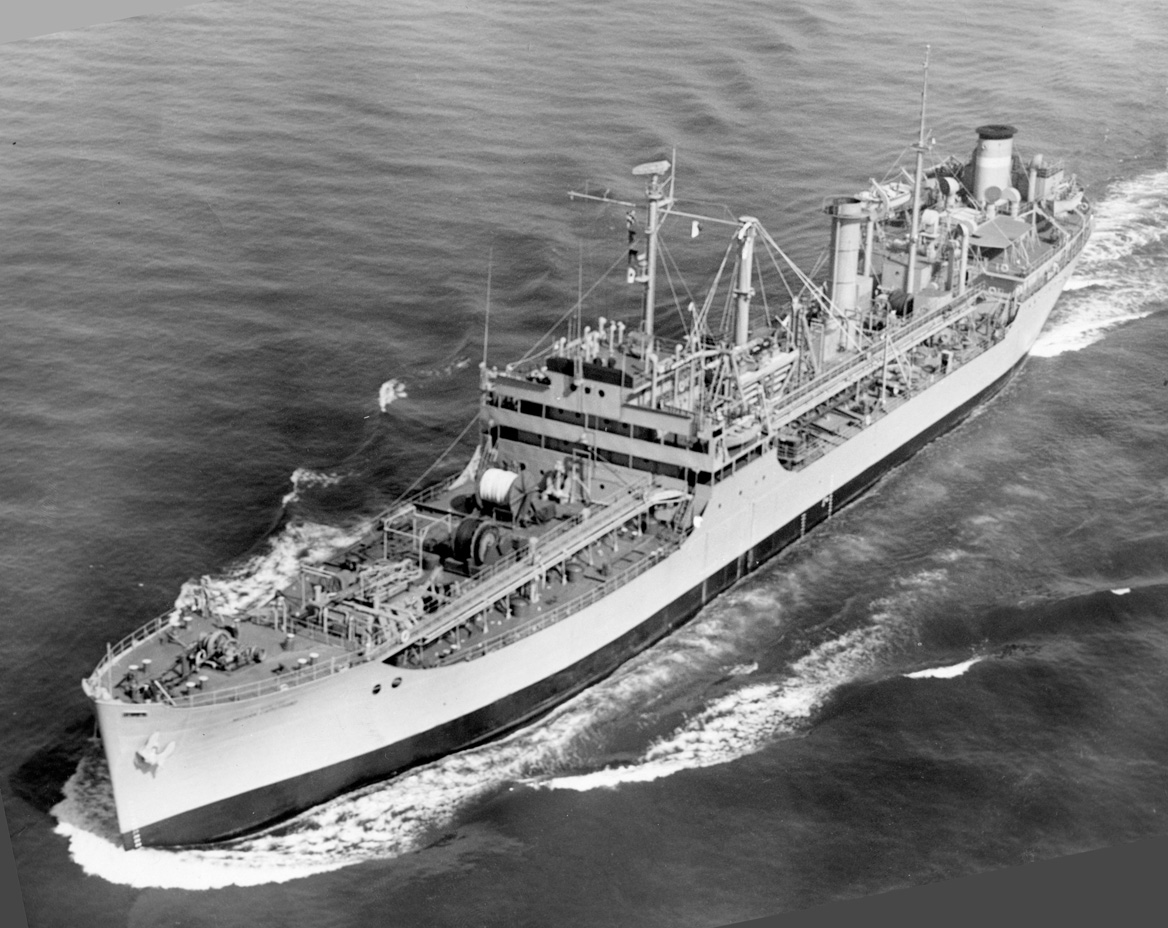
USNS Mission Capistrano (T-AG 162) Without the helicopter platform and the rack for drill pipes forward which were removed circa mid-1964. The cable reels on deck forward and aft that hoisted the transducer array are visible but the array itself is not. Photo No. Unknown Source: U.S. Naval History and Heritage Command (MSC) |
 |